Mercedes-Benz Actros to get hydrogen combustion engine from 2027
Daimler Truck has partnered with Munich company KEYOU, which will convert the Mercedes-Benz Actros to hydrogen combustion and offer the trucks to customers from the end of 2027. Claimed range of around 400 miles at 40 tonnes.

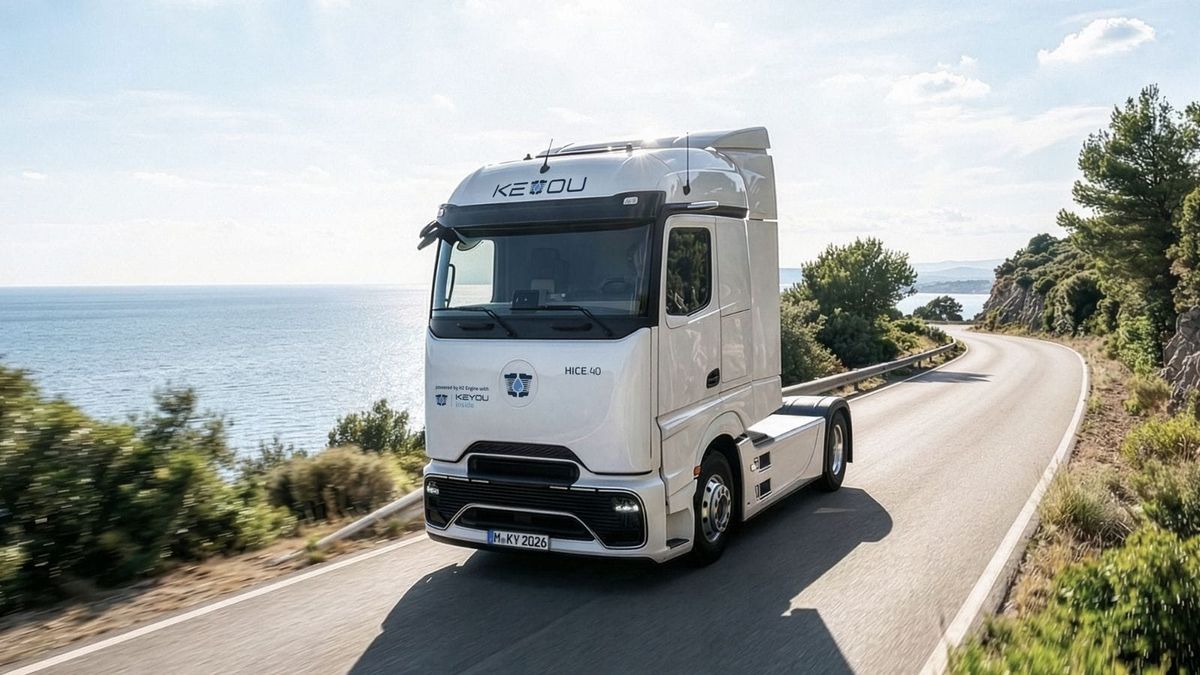
The Mercedes-Benz Actros, of which Daimler has sold more than 1.5 million since 1996, is to be converted to hydrogen combustion by Munich-based specialists KEYOU under a partnership announced today by Daimler Truck.
The 12.8-litre OM 471 diesel engine that powers the standard Actros will be converted to burn hydrogen instead of diesel, with around 80% of the original engine left unchanged. KEYOU will subsequently offer the vehicles to customers, with market launch planned from the end of 2027.
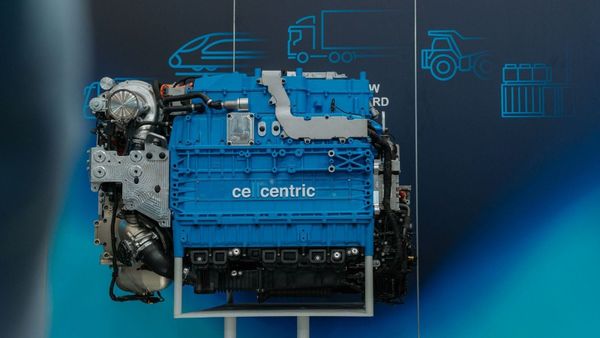
Daimler has invested heavily in hydrogen mainly in fuel cells via its cellcentric joint venture with Volvo Group - which Toyota plans to join as an equal shareholder. The company is developing the Mercedes-Benz NextGenH2 fuel cell truck, with around 100 units due for customer deployment from late this year.
But this is the first time Daimler has put its weight behind a hydrogen combustion truck - an engine that burns hydrogen directly, much like a diesel engine, rather than converting it to electricity through a fuel cell.
The company previously built a hydrogen-powered Unimog prototype under the publicly funded WaVe research project but has never put a hydrogen combustion engine into series production. Daimler describes the arrangement as "partnership instead of in-house development" - it will supply Actros L 1848 tractor units and OM 471 engines from its Mannheim plant to KEYOU, which handles the conversion.
The truck
The converted truck, the KEYOU HICE.40, is a 4x2 tractor unit rated for 40 tonnes gross vehicle weight. KEYOU says the converted engine should produce up to 350 kW using a port fuel injection system, with a modular 350-bar compressed hydrogen tank system giving a claimed range of up to 400 miles (650 km) in the maximum-range configuration.
Refuelling time for the 40-tonne variant has not been disclosed, though KEYOU's smaller 18-tonne hydrogen truck refuels in about 15 minutes.
The truck is eligible for funding under the German federal government's nationwide hydrogen programme, with leasing available through GML Gesellschaft für Mittelstandsleasing. KEYOU and GP Joule, the German renewable energy company, have also agreed an "H2 Mobility as a Service" model that bundles the truck with maintenance, roadside assistance, and optional insurance.
Andreas Gorbach, Daimler Truck board member responsible for truck technology, said the company was "partnering with a specialised company to bring hydrogen combustion technology to market quickly and efficiently."
Who is KEYOU
KEYOU is a Munich company founded in 2015 by three former BMW powertrain engineers - Thomas Korn, Alvaro Sousa, and Markus Schneider - that specialises in converting diesel engines to hydrogen. The company is independently owned, not a Daimler subsidiary or joint venture, though its advisory board includes Prof. Dr. Jörg Zürn, who spent 34 years as a senior executive at the Daimler Group, and Holger Mandel, the former CEO of MAN Truck & Bus Germany.
KEYOU's investors include the BESTO family office - backed by the Beyer and Stoll families behind industrial group FESTO - and the European Innovation Council, which invested €5.8m. In 2018, KEYOU claimed a world record for hydrogen combustion engine efficiency at 44.5%.
KEYOU received road certification from TÜV Süd, the German testing and certification body, for its first hydrogen 18-tonne truck in 2023 and delivered one to German logistics operator EP-Trans late last year. It has also built a 12-cylinder hydrogen engine for Komatsu, the Japanese construction equipment manufacturer, and developed a 13-litre hydrogen engine with Volvo Trucks as part of the publicly funded HyCET project. KEYOU had already been developing a hydrogen tractor unit based on the Actros platform before this deal, initially targeting a 2026 launch.
The conversion will be carried out with partners including Bücker + Essing, part of the Elevion Group, and KEYOU will sell the finished vehicles to fleet customers. The two companies are also discussing using Daimler's service network for ongoing support.
The hydrogen combustion truck market
KEYOU and Daimler are not the first to bring a hydrogen combustion truck to market. MAN, the German truck manufacturer, built its hydrogen combustion programme in-house and began delivering trucks to customers in late 2025 - an initial series of roughly 200 units for construction, tanker, and timber haulage in Germany, the Netherlands, Norway, and Iceland.
MAN uses 700-bar hydrogen storage and a 383 kW engine, claiming up to 373 miles (600 km) from 56 kg of hydrogen. KEYOU claims more range from lower-pressure 350-bar tanks but has not disclosed how much hydrogen the HICE.40 carries.
Volvo Trucks began road-testing a hydrogen combustion truck earlier this year, with a commercial launch targeted before 2030. Cummins, the American engine manufacturer, has validated hydrogen combustion at 6.7-litre and 15-litre displacement, though neither is yet in series production.
Daimler already sells battery-electric Actros trucks for shorter routes and is developing the NextGenH2 fuel cell truck. With the addition of the KEYOU hydrogen combustion conversion, three zero-emission powertrains will be available on the Actros platform.
The two companies are targeting what they describe as "market scale" volumes from the end of 2027. The EU's CO2 standards for heavy-duty vehicles tighten sharply from 2030, and hydrogen combustion trucks that produce less than 3 g CO2 per tonne-kilometre qualify as zero-emission under the regulation - the same classification as battery-electric and fuel cell trucks.