Exclusive | JCB heir Jo Bamford: 'The best people in the world at doing it are China'
The JCB heir and Wrightbus owner tells Hymotive that China's integrated hydrogen strategy is the model Europe should follow - and that the UK's Climate Change Committee has too few engineers to understand why.

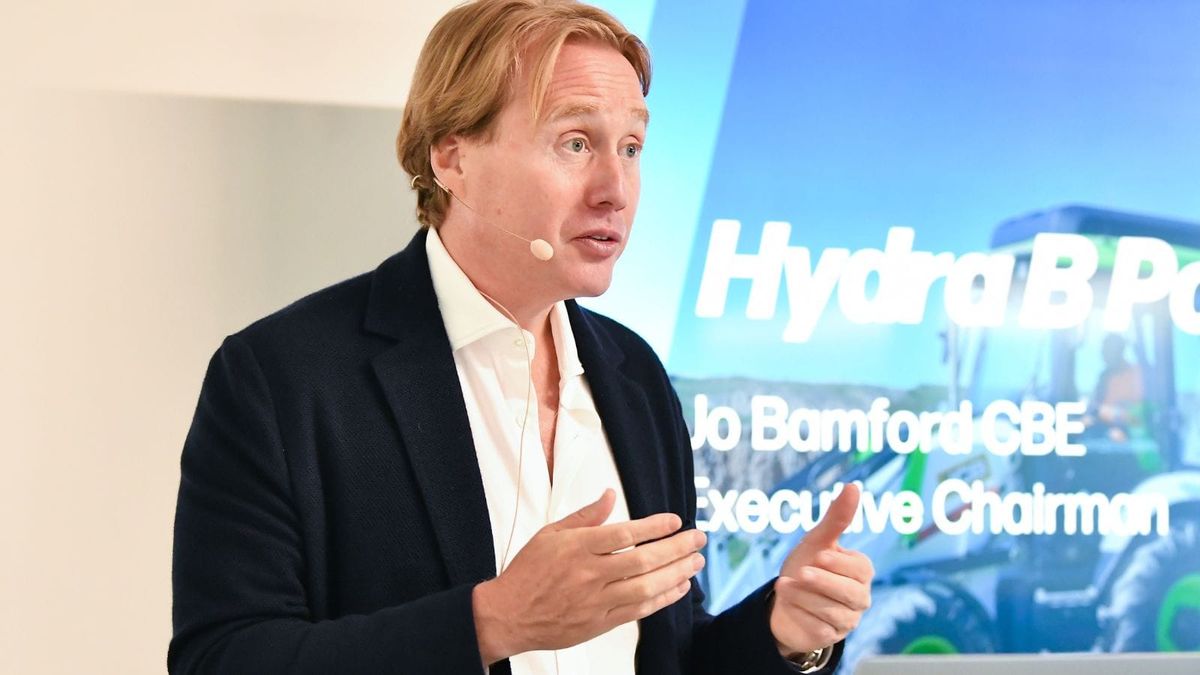
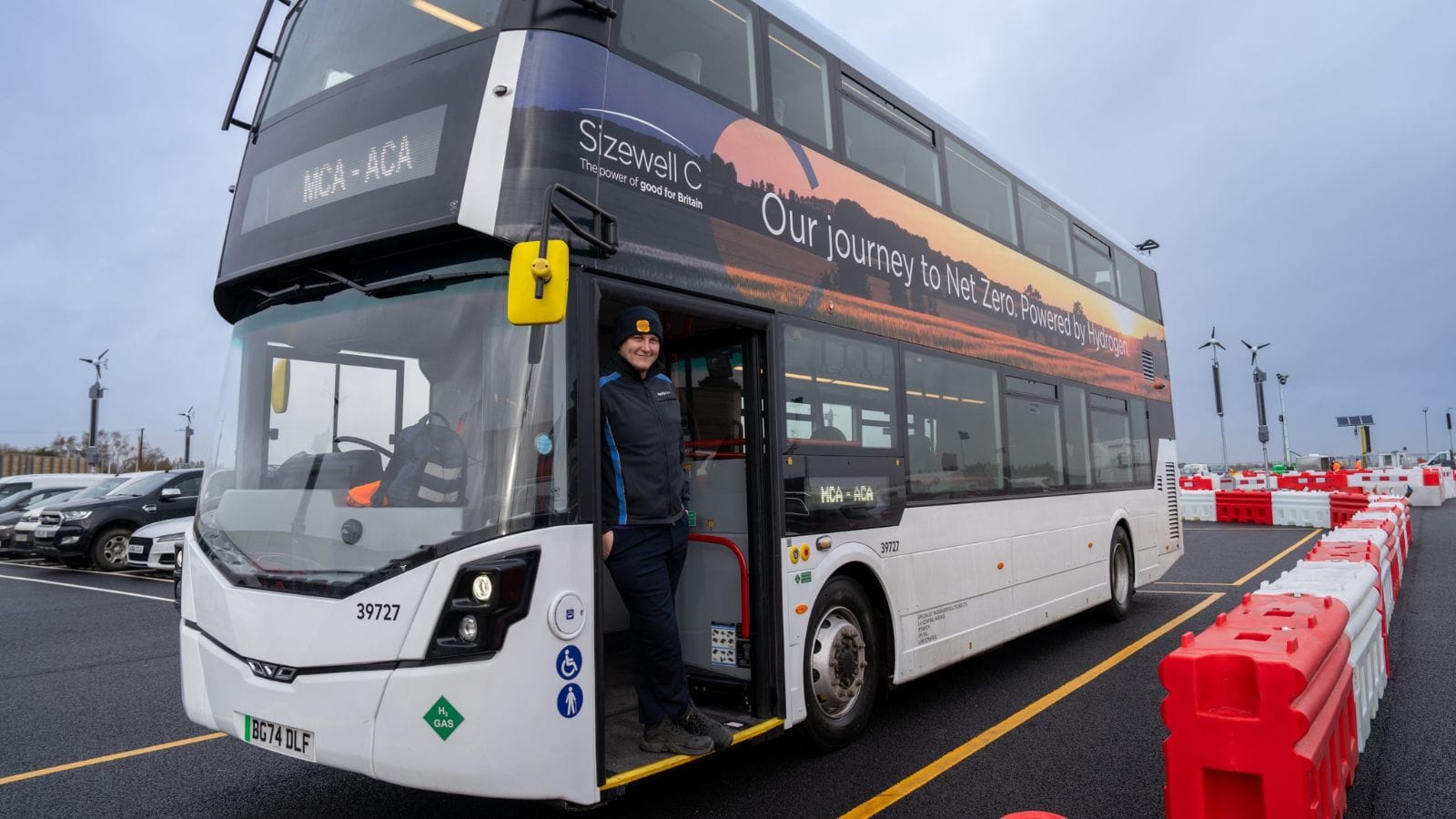
Jo Bamford, the JCB heir who rescued bus manufacturer Wrightbus from administration and put the world's first hydrogen double-decker on the road, has since expanded into fuel production, distribution, and refuelling. At the launch of his latest venture - a HyKit factory in Bicester - he told Hymotive that the country getting hydrogen right, better than Germany, better than the Netherlands, better than anywhere in Europe, is China.
"The best people in the world are doing this in China," Bamford said. He visited BYD's Shenzhen headquarters in 2020 and came back with a clear picture of what serious hydrogen industrialisation requires.
BYD does not just build buses and cars - it manufactures its own drivelines, batteries, and every component inside them, with 120,000 people working on battery chemistry research alone. "The UK throws out 10,000 engineers a year, total," Bamford said. "The second-largest battery manufacturer in China has 12 years' worth of that capacity."
China's approach to batteries - state-backed subsidies that drove volume until costs fell below the competition - is, in Bamford's view, what hydrogen needs. The Chinese government picked champions like BYD and CATL, subsidised both the vehicles and the fuel to diesel price parity, and backed them across the entire supply chain. A decade later, Chinese firms hold roughly 70% of global EV battery market share.
Beijing is now applying the same playbook to hydrogen. Green hydrogen was elevated to strategic-industry status in China's 15th Five-Year Plan, placed alongside quantum computing and nuclear fusion.
The country had roughly 40,000 fuel cell vehicles on the road and 574 refuelling stations by the end of 2025, and controls an estimated 60% of global electrolyser manufacturing capacity - with domestic alkaline units costing less than half their European equivalents. A national pilot programme launched in March 2026 aims to double the FCEV fleet to 100,000 by 2030.
"They're scatter gun"
Bamford's frustration with Europe is that it does the opposite. Rather than concentrating investment behind a single use case and scaling it until the costs break, European hydrogen strategies spread funding across drones, shipping, refining, heavy transport - with every different application requiring a different engineering solution and a different supply chain.
"The biggest problem with the European hydrogen strategy is they're scatter gun," he told Hymotive. "You're not creating an ecosystem and driving repetitivity in every factory."
European subsidies, he argued, tend to fund large one-off projects - a 200 MW electrolyser for a refinery, say - that help the manufacturer once but do nothing for scale. "What he should be doing is building 10 one-megawatt boxes every week so he can get the membrane productionised," Bamford said. "You need the same use case every time."
"If you gave me a thousand buses every year for the next 10 years with a 15-year hydrogen offtake, I'd joint-venture on a fuel cell factory, a tank factory, give every single one of those factories volume," he said.
"By year 7, my hydrogen would be cheaper than diesel." The same 75 kW fuel cell goes into every bus, the same tanks, the same 100 MW electrolysis plant. Component costs fall across every other application because the same engine goes into a truck, the same fuel cell into construction equipment.
The economics also explain why Bamford starts with buses rather than passenger cars. "You need 200 cars to finance one filling station," he said. A bus depot generates enough demand to pay for the supply chain on its own.
"Ask me how to do it," he said. "In fact, I'll do it for you. Just give me the orders."
Bamford's businesses already span the hydrogen value chain in a way few European players can match. Wrightbus, which he rescued from administration in 2019, produced more than 1,200 buses in 2025 and operates hydrogen fleets in London, Birmingham, Cologne, and several other German cities. Ryze Hydrogen distributes the gas. HyGen Energy produces it, with 4 GW of green ammonia under development in Oman.
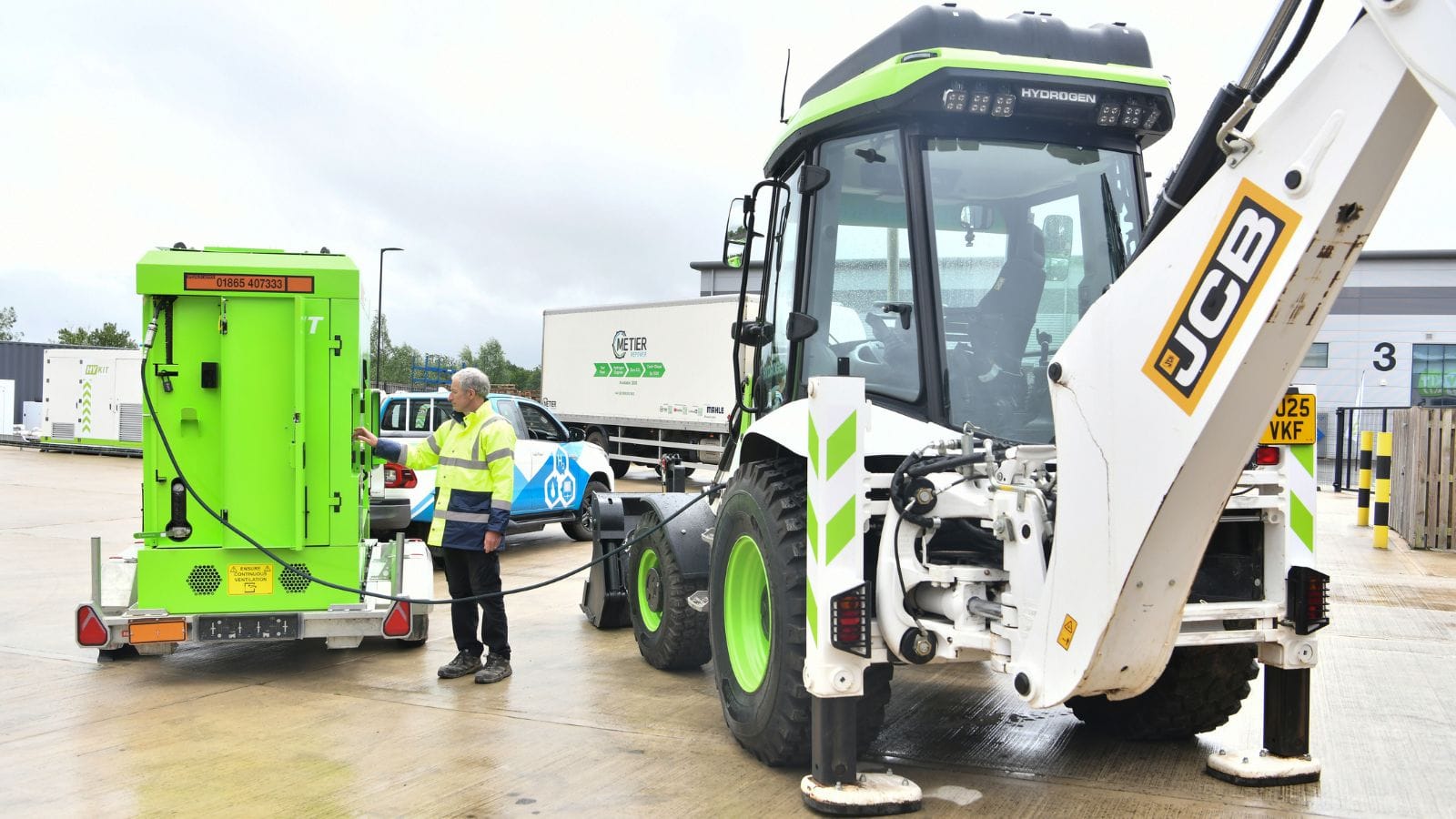
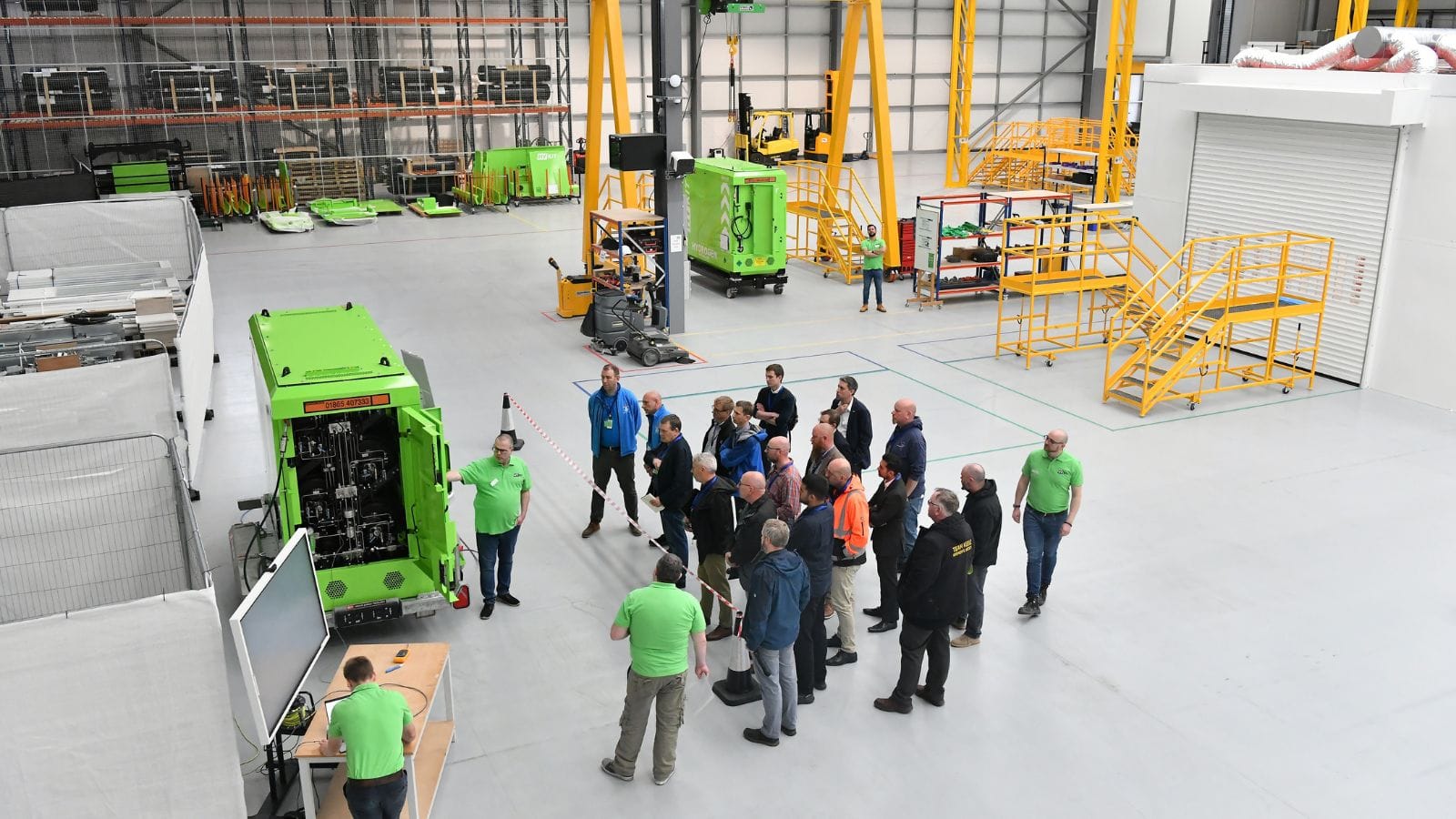
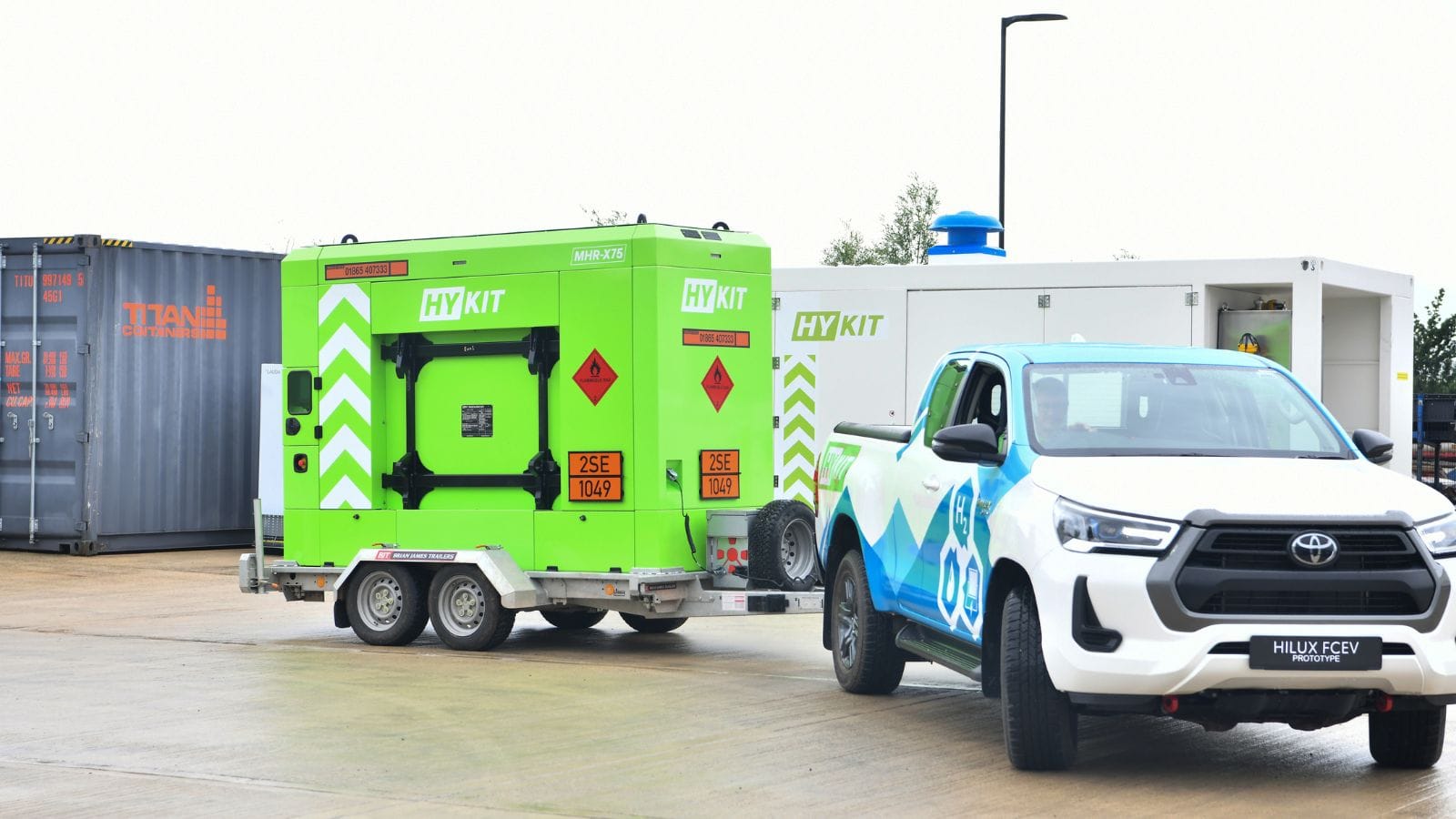
HyKit - a joint venture between his HYCAP investment fund, his HydraB holding group, and JCB - builds mobile refuelling systems designed to bring hydrogen to construction sites, military bases, and anywhere else the grid does not reach, with more than 90% of its componentry manufactured in the UK and Europe.
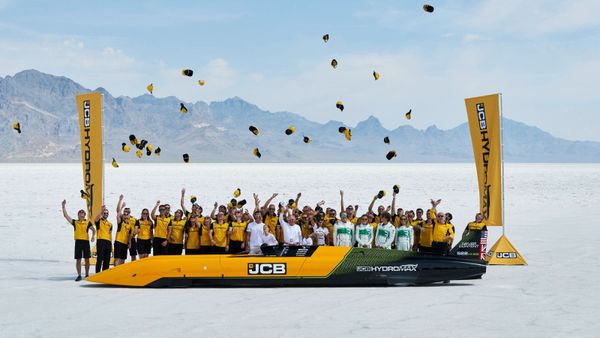
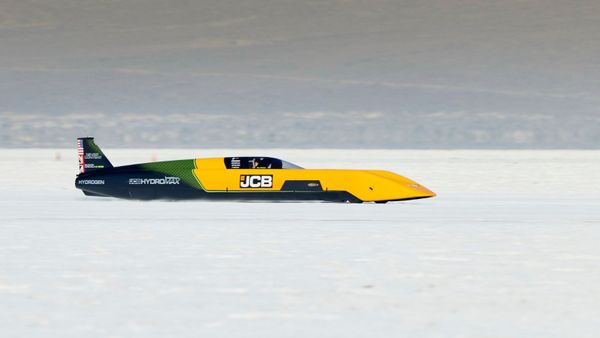
"You can't move a six-ton battery to the front line of a war zone, charged up, to stick into a tank," Bamford said. And JCB itself has invested £100 million and 150 engineers in a hydrogen combustion engine that now has full EU type-approval for commercial use.
Britain's grid problem
On UK policy, Bamford took aim at the Climate Change Committee, the independent body whose advice on emissions targets the government is legally obliged to consider.
"The Committee on Climate Change aren't really very pro hydrogen," he said, "but I think there's only one engineer on the board of that."
The CCC's Seventh Carbon Budget, published in February 2025, sees "no role for hydrogen in buildings heating and only a very niche, if any, role in surface transport." Bamford does not dispute that batteries work for shorter routes and lighter vehicles - he makes battery buses himself. His argument is that the grid cannot absorb everything the electrification agenda demands of it simultaneously. Transformer manufacturers are on 5-year lead times, he said, and if data centre demand accelerates, those lead times stretch to 8.
"Do you want data centres or do you want battery cars or do you want heat pumps?" he asked. "There's a certain amount of energy and electrification network. You've got to decide which ones you want."
He compared the grid to a motorway system. "What happens when you get rid of two motorways and make the most congested one 10 times more congested?" he asked. "We're starting to see that now."
"Electrification and hydrogen are symbiotic," he said. "It's the same bloody thing."
"Subsidise me to put in an electrolyser and turn it on when the wind's blowing too much," he said, referring to the more than £1.5 billion that curtailment cost consumers in 2025 alone - the practice of paying wind farms to switch off when they produce more power than the grid can absorb. "I've now got a cheap form of gas that I can move around and it doesn't have to go through the electricity network."
"One market working properly"
Bamford received a CBE in the King's Birthday Honours in 2025 for services to the hydrogen economy, an award that arrived in a year of considerable negative press for the sector. He described the experience as "very, very humbling" and said "the King really cares about hydrogen - loves hydrogen."
Asked what he would want to point to in 5 years, Bamford said: "One market working properly, regularly. Not all this scattergun approach. Hydrogen working for one use case where it can give the customers a solution that replicates a behaviour and I can get it to cost the same."
A solution, he added, should not be big or clever or ego-driven. "It should just give people a solution so they can get on with their day."
China backed its champions with volume and decades of subsidy. The HyKit factory in Bicester has capacity for 500 units a year.
"Well if you want to know how to do it, I'll tell you how to do it," Bamford said. "And I've got the supply chain to do it."