Toyota to enter hydrogen fuel cell Hilux in 2027 Dakar Rally
Gazoo Racing says its DKR GR FC Hilux will race in Dakar's experimental category - the first time Toyota has deployed fuel cell rather than hydrogen combustion engine technology in motorsport.
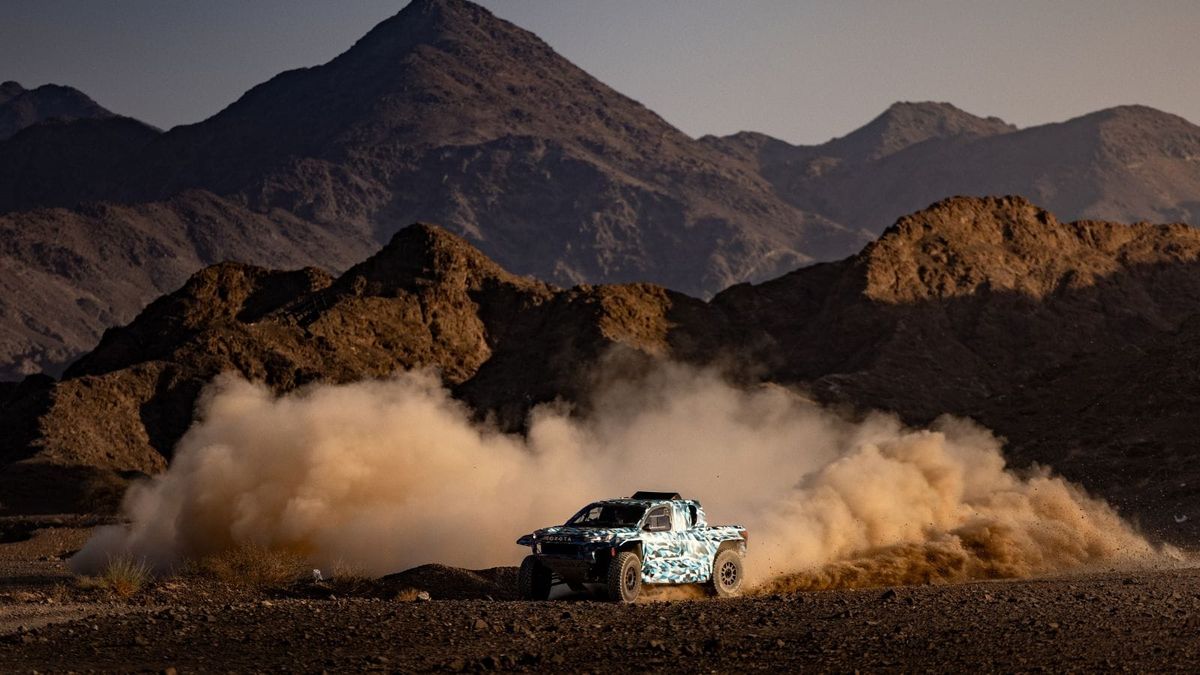
Toyota's Gazoo Racing division says it will enter a hydrogen fuel cell electric vehicle in the 2027 Dakar Rally, the first time the company has deployed fuel cell technology in competitive motorsport. The DKR GR FC Hilux, based on the petrol-powered Hilux that already competes in Dakar's top T1+ class, replaces its combustion engine with Toyota's hydrogen fuel cell system.
It will run in the Future Mission 1000 category for experimental vehicles, racing against the clock over 13 stages and 1,000 competitive kilometres of Saudi desert between 1 and 15 January.
From hydrogen engines to fuel cells
Toyota has been building hydrogen motorsport experience since 2021, when it first entered Japan's Super Taikyu endurance series with a hydrogen-burning GR Corolla.
The programme has since expanded into rally and endurance racing - Akio Toyoda drove the GR Yaris Rally2 H2 Concept at Rallye Monte-Carlo in January, three-time Le Mans winner Kazuki Nakajima drove a liquid hydrogen prototype around the Circuit de la Sarthe last month, and in June a hydrogen GR Corolla fitted with a superconducting liquid hydrogen pump became the first vehicle of its kind to finish a race.
Every one of those vehicles burned hydrogen in a conventional internal combustion engine. The DKR GR FC Hilux is the first to use a fuel cell, and the engineering challenge is fundamentally different.
A hydrogen combustion engine handles vibration, dust, and heat much as any petrol unit does, because structurally it is one. A proton exchange membrane fuel cell - the type Toyota uses in its Mirai and across its commercial vehicle applications - operates optimally around 80°C, is sensitive to contaminant ingestion and thermal cycling, and does not enjoy being shaken violently for hours at a time.
1,000 km of proving ground
Gazoo Racing says the project will focus on fuel cell downsizing, improved cooling, and enhanced durability - areas that align with the third-generation fuel cell system Toyota is preparing to bring to market.
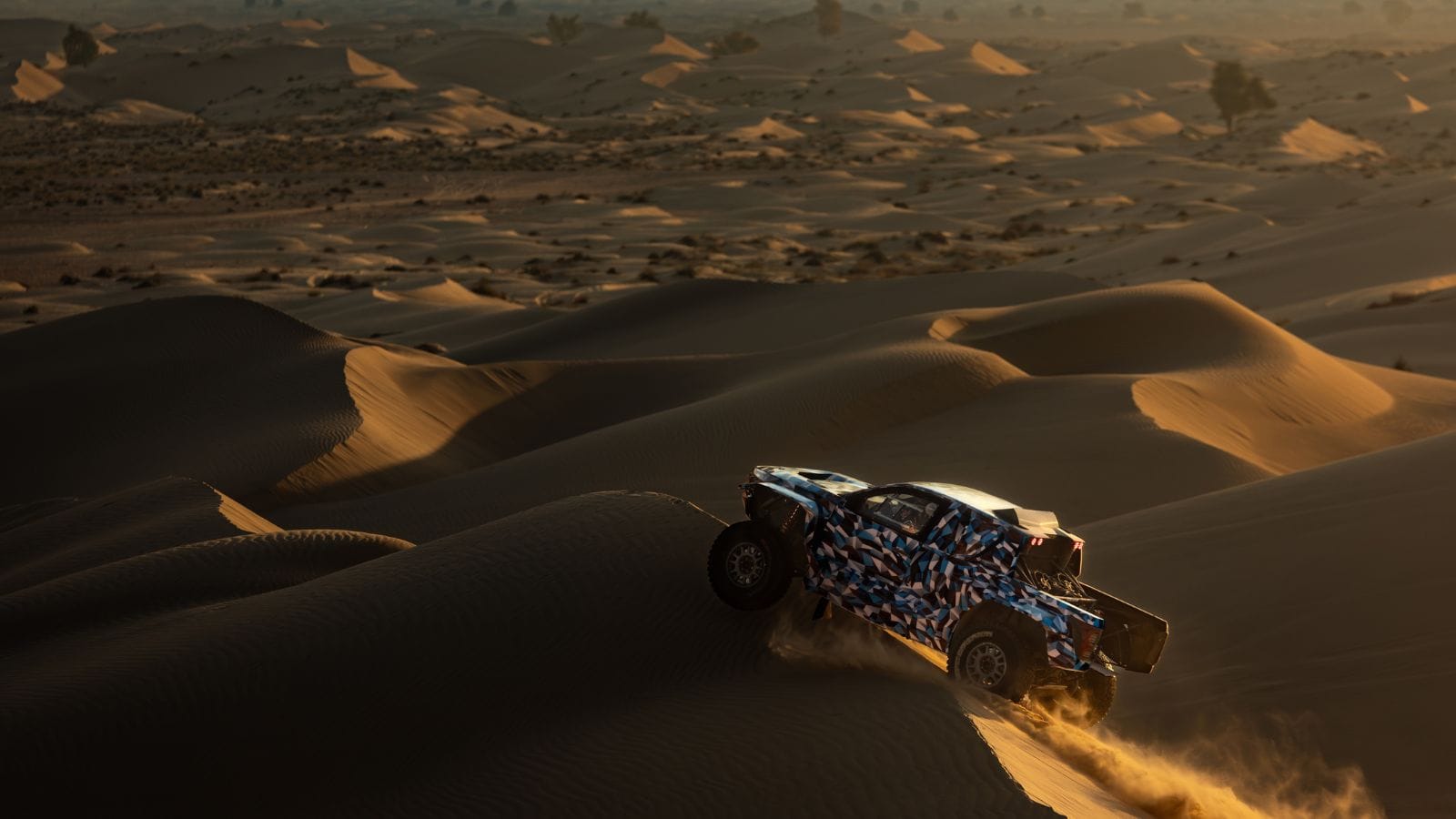
That platform, announced in 2025, targets durability "comparable to diesel engines" and a 20% improvement in range over the current Mirai architecture, with applications spanning passenger cars, heavy-duty trucks, buses, trains, and marine vessels.
Toyota confirmed last November that a production fuel cell Hilux will arrive in 2028. The company has been developing the fuel cell platform at its UK plant in Derby, where 10 prototypes using the Mirai's 128 kW stack have claimed up to 600 km of range. The Dakar entry puts the technology through 1,000 km of desert roughly a year before the road version reaches customers.
Not the first hydrogen at the Dakar
Hydrogen is not new to the rally's experimental category. HySE, a Japanese research association backed by Toyota, Honda, Kawasaki, and Yamaha, entered hydrogen-burning buggies in 2024 and 2025.
The HySE-X2 finished second in class last year and was the only vehicle in its category to complete the full 1,120 km course, with top speeds roughly 20 km/h faster per stage than its predecessor. Both HySE vehicles burned hydrogen in a conventional engine, not a fuel cell.
Fuel cells have reached off-road racing through Extreme H, the FIA-backed series that launched in Saudi Arabia in October 2025 and completed an inaugural 8-team season using Symbio fuel cell and battery powertrains. But Extreme H runs on prepared circuits with controlled refuelling infrastructure - not across 1,000 km of open desert.
Testing of the DKR GR FC Hilux has begun in Belgium, though Gazoo Racing has not yet named a driver or published specifications for the fuel cell system.