World's biggest carmaker buys into hydrogen truck fuel cell maker cellcentric
Toyota has signed a binding agreement to take an equal third of cellcentric, the heavy-duty fuel cell company set up by Daimler Truck and the Volvo Group, with completion expected around the turn of the year.

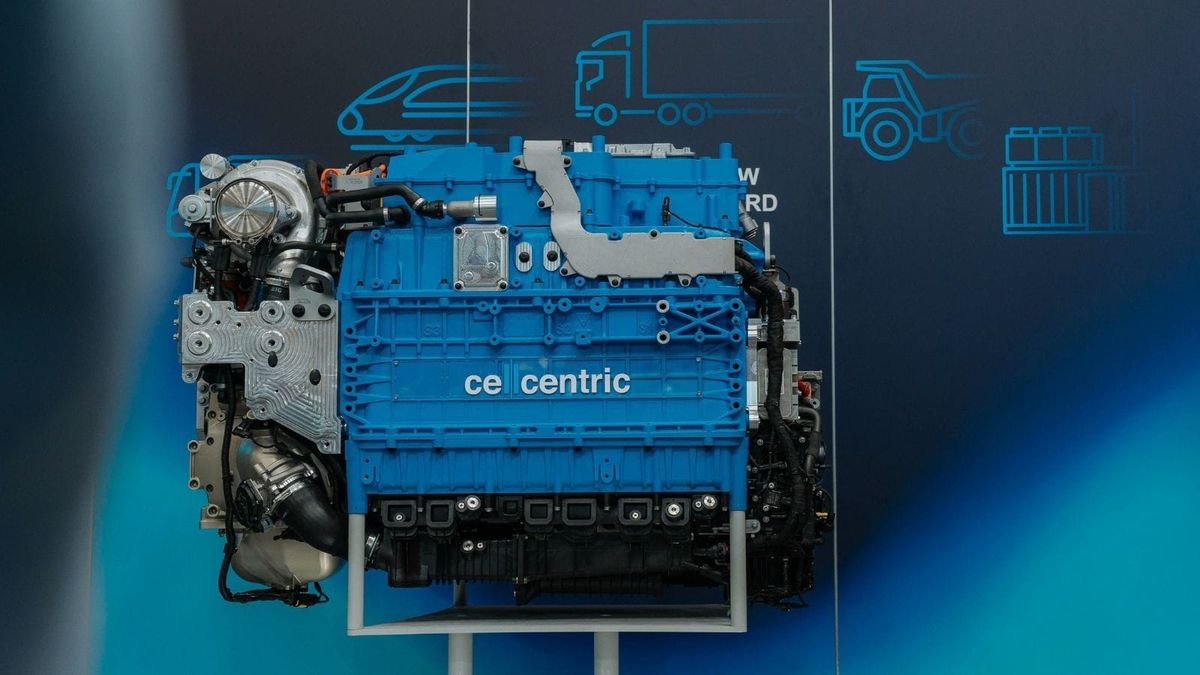
Toyota, Daimler Truck and the Volvo Group have signed a binding agreement for Toyota to take a third of cellcentric, the German company Daimler Truck and the Volvo Group founded in 2021 to develop and build fuel cell systems for heavy vehicles. All 3 will hold equal shares once the transaction completes, which they say they expect around the end of 2026 or the start of 2027, subject to regulatory approval.
No price was disclosed and none of the 4 parties issued comment alongside the announcement. Toyota will pay through a capital increase, according to the outline agreement the companies signed in Tokyo on 31 March, and the Volvo Group said at the time that it expected no significant financial impact from the transaction.
"We are proud that Toyota plans to join cellcentric as a shareholder. This will enable us to strengthen development and further scale hydrogen technology, which we believe complements battery-electric drives in decarbonising transport," Karin Rådström, president and chief executive of Daimler Truck, said in March.
Toyota's cells, cellcentric's systems
The March agreement commits Toyota and cellcentric to jointly manage the development and production of fuel cell unit cells - the individual cells that stack together in their hundreds to make a working system - along with what the companies call directly linked architecture and control elements. Toyota has been developing fuel cells for more than 30 years, almost all of it in passenger cars.
Its third-generation system, announced in February 2025, doubles durability over the previous generation to match a conventional diesel engine and improves fuel efficiency by 1.2 times, according to Toyota. The company designed it for heavy commercial vehicles, stationary generation, rail and ships as well as cars, and says it will reach Japan, Europe, North America and China from 2026 at the earliest.
"We are thrilled to explore this collaboration with Toyota, so that we through cellcentric can accelerate and create critical mass for hydrogen applications," Martin Lundstedt, president and chief executive of the Volvo Group, said in March.
Toyota was already supplying Daimler
Toyota Motor Europe has supplied its fuel cell module to Daimler Buses since a 2022 agreement, for the Mercedes-Benz eCitaro fuel cell. Since 1 April this year Toyota and Daimler Truck have also each held roughly 25% of Archion, the Tokyo-listed holding company formed from Mitsubishi Fuso and Hino Motors. Neither company has said whether Archion's trucks sit within cellcentric's scope.
375 kW and 25,000 hours
cellcentric employs more than 560 people across sites at Kirchheim/Teck, Esslingen and Stuttgart in Germany and Burnaby in Canada, and holds roughly 700 patents. In April it unveiled the BZA375, which the company says produces up to 375 kW of continuous net power in a package weighing under 500 kg and lasts 25,000 hours, or roughly 10 years of heavy-duty work. cellcentric says a fully loaded 40-tonne truck should use under 6 kg of hydrogen per 100 km in real-world driving.
The system already in service is the BZA150, which powers the Mercedes-Benz NextGenH2 Truck using 2 modules for 300 kW of system output. Daimler will build 100 of the trucks in small series with deliveries from the end of this year, and says each covers over 1,000 km on 85 kg of subcooled liquid hydrogen and refuels in 10 to 15 minutes. Germany's federal transport ministry, Rhineland-Palatinate and Baden-Württemberg have put €226m behind the programme.
Series production waits for the end of the decade
Pilot production runs at Esslingen, where cellcentric opened a 10,300 m² plant in June 2024 with the full process chain from ink mixing through to final testing. Volume manufacturing is intended for a larger site at Weilheim/Teck, where the company bought 16 hectares in December 2024 and where it has said it aims to start operations around 2030, aligning the date with EU CO2 legislation. That is later than the 2026 start originally planned, the company having slowed the ramp after the land purchase took longer than expected and hydrogen infrastructure arrived more slowly than the industry had hoped. Series production of the BZA375 is planned for the turn of the decade.
EU rules require new heavy-duty vehicles to cut CO2 by 45% against 2019 levels by 2030, 65% by 2035 and 90% by 2040. The Alternative Fuels Infrastructure Regulation obliges member states to install a hydrogen station every 200 km along the core trans-European road network, and in every urban node, by the end of 2030 - each capable of dispensing at least 1 tonne a day.