BREAKING: JCB Hydromax hits 368 mph on hydrogen, beats own diesel record
JCB's hydrogen Hydromax has hit 368 mph at Bonneville, breaking a 16-year-old class record and eclipsing the company's own diesel land speed benchmark. The engines aren't at full power yet - and an FIA world record attempt is next week.

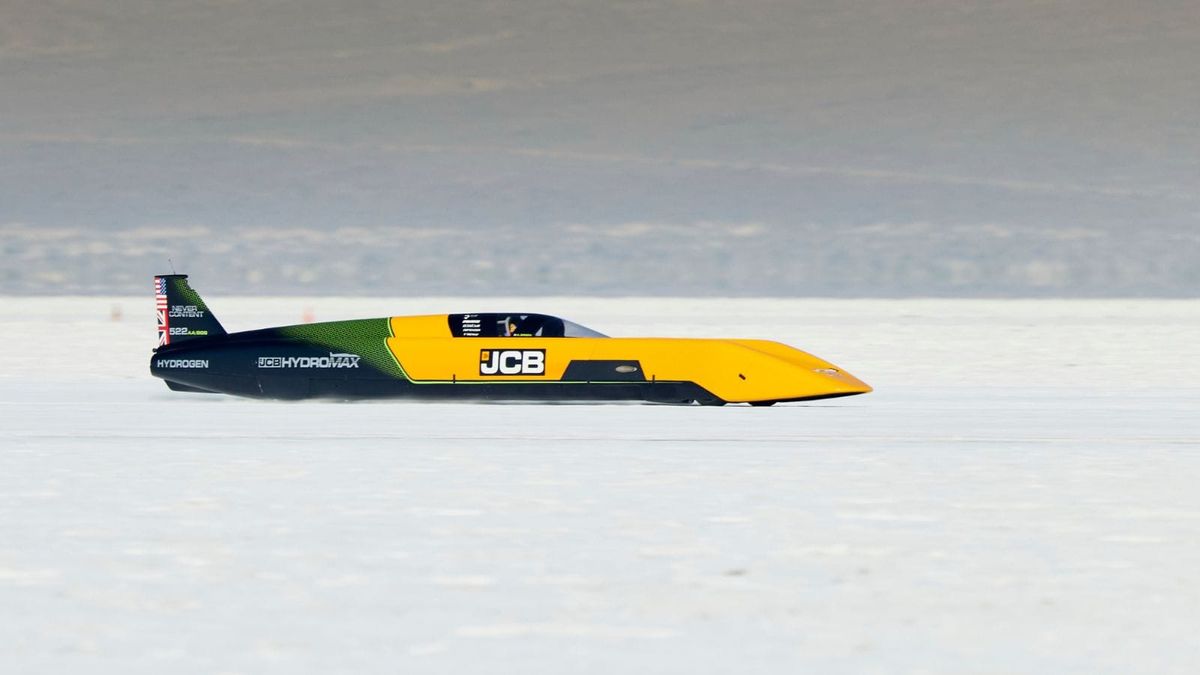
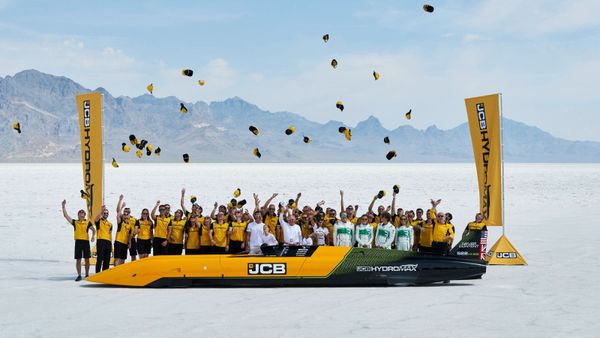
JCB's hydrogen-powered Hydromax streamliner has recorded an average speed of 368.347 mph at Bonneville Speed Week, setting a new class record and surpassing JCB's own diesel land speed record of 350.092 mph, set on the same salt flats 20 years ago by the same driver.
Wing Commander Andy Green OBE drove the 32-foot, twin-engined Hydromax to 367.141 mph on the first day and 369.554 mph on the second, giving an average of 368.347 mph under Southern California Timing Association rules.
The previous record in the SCTA's 'Blown Gas Streamliner' class - 348.342 mph, held by the Spectre Streamliner since 2010 - had stood for 16 years. The SCTA class is defined by engine configuration rather than fuel type, so the hydrogen-fuelled Hydromax competed in what is technically a gasoline category.
Hydrogen beats diesel on the same salt
Green drove the JCB Dieselmax to 350.092 mph on this same course in August 2006 - a diesel land speed record that still stands two decades later. Same driver, same venue, same company's engines, different fuel. The hydrogen car has now outpaced the diesel by 18 mph.
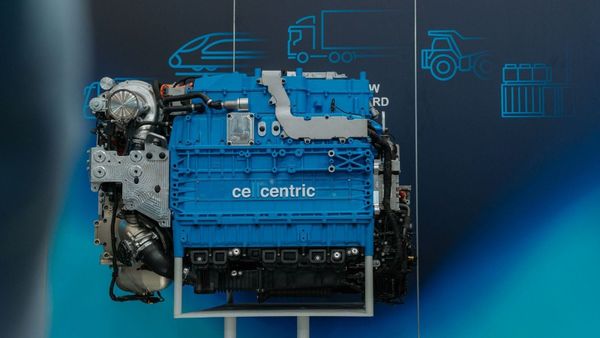
And at 368 mph the engines were not at full power, according to JCB. The two hydrogen internal combustion units share their basic architecture with the 4.8-litre engines fitted to JCB's production 3CX Hydrogen backhoe loader - which produces 74 hp in excavator form - but are tuned to 800 hp each for the streamliner, with a combined ceiling of 1,600 hp that the team says it has not yet reached.
Roughly double the previous hydrogen combustion record
The speed puts the Hydromax well beyond any hydrogen vehicle on record. The fastest FIA-ratified hydrogen combustion benchmark is BMW's H2R at 186.52 mph, set in 2004 at Miramas in France with a modified V12 producing 232 hp. JCB's run is approximately double that.
Even the Venturi Buckeye Bullet 2, a hydrogen fuel cell streamliner that reached 303 mph at Bonneville in 2009 using an entirely different technology, has been overtaken - and by a pair of engines derived from the powertrains in JCB's diggers.
"With our first record in the bag, we're now turning up the power on the engines, aiming to go even faster next week," Green said.
FIA world record attempt next week
The team is remaining at Bonneville to pursue an officially recognised FIA world record, with the global motorsport governing body overseeing timing and verification. JCB has not disclosed a target speed.
"To reach 368.347 mph is a fantastic achievement for the whole JCB Hydromax team," Lord Bamford said. "This project is about proving that hydrogen power can perform at the very highest level with zero emissions, and today's result is powerful evidence of that."
The Hydromax programme sits within JCB's broader hydrogen engine business. The company has invested £100 million over 5 years in developing hydrogen combustion engines, secured full EU type approval across 10 European countries in 2025, and has produced more than 150 hydrogen engines to date.
Engineering partners Prodrive, Ricardo, and Xtrac supported the build, and the team has completed 44 runs across the test programme - from early outings at 177 mph at RAF Wittering in Cambridgeshire to this week's result on the salt. The record attempt coincides with the planned opening of JCB's $500 million factory in San Antonio, Texas, which the company says will employ 1,500 people.
Each run consumes just over 2 kg of hydrogen, producing approximately 18 litres of water as exhaust.