Hydrogen trucks need €8 fuel to beat diesel, says cellcentric
cellcentric's head of sales tells Hymotive the BZA375 cuts hydrogen consumption below 6 kg per 100 km in a loaded truck - and that somewhere between €6 and €8 per kilo at the pump, the total cost of ownership case against diesel starts to close.

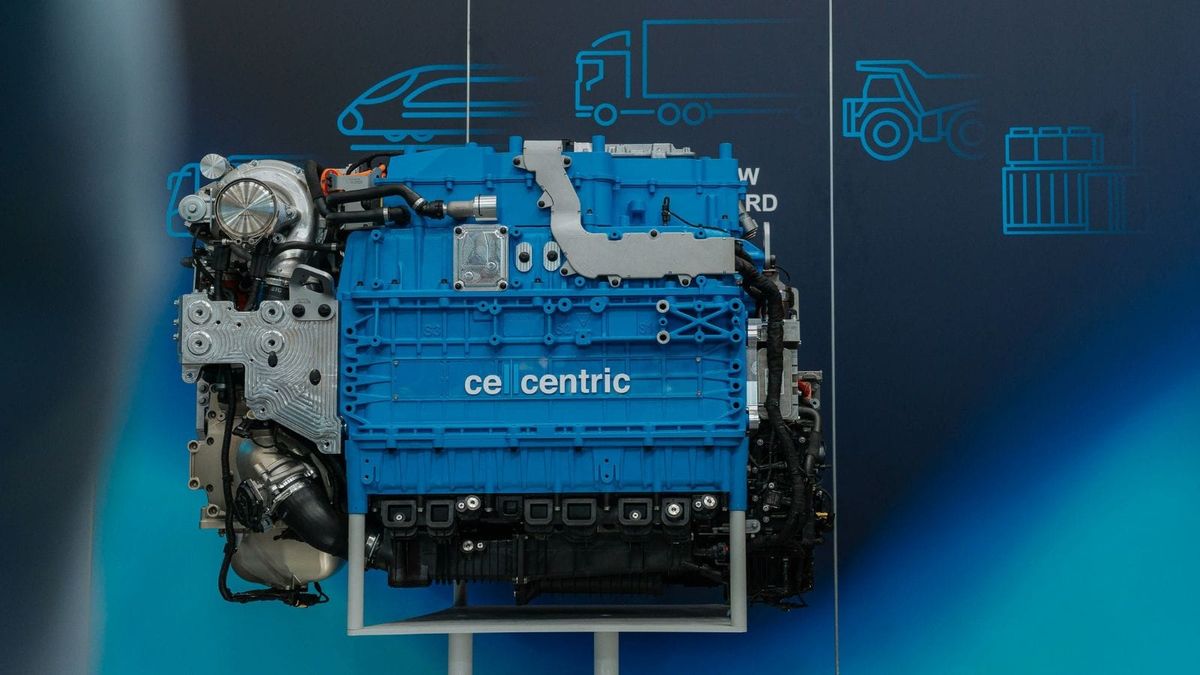
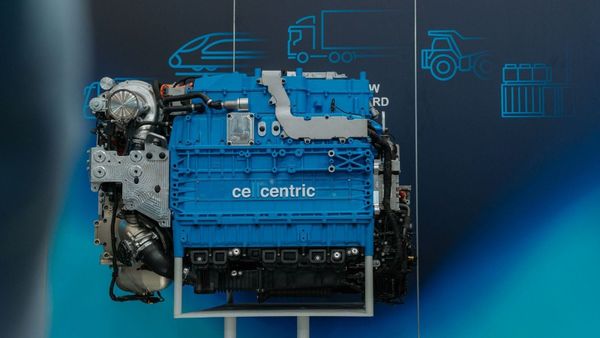
cellcentric, the Daimler Truck-Volvo Group fuel cell joint venture, says its latest BZA375 fuel cell system will get a fully loaded 40-tonne long-haul truck below 6 kg of hydrogen per 100 km under real-world driving conditions - a 20% improvement on the outgoing BZA150 - and that the commercial crossover with diesel begins when hydrogen reaches €6-8 per kilogram at the pump.
Joachim Ladra, cellcentric's head of sales, marketing and communication, told Hymotive that the efficiency gain is the single most important thing fleet operators should take from the new system. "With the specifics of a heavy-duty use case in mind, especially in a truck where it's all about driving, driving, driving in the long-haul segment, that would be efficiency and corresponding fuel consumption numbers," he said, speaking from Hannover Messe where cellcentric had just unveiled the BZA375 to its first public audience.
The BZA150, cellcentric's previous-generation fuel cell, achieves around 7.5 kg of hydrogen per 100 km in the same duty cycle, according to Ladra. That consumption figure already underpins the Mercedes-Benz GenH2 Truck's 1,047 km world record on a single fill of 80 kg of liquid hydrogen - but 7.5 kg per 100 km is expensive when European pump prices for hydrogen remain multiples of what fleet operators would need for TCO parity with diesel.
Getting below 6 kg changes the arithmetic. At €8 per kilogram - the upper end of cellcentric's parity range - a loaded truck covering 600 km would burn roughly 36 kg of hydrogen, costing around €288. The equivalent diesel bill for a 40-tonne truck averaging 30-33 litres per 100 km at €1.50 per litre would land between €270 and €300 for the same distance.
How the BZA375 gets below 6 kg
The efficiency improvement is not the result of a single engineering change, Ladra said, but a compound effect across the entire system architecture.
The most consequential shift is structural. The BZA150 required 2 systems running in parallel to produce 300 kW in a heavy-duty truck. The BZA375 does the job alone, delivering 375 kW of continuous net power from a single unit weighing under 500 kg. That consolidation changes where the system sits on its own efficiency curve - Ladra said the additional headroom allows the operating point to sit in the most efficient part of the power band during steady-state cruising at around 85 km/h, which is where a long-haul truck spends most of its working life.
cellcentric has also redesigned the fuel cell stack in-house - as it did for the BZA150 - and optimised the balance of plant around efficiency. "It's not the one single lever that we apply," Ladra said. "It's a whole gamut of different factors."
The combined result is a system that cellcentric says exceeds 60% peak efficiency, fits inside engine bays designed for 13-litre diesel engines, and maintains the same 25,000-hour durability target as its predecessor - equivalent to roughly 1.2 million km or 10 years of heavy-duty operation.
For comparison, Bosch's competing FCPM C300 delivers 300 kW and has been in volume production since 2023, with several thousand equipped trucks already operating globally. Symbio, the Forvia-Michelin fuel cell venture, demonstrated a 400 kW heavy-duty stack in 2024, though the company has since lost its largest customer after Stellantis exited the joint venture in early 2026. cellcentric's 375 kW puts the BZA375 between the 2, but neither Bosch nor Symbio has published a comparable real-world fuel consumption figure for a loaded heavy-duty truck.
Hydrogen needs to hit €6-8 for trucks to compete with diesel
The breakeven with diesel varies substantially depending on duty cycle, annual mileage, and how hard the truck works, so cellcentric frames it as a range.
The economics start to favour hydrogen at around €8 per kilogram at the pump for high-utilisation applications - fleets running long distances with heavy loads and burning through fuel. For broader adoption across a wider range of duty cycles, the price needs to come down further, to around €6 per kilogram. Ladra said these figures align with the analysis carried out by the Global Hydrogen Mobility Alliance.
Those numbers sit well below where the market is today. The European Commission's fuel price comparison framework, published by the European Alternative Fuels Observatory across 17 member states between Q1 2025 and Q1 2026, found hydrogen was consistently the most expensive transport fuel per kilometre driven. It is also, as the International Energy Agency has noted, the only one whose cost is structurally declining - driven by electrolyser learning curves, falling renewable electricity prices, and production scale that fossil fuels, as a depleting commodity, do not share.
Green hydrogen production in Europe currently costs around €8 per kilogram, according to the EU Agency for the Cooperation of Energy Regulators, with distribution, compression, and retail margin on top. The International Council on Clean Transportation's central estimate puts EU production costs at around €5 per kilogram by 2030.
Ladra acknowledged the gap but pointed to movement on the other side of the equation. "Considering what the oil price is doing at the moment, that certainly helps the case to get even closer and quicker to that tipping point," he said. Rising diesel costs narrow the gap from above while hydrogen production costs are forecast to fall from below - though the pace of both remains uncertain.
Toyota as a third shareholder
The Toyota deal, announced in late March 2026, would bring Toyota Motor Corporation in as an equal third shareholder alongside Daimler Truck and Volvo, replacing the existing 50/50 structure with a three-way split. It remains at the non-binding MoU stage, with binding agreements and regulatory approvals still to come.
Ladra described the intended collaboration as operating on 2 levels. cellcentric and Toyota would jointly develop and produce the unit cell - the core component of the fuel cell stack - pooling what amounts to over 60 combined years of automotive fuel cell expertise between the 2 organisations. cellcentric would then remain the supplier for heavy-duty applications, while Toyota would apply the shared technology pool to passenger cars and light-duty vehicles.
If the deal completes, the world's 2 largest truck manufacturers and the company with arguably the deepest fuel cell manufacturing experience would be sharing development costs and driving volume through a single product platform - the kind of scale that cellcentric needs to bring unit costs, and therefore vehicle purchase prices, down to the levels Ladra's TCO calculations require.
"The hype has gone down - I don't think that's negative"
Ladra has been in the fuel cell space since before cellcentric existed, having helped establish the joint venture from within Daimler's fuel cell division. The correction from the 2022-23 hydrogen hype cycle has, in his view, left a smaller but more credible ecosystem.
"A few players have left the marketplace, that's undisputed," he said. "But the ones that are left, I think we can say they know exactly what they're doing. They have great technology in place, they have great expertise, they have full commitment."
What he values most is that hydrogen has moved from engineering proof-of-concept to commercial viability. "What 2 to 3 years ago still was very much a technically driven discussion now always is associated with a business angle," he said. "We're talking about business plans, we're talking about commercial viabilities revolving around hydrogen projects."
The single change that would most accelerate adoption, Ladra said, is "a stronger and a more stable commitment from the political domain towards hydrogen as an energy carrier and also as a future source of industrial strength and resilience." The technology is ready, the investments have been made, and the companies involved are waiting to start generating revenue on that baseline - but policy volatility is holding back the final investment decisions that would unlock the ecosystem.
cellcentric is currently in the B-sample stage with the BZA375, with prototypes already going out to OEM customers for testing. The Esslingen production facility near Stuttgart is being prepared for C-sample production, and Ladra said the company is targeting full automotive-grade series production by the end of the decade. AFIR, the EU's alternative fuels infrastructure regulation, requires hydrogen refuelling stations every 200 km along the core TEN-T network by 2030 - a deadline that would, in theory, give those first series-production trucks somewhere to fill up.