Scania's 1,000 km hydrogen truck begins Italy's first FCEV road trial
Gruber Logistics will run a fuel cell prototype on commercial freight routes in South Tyrol, carrying loads for Nestlé, P&G, and ABB as part of the EU-funded ZEFES project.

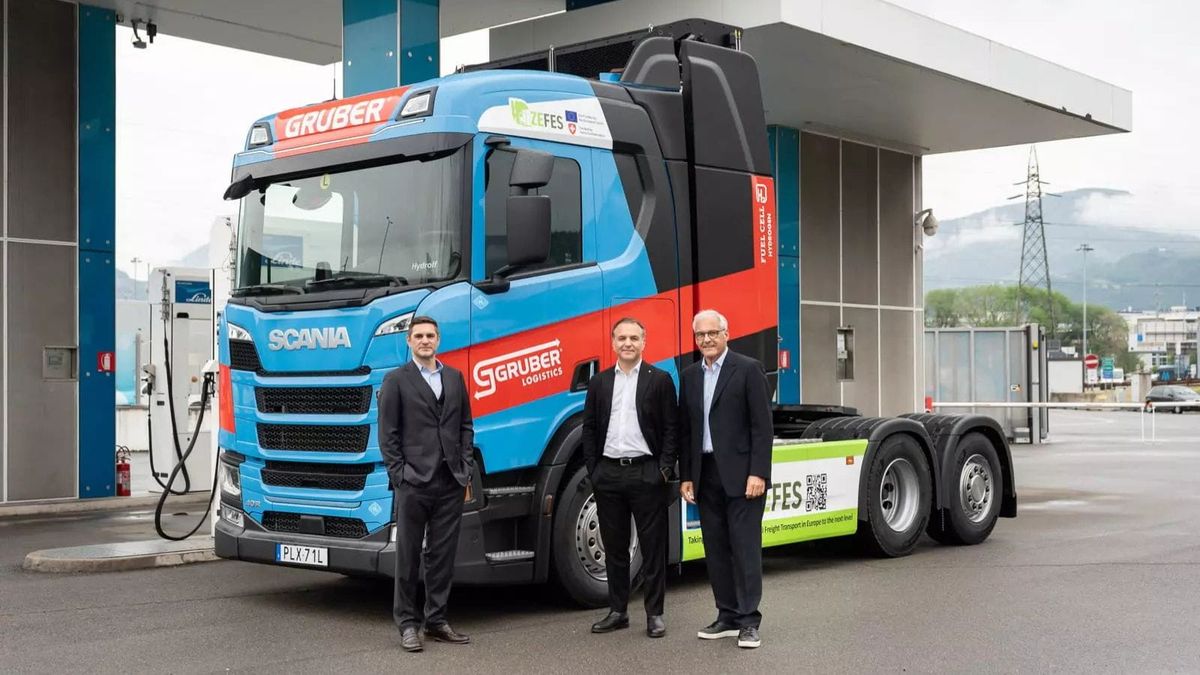
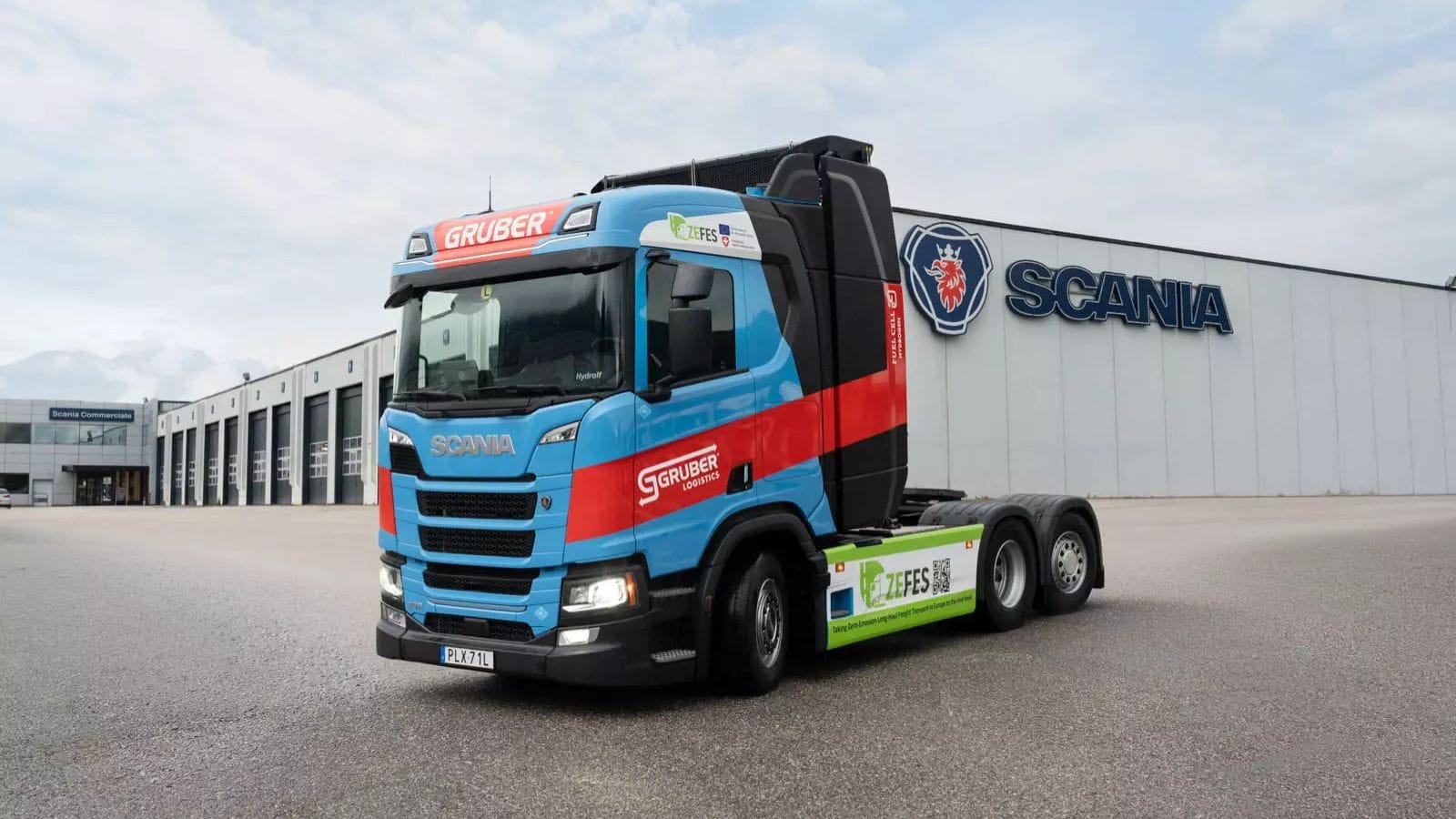
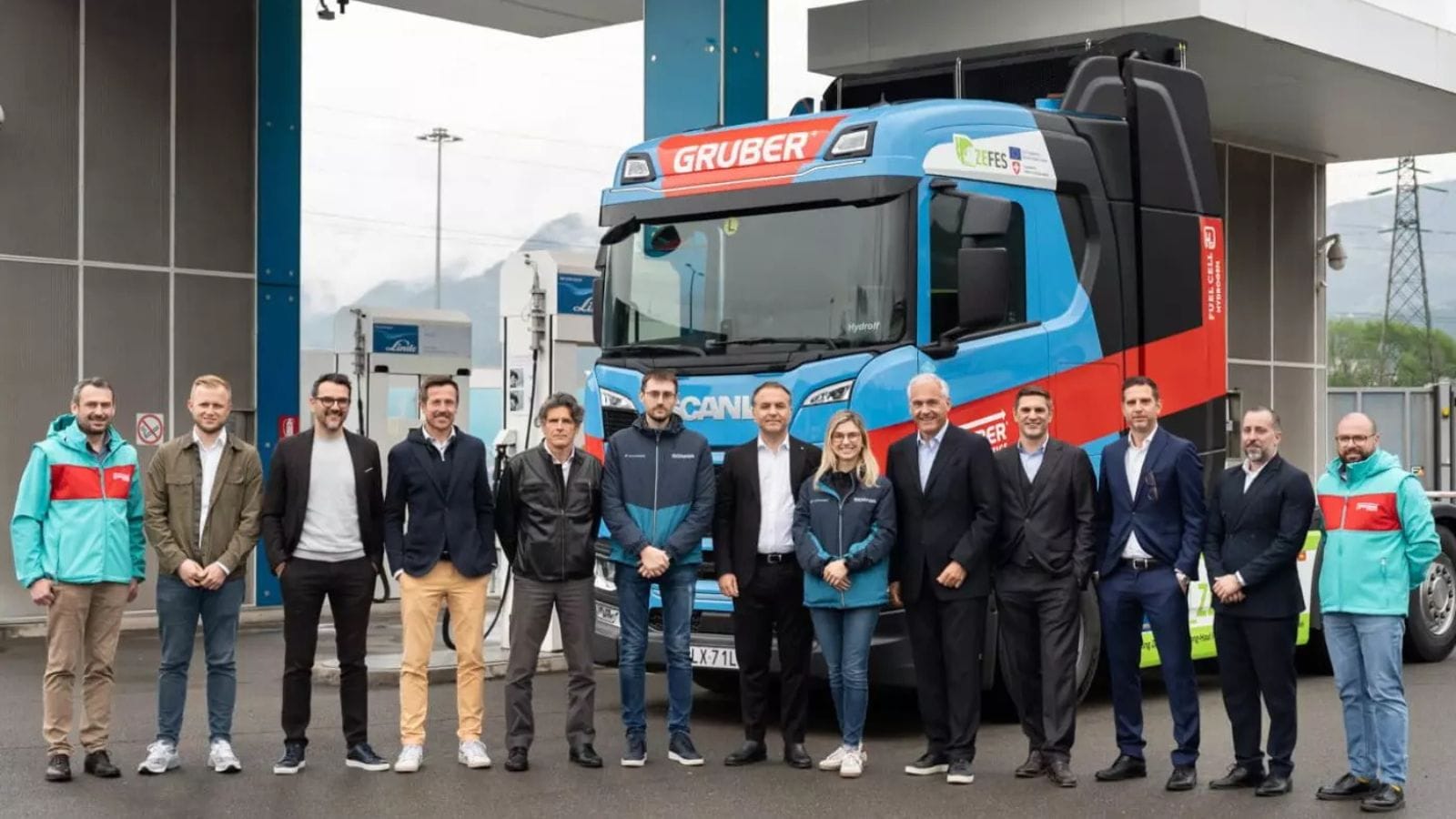
A Scania fuel cell truck that the manufacturer says can cover up to 1,000 km on a single fill has begun real-world freight operations in northern Italy - the first time a hydrogen-powered heavy vehicle has entered road testing in the country. The 3-axle Scania 40R prototype will haul commercial loads for Gruber Logistics, the South Tyrolean operator, on routes through the Alps carrying freight for clients including Nestlé, Procter & Gamble, ABB, Verallia Italy, and local brewer Birra Forst.
The trial is part of ZEFES, a €39 million EU-funded project deploying 9 different zero-emission long-haul truck configurations across Europe - 6 battery electric and 3 fuel cell - with the aim of collecting up to 1 million kilometres of real-world driving data. Forty partners across 14 countries are involved. The Gruber truck is the first FCEV deployment on Italian soil under the programme.
56 kg of hydrogen and a BEV platform underneath
Scania has built the truck on its existing battery electric platform and bolted on the hydrogen hardware - 4 tanks holding 56 kg of compressed hydrogen at 700 bar, feeding a 300 kW fuel cell. The battery pack remains substantial at 416 kWh installed (345 kWh usable), which means the truck can run as a pure battery electric vehicle for around 190 miles even with the hydrogen tanks empty.
With both systems working, Scania says the total range reaches approximately 620 miles (1,000 km) - 430 miles from hydrogen and the remaining 190 on battery alone. Refuelling the hydrogen tanks takes around 20 minutes at a 700-bar, pre-cooled, high-flow dispenser. The electric motor produces 400 kW, and the whole rig weighs in at 13.8 tonnes unladen, leaving a 23-tonne payload at 44 tonnes gross.
Hyundai's XCIENT fuel cell truck - arguably the most established hydrogen heavy-duty vehicle on the market - offers around 250-310 miles of range from a 180 kW fuel cell system. The Mercedes-Benz NextGenH2 Truck, due to enter customer trials later this year with 100 units, is expected to target the same long-haul segment. Scania's 620-mile figure, if it holds across Alpine routes with 23 tonnes on the back, would put it comfortably ahead of both - though the oversized battery contributing nearly a third of the range makes this a somewhat unusual comparison.
A prototype, not a product
Simone Martinelli, Scania's e-mobility sales manager for Italy, said the vehicle is "not optimized in its final configuration" but rather "a transitional solution" that allows the company to evaluate fuel cell behaviour under real conditions while building on its existing electric powertrain work. The next step, according to Martinelli, will be reducing the battery pack - which he described as "currently oversized" - and optimising the layout to save space.
Battery electric transport is Scania's stated primary strategy for decarbonisation. Hydrogen sits within the Pilot Partner programme - a structured collaboration with selected fleet operators designed to generate real operational data rather than signal commercial intent. Scania has previously deployed fuel cell trucks with grocery wholesaler ASKO in Norway and with Explore Transport in the UK, where a prototype entered service under the Department for Transport's ZEHID programme earlier this year.
None of these trucks are available for purchase. They are research tools. But the data they generate on consumption, refuelling logistics, payload capacity, and route feasibility is the evidence base that determines whether and when hydrogen trucks move from pilot to production.
Italy's 2-station problem
Where this truck will actually refuel is another matter entirely. Italy currently has just 2 operational hydrogen stations - in Bolzano and Mestre - and while the government has targeted 5 across northern Italy by the end of 2026, the country is far behind the rollout schedules required under AFIR, the EU regulation that obliges member states to build hydrogen refuelling corridors by 2030. A national call for proposals aimed at funding 40 stations for heavy-duty transport has produced limited visible progress.
Gruber Logistics is based in Ora, near Bolzano - one of the few places in Italy where a hydrogen station already exists. The Brenner corridor connecting northern Italy to Austria and Germany is also attracting infrastructure investment, with operators beginning to expand along the route. A controlled trial with known routes and pre-arranged refuelling can work within these constraints. Anything resembling normal commercial operations cannot, not yet.
Gruber operates more than 750 trucks and has form with alternative fuels - 100 LNG-powered units, a growing number of battery electric vehicles, and the distinction of being the first European logistics company to order 40-tonne hydrogen internal combustion engine trucks. CEO Martin Gruber said the Scania trial would help the company understand "the potential difficulties that a logistics operator must face" with fuel cell technology.
The truck will be on static display at Transpotec 2026 in Milan from 14 May, and at Gruber's Innovation Summit in Bolzano on 27 and 28 May. Real-world data from the trial is expected over the ZEFES project's remaining months.