JCB built a 1,600 bhp hydrogen car to beat its own land speed record
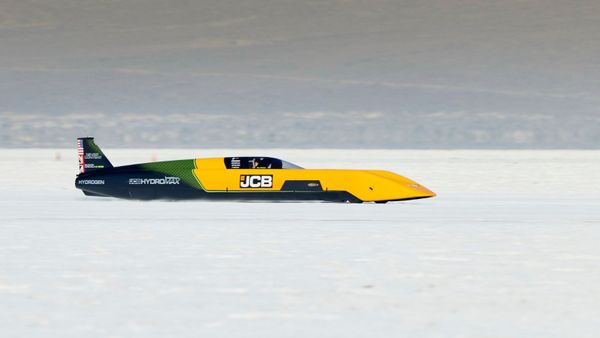
JCB says its 32-foot Hydromax will attempt to exceed 350 mph at Bonneville this August, powered by twin hydrogen combustion engines producing 1,600 bhp - two decades after its Dieselmax set a diesel record that still stands.

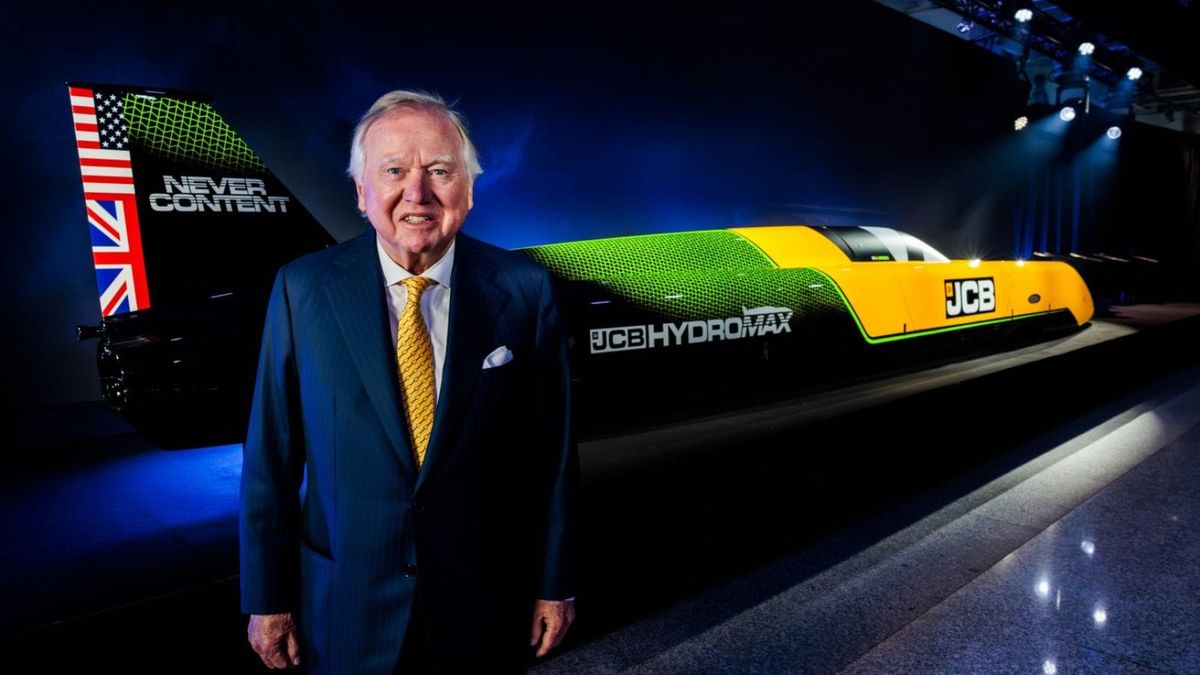
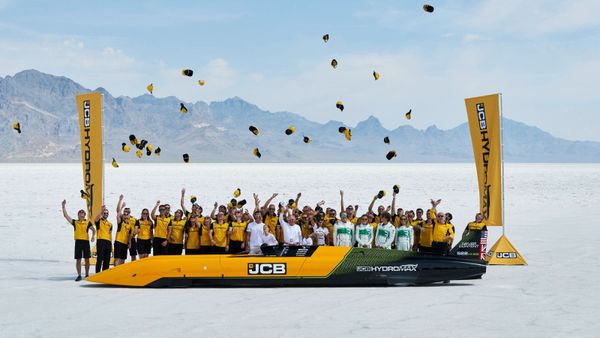
JCB, the Staffordshire construction equipment manufacturer, says it will attempt a new hydrogen land speed record at Utah's Bonneville Salt Flats in August, using a 32-foot streamliner powered by two of its own hydrogen internal combustion engines.
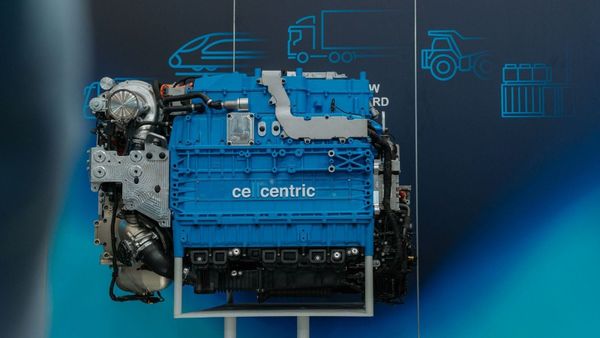
The car - called JCB Hydromax - produces a combined 1,600 bhp from twin production-based H2 ICE units, versions of the same engine technology JCB has spent £100 million and five years developing for its construction machinery. Hydrogen-powered JCB diggers started rolling off the production line earlier this year, and the company is making no secret of the fact that the land speed attempt is, at heart, a demonstration of what those engines can do at the extreme end of the performance envelope.
Wing Commander Andy Green returns to Bonneville
The driver will be Wing Commander Andy Green OBE, who set the existing FIA diesel land speed record of 350.092 mph in JCB's Dieselmax on the same salt flats in August 2006. That record still stands. Green is also the fastest person alive on land, having broken the sound barrier at 763 mph in ThrustSSC in 1997.
JCB's stated target with the Hydromax is to beat 350 mph - which would not only surpass the company's own 20-year-old diesel benchmark but comfortably destroy the current hydrogen land speed record of 303 mph, set by Ohio State University's Venturi Buckeye Bullet 2 in 2009. That car, a student-built fuel cell electric streamliner, has held the hydrogen record for 17 years. JCB intends to take it with combustion engines rather than fuel cells, and at a speed nearly 50 mph higher.
The H2 ICE-specific land speed record is lower still, at around 185.5 mph.
The Dieselmax playbook, replayed with hydrogen
JCB Chairman Lord Bamford, who has driven the company's hydrogen investment, was characteristically direct about the strategy. "Putting an advanced engine into a land-speed car showed the world what it could do in a way a digger never could," he said. "It's the same thinking with hydrogen today."
He added that the speed target was unambiguous. "We intend to beat 350 mph."
It is the same playbook. In 2006, JCB took its production diesel engine, tuned two of them to produce 750 bhp each, and sent Andy Green to Bonneville. The point was never really about diesel land speed racing. It was about proving the engineering in the most visible, unignorable way possible. Twenty years on, the hydrogen programme gets the same treatment - and Green, now 20 years older, gets the same seat.
Prodrive and Ricardo join the effort
The Hydromax project is being supported by Prodrive, the Banbury-based motorsport engineering firm behind Subaru's three World Rally Championship manufacturers' titles and multiple Le Mans class wins, and Ricardo, the powertrain and engineering consultancy. These are serious motorsport partners, and their involvement suggests a level of engineering rigour beyond what a marketing exercise alone would require.
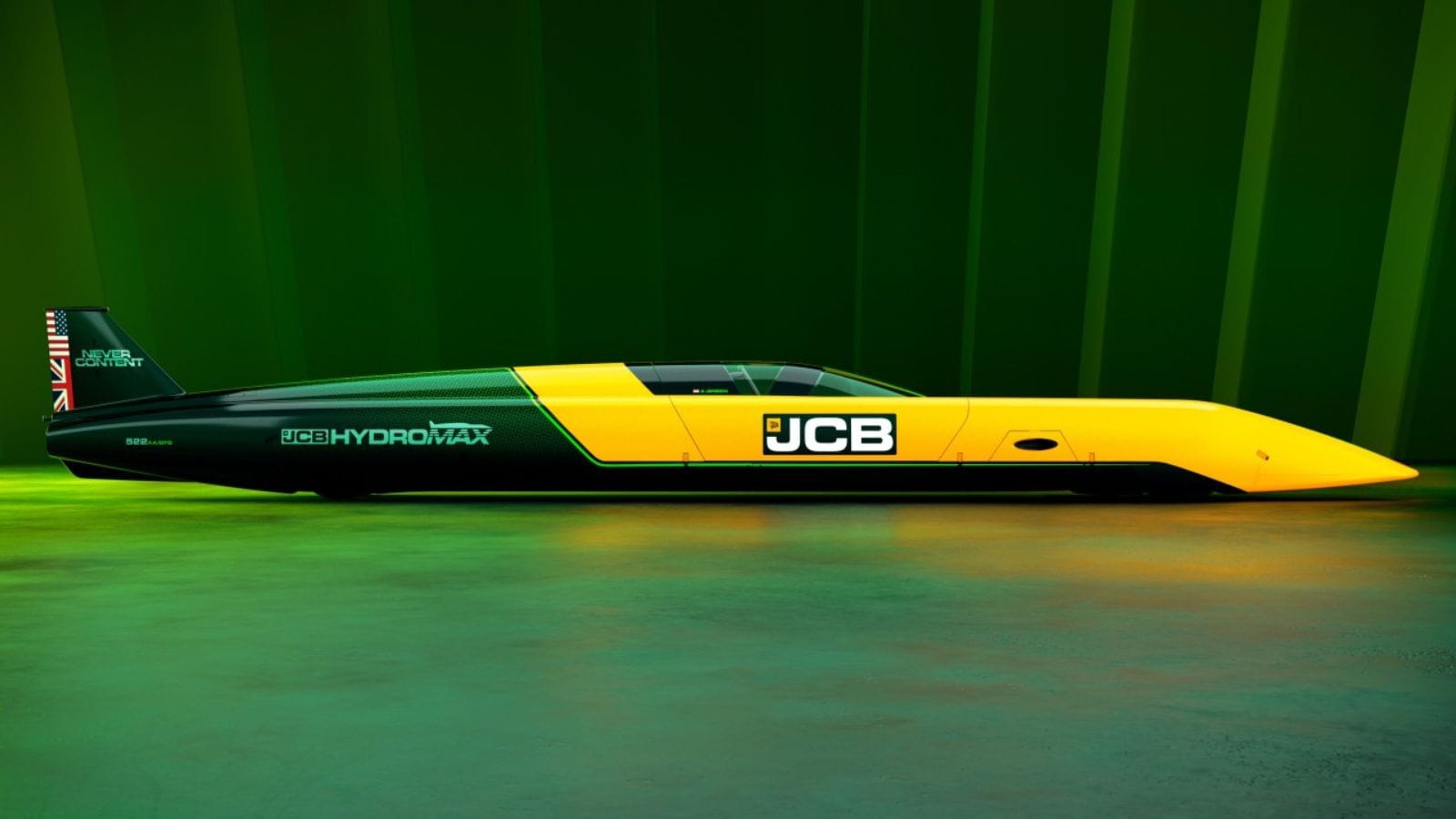
JCB says the Hydromax's engines are production-based, though with a combined output of 1,600 bhp from two units, they have clearly been developed well beyond the 55 kW units fitted to the company's 3CX Hydrogen backhoe loaders.
Testing will begin in the UK before the team travels to Bonneville SpeedWeek, the annual SCTA-sanctioned land speed racing event, in August. The team will then remain on the salt flats for a separate FIA-officiated world record attempt.
How JCB's hydrogen engine programme reached production
The timing of the land speed attempt is not coincidental. JCB's hydrogen combustion engines received EU Stage V type approval across 10 European countries in 2025, and the 3CX Hydrogen backhoe loader - the first production hydrogen-powered construction machine of its kind - has now entered full production. The £100 million programme has moved from R&D to commercial reality, and the Bonneville run is timed to make sure the industry pays attention.
The speed attempt also coincides with the opening of JCB's new $500 million factory in San Antonio, Texas, a one-million-square-foot facility that will employ 1,500 people manufacturing machines for the US market. A land speed record set on American soil, with American media watching, would do the company's North American profile no harm at all.
A company that likes going fast
JCB has form here beyond the Dieselmax. In 2019, the JCB Fastrac was crowned the world's fastest tractor at 135.191 mph. In 2014, the JCB GT set the record for the world's fastest backhoe loader at 72.58 mph. There is, it seems, an institutional reflex at JCB's Rocester headquarters that responds to any new engine programme by asking how fast it can go.
If the Hydromax hits its target in August, JCB will hold land speed records for both diesel and hydrogen - and both achieved with production-derived engines from a company whose core business is moving earth.