Daimler Truck and Kawasaki plan liquid hydrogen corridor to Hamburg
Daimler Truck, Kawasaki Heavy Industries and Hamburg energy firm MB Energy have signed a deal to build a liquefied hydrogen supply chain from production countries to Europe, with commercial operations targeted for the early 2030s.

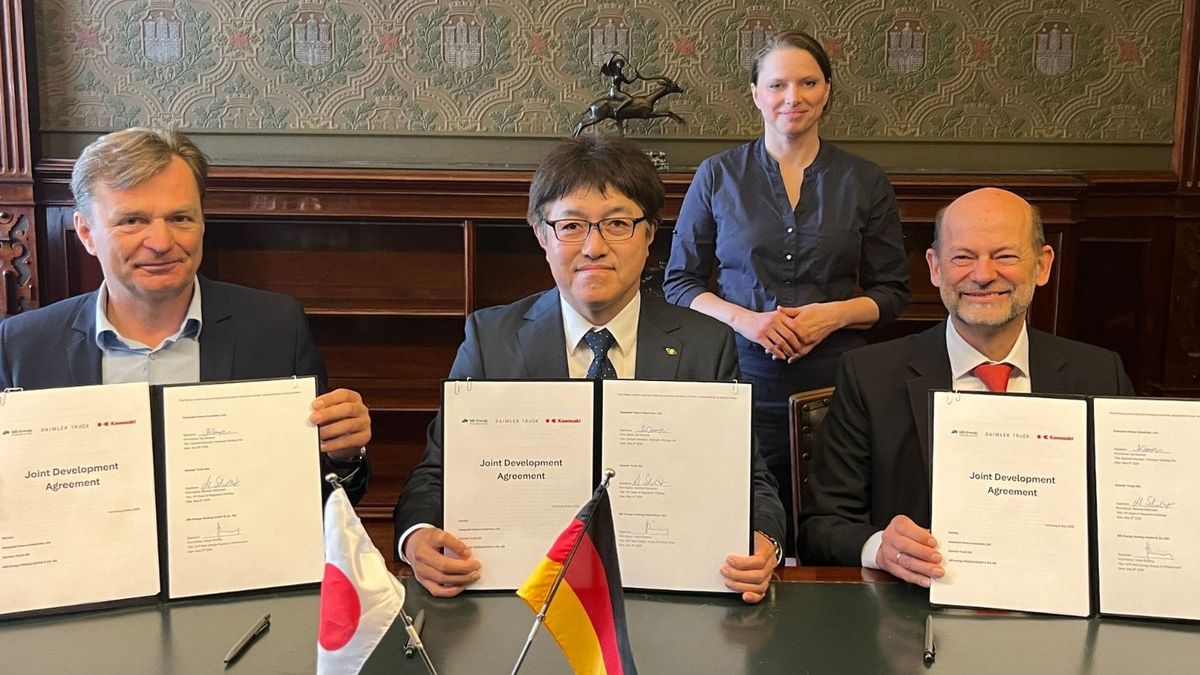
MB Energy, Daimler Truck and Kawasaki Heavy Industries have signed a joint development agreement to establish a liquefied hydrogen supply chain linking hydrogen-producing countries to a receiving terminal in Hamburg - a deal the three firms say could eventually supply fuel to heavy-duty transport operators across northern Europe. The port logistics firm HHLA, which operates Hamburg's container terminals and an extensive European rail freight network, is also part of the broader partnership.
The agreement, signed during the Hamburg Port Anniversary festival on 11 May, formalises work that began with a memorandum of understanding between the German and Japanese partners. It commits the three companies to specific feasibility studies, with a target of reaching commercial operations by the early 2030s - a timeline that conveniently aligns with Daimler Truck's own plans for series production of its hydrogen trucks.
Why liquid hydrogen suits long-haul trucks
The choice of liquid rather than compressed hydrogen is deliberate. Liquid hydrogen, stored at -253C, has roughly 1.8 times the energy density of compressed gas at 700 bar. For a long-haul truck, that translates directly into range. Daimler says its NextGenH2 Truck - which carries 85 kg of liquid hydrogen in cryogenic tanks - should manage more than 1,000 km on a single fill, with refuelling in 10 to 15 minutes. A comparable compressed hydrogen truck would typically manage around 700 km.
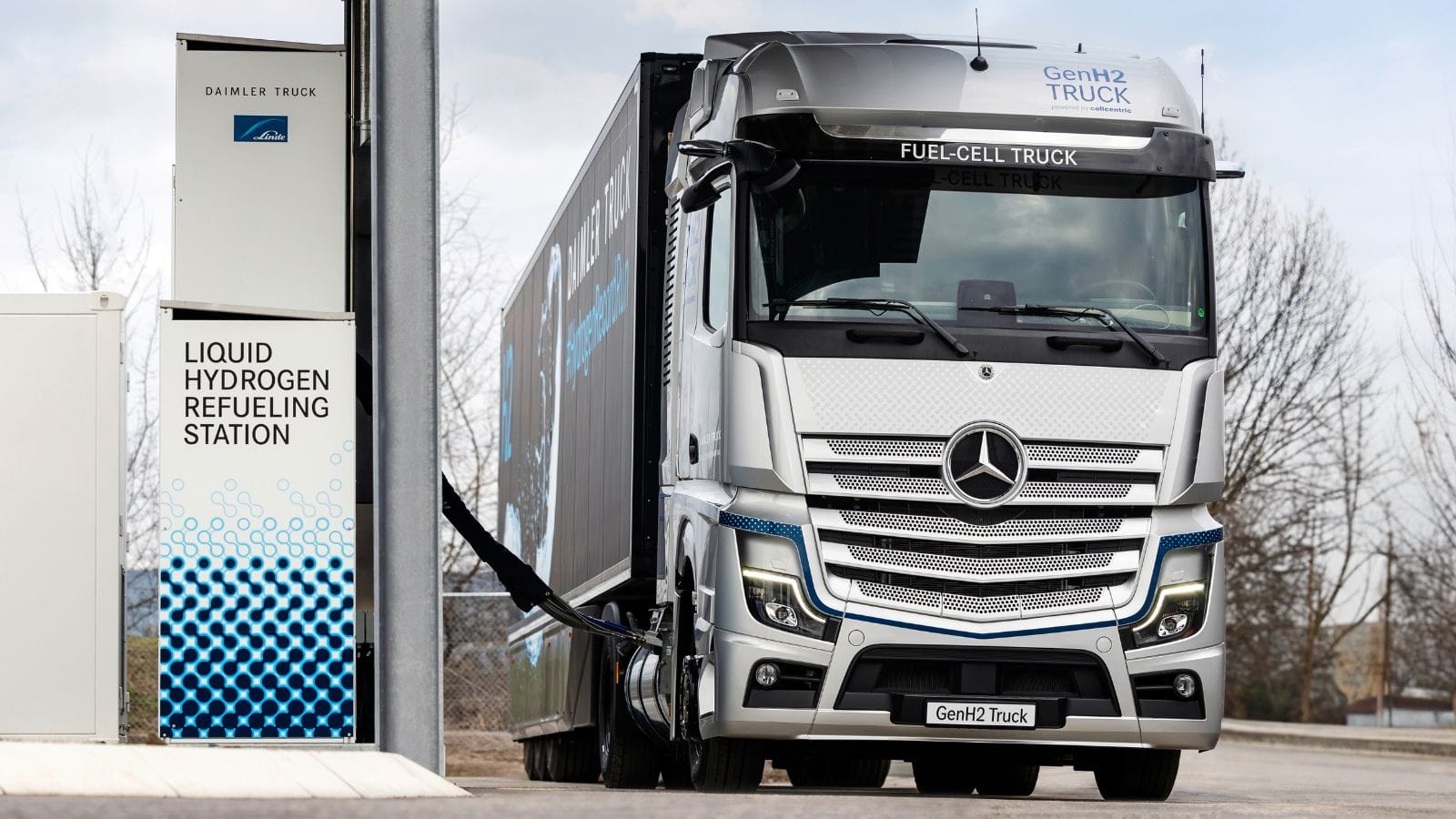
The logistics of getting hydrogen to the truck also favour liquid. Compressed hydrogen tube trailers require roughly 4 times as many delivery trips as cryogenic tankers to move the same quantity of fuel, according to a recent techno-economic comparison published in the International Journal of Hydrogen Energy. Liquid hydrogen can, in principle, be distributed to refuelling stations using the same kind of tanker trucks that deliver diesel today - a point Daimler's head of regulatory strategy, Manfred Schuckert, made explicitly when he said the partnership was needed to shape a supply chain with a focus on feasibility, scalability and long-term impact.
The trade-off is that liquefying hydrogen in the first place requires substantially more energy than compressing it - roughly 10 to 13 kWh per kilogram versus 1.4 to 3 kWh for compression. The economics only work at scale, which is precisely what this agreement is designed to test.
Each partner's role in the chain
The structure of the deal maps neatly onto the supply chain it is trying to build. Kawasaki brings the shipping technology - the company is already constructing a 40,000 cubic metre liquefied hydrogen carrier, some 32 times the capacity of the Suiso Frontier, the small demonstration vessel that completed the world's first liquid hydrogen sea crossing between Australia and Japan. Kawasaki is also building a 50,000 cubic metre liquid hydrogen storage tank at its terminal in Kawasaki City, which it describes as one of the largest in the world.
Launching ceremony for liquefied hydrogen carrier "Suiso Frontier"
MB Energy, the recently rebranded Hamburg energy group formerly known as Mabanaft, handles the European end. The company operates 13 tank storage facilities across Germany, Hungary and Denmark with a combined capacity of 2.9 million cubic metres, and says it plans to convert sites at key logistics hubs for liquid hydrogen. Its existing service station network - inherited from decades in the petroleum business - gives it a distribution footprint that most hydrogen-only startups lack.
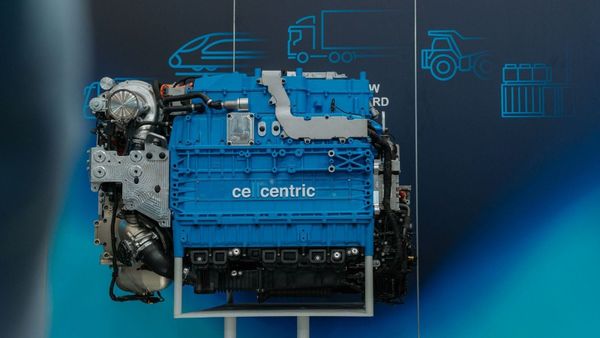
Daimler Truck provides the demand. The company intends to put 100 NextGenH2 trucks into customer operations from late 2026, manufactured at its plant in Worth, Germany. The programme is backed by 226 million euros in funding from the German federal transport ministry and the states of Rhineland-Palatinate and Baden-Wurttemberg. Each truck runs twin BZA150 fuel cell units from cellcentric - the Daimler-Volvo joint venture that Toyota agreed to join as a third equal shareholder in March 2026 - producing a combined 300 kW.
HHLA's contribution is the onward distribution network. The company's rail subsidiary Metrans operates intermodal freight services across Europe, and HHLA is already involved in a separate but related project - the world's first liquid hydrogen import corridor from Oman, signed in April 2025, which aims to begin deliveries to Amsterdam and Germany by 2029.
Hamburg's bid to become Europe's hydrogen port
The agreement positions Hamburg as a central node in what the partners hope will become a European liquid hydrogen distribution network, with road and rail connections fanning out into the continental hinterland. It is not the only city with this ambition - Rotterdam and Amsterdam are both pursuing hydrogen port strategies - but Hamburg's advantage is that it already has multiple complementary projects converging on the same location.
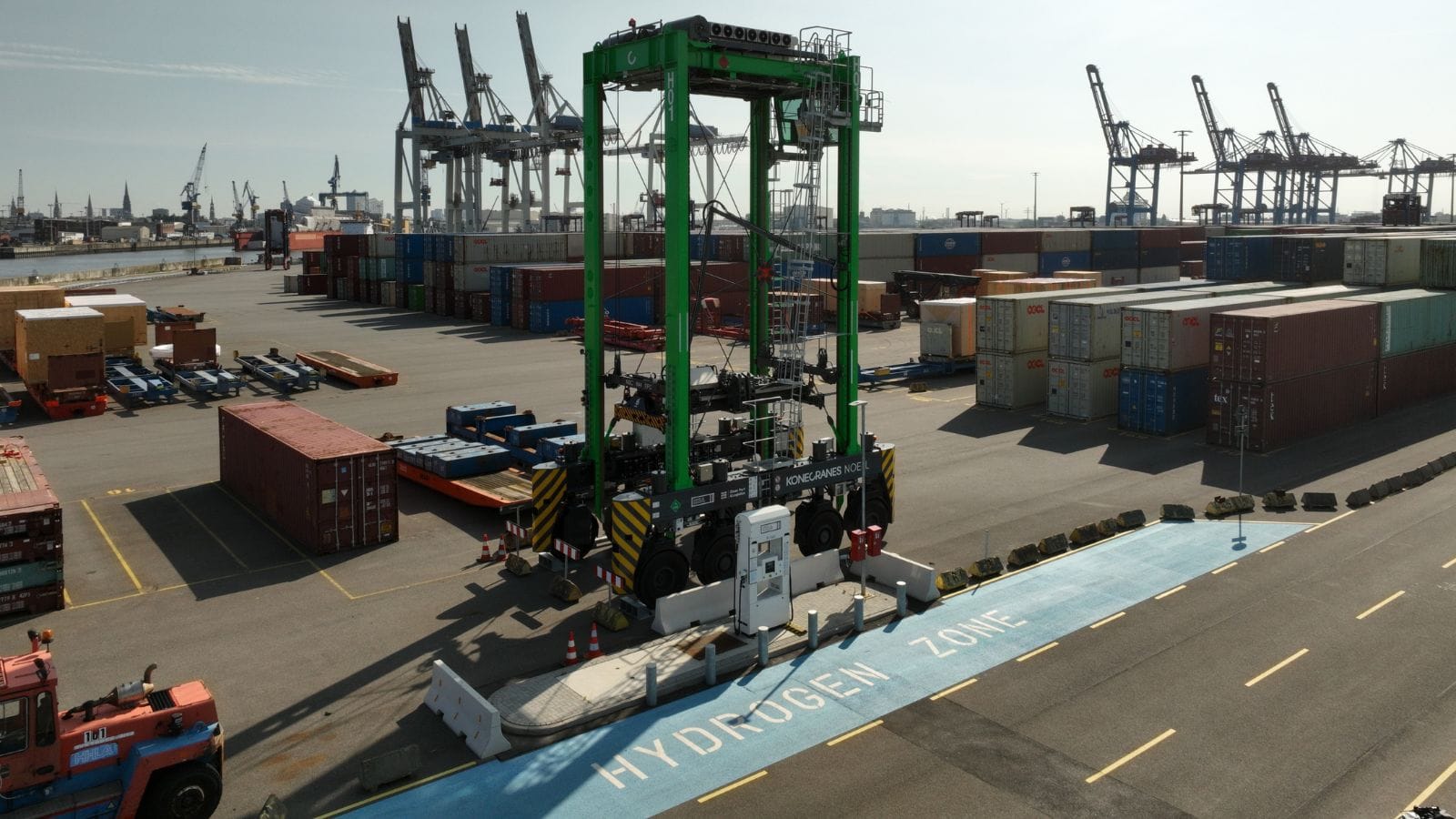
Beyond this partnership, the port is home to a 100 MW electrolyser being built by Hamburg Energiewerke at the Moorburg site, scheduled for commissioning in 2026. Oiltanking Deutschland, now rebranded as enport under the MB Energy group, is building Germany's first green ammonia import terminal at its Blumensand tank farm, with loading facilities for both liquefied and gaseous hydrogen. And HHLA has been testing hydrogen-powered straddle carriers at its Container Terminal Tollerort.
The timeline and what it depends on
The early 2030s target for commercial operations is still more aspiration than certainty. The agreement commits the partners to feasibility studies, not construction. And the commercial viability of imported liquid hydrogen will depend on production costs in exporting countries, shipping economics at scale, and whether European demand materialises as the regulatory framework assumes it will.
On the demand side, at least, the regulatory direction is set. The EU's Alternative Fuels Infrastructure Regulation requires member states to install hydrogen refuelling stations every 200 km along the TEN-T Core network by the end of 2030, with each station capable of dispensing at least 1,000 kg per day. That infrastructure will need fuel. Daimler's 100 NextGenH2 trucks, arriving from late 2026, are a small fleet by commercial standards - but as a proof of concept for liquid hydrogen in daily haulage operations, they will generate data that no simulation can replicate. A GenH2 prototype already covered 1,047 km on a single tank of liquid hydrogen across Germany in 2023, and a fleet of 5 prototypes has since accumulated more than 225,000 km in real customer operations.
With Toyota now inside cellcentric and the BZA375 next-generation fuel cell system already in prototype production at Esslingen, the technology pipeline is advancing even if full series production remains targeted for the end of the decade. The supply chain to feed those trucks is the piece that has, until now, received the least attention. This agreement is an attempt to close that gap - though whether it does so on schedule will depend on factors well beyond the control of any single partnership.