Teva puts first hydrogen truck to work on 2,000 km weekly pharma runs
Pharmaceutical group Teva has deployed an IVECO S-eWay Fuel Cell truck through hylane's pay-per-kilometre rental model for ratiopharm medicine deliveries from Ulm.

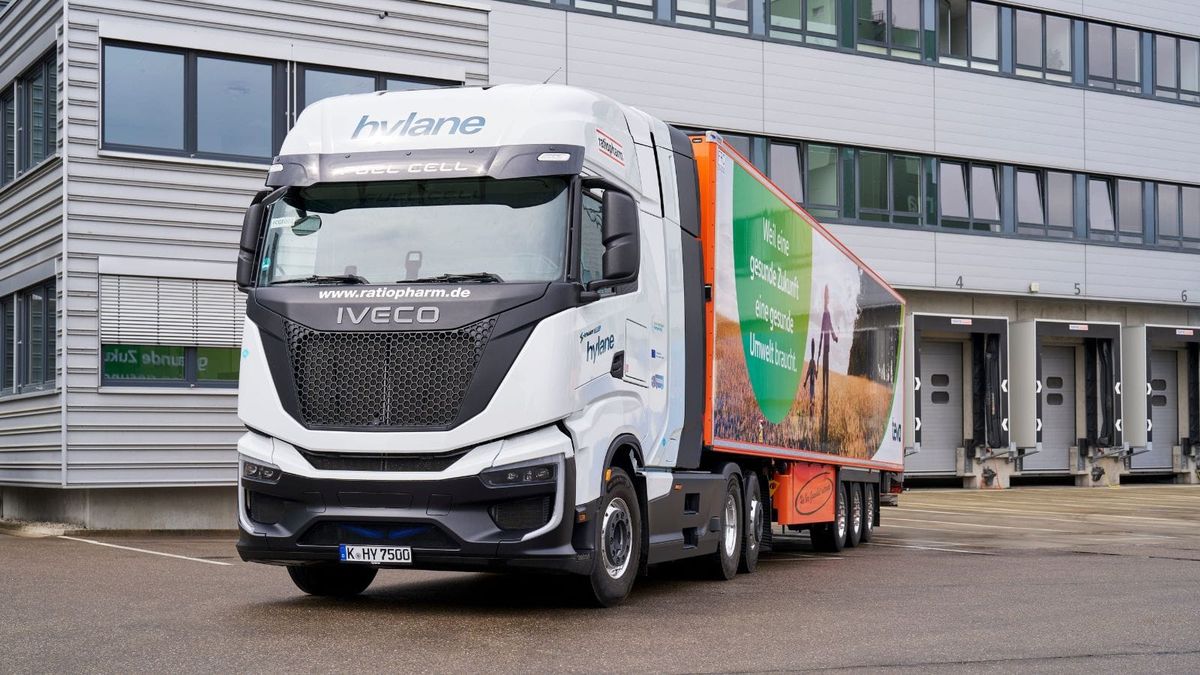
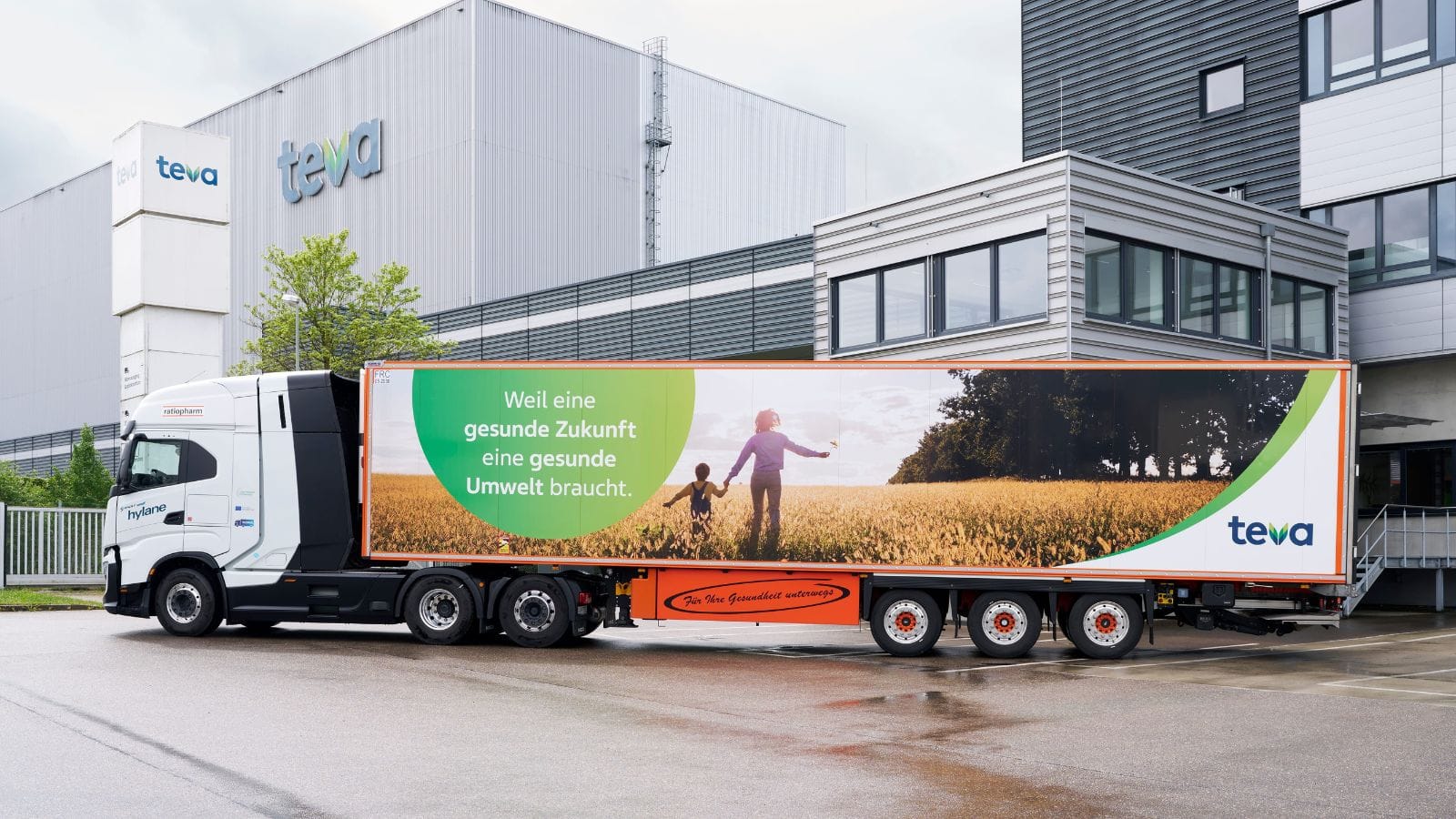
Teva, the pharmaceutical group behind Germany's ratiopharm brand, has put its first hydrogen-powered truck into service on medicine delivery routes across southern Germany, the company has confirmed.
The truck - an IVECO S-eWay Fuel Cell tractor unit supplied by hylane, Germany's largest hydrogen truck rental operator - will cover up to 1,250 miles (2,000 km) per week on a mix of regional runs around Ulm and longer hauls to Nuremberg, Munich, Stuttgart, Heidelberg and Bamberg. Teva's German operation runs a fleet of more than 80 trucks and trailers, delivering around 450,000 pallets of pharmaceuticals per year.
The deployment uses hylane's pay-per-kilometre rental model, which bundles the vehicle, driver training, registration, maintenance, insurance, tyres and vehicle return into a single per-km rate. The customer pays only for kilometres driven and hydrogen consumed - no upfront capital investment required.
500 miles on a single fill
The IVECO S-eWay Fuel Cell carries 70 kg of compressed hydrogen at 700 bar, feeding a fuel cell system producing over 200 kW. Total system output sits at 400 kW, with a gross vehicle weight of 44 tonnes. IVECO claims a range of around 500 miles (800 km) and a refuelling time of under 20 minutes - comparable to a conventional diesel stop.
The truck will run predominantly on RFNBO-certified green hydrogen, produced from renewable energy sources under the EU's Renewable Energy Directive. Germany's own RFNBO mandate, which came into force in 2026, requires a proportion of transport energy to come from certified renewable fuels of non-biological origin.
Toll savings and €8 hydrogen narrow the diesel gap
Hydrogen trucks in Germany are currently exempt from the country's distance-based LKW-Maut road toll - an exemption extended to run until June 2031. For operators running significant weekly mileage, that toll saving narrows the cost gap with diesel considerably.
hylane, which is backed by Cologne-based insurer DEVK, has also secured hydrogen pricing of around €8 per kilogram at selected stations operated by H2 Mobility, the German hydrogen refuelling network, since January 2026 - a level the company says delivers total cost of ownership parity with diesel on long-haul routes.
The Cologne-based rental company now counts Hermes, DB Schenker, REWE, GLS and DHL alongside Teva among its customers, and has expanded beyond hydrogen to include battery-electric trucks in its fleet - deploying Mercedes-Benz eActros 600 units for DHL under the same pay-per-use model.
"Reliability and flexibility are critical in pharmaceutical logistics," said Dr Sara Schiffer, hylane's founder and CEO. "The deployment at Teva shows that hydrogen trucks can already meet these requirements. Our aim is to make the switch to zero-emission commercial vehicles as straightforward as possible - with a flexible usage model and without the barriers of high upfront investment."
Andreas Burkhardt, Teva's senior vice president for Germany, the UK, Benelux, Ireland and Scandinavia, said the hydrogen truck was "a further important building block" in the company's efforts to trial low-emission transport. "In pharmaceutical logistics, reliability, flexibility and range are what count - and we see real potential to meet these demands with new technologies," he said.
Teva added its first battery-electric truck in 2023, charged via rooftop solar at its Ulm logistics centre. The hydrogen deployment extends that approach to routes where range and refuelling flexibility are the priority.