Toyota signs deal for 40 hydrogen trucks built from Nikola's remains
Toyota says it will deploy 40 fuel cell Class 8 trucks from Hyroad Energy - the company that bought Nikola's hydrogen fleet out of bankruptcy for $3.85m - to haul freight in Southern California.

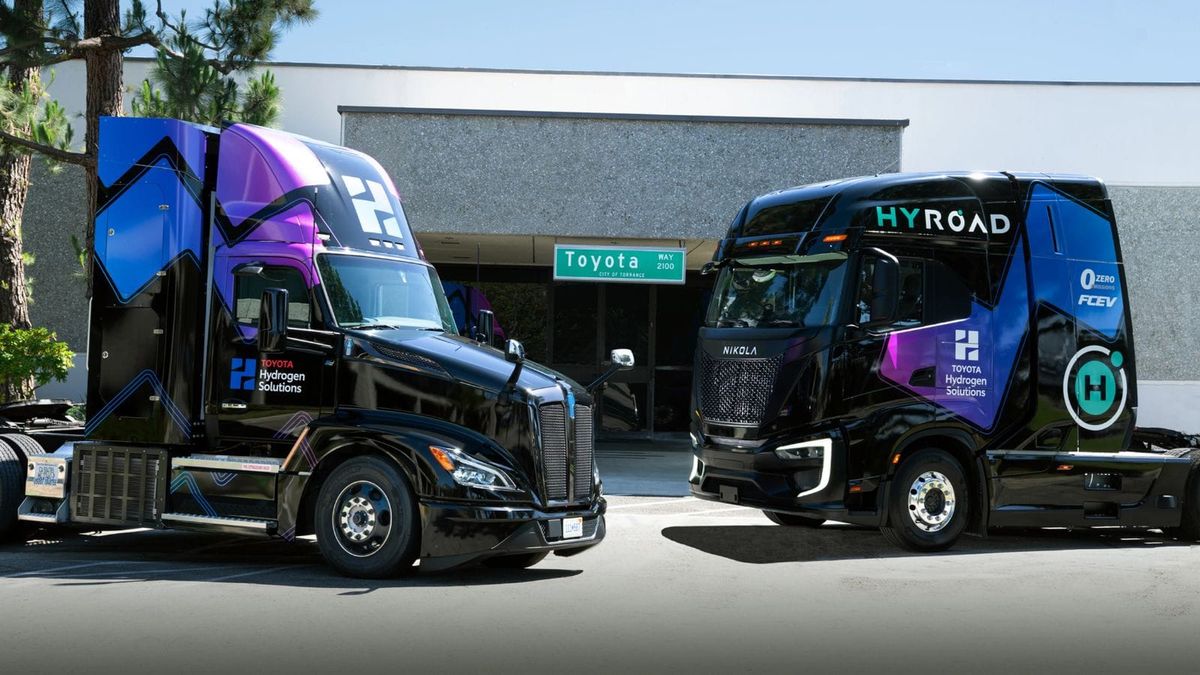
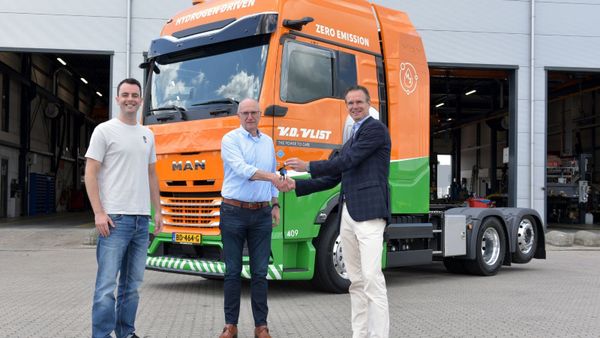
Toyota Motor North America has signed a definitive agreement with Hyroad Energy to deploy 40 hydrogen fuel cell Class 8 trucks in Southern California, the two companies announced at ACT Expo - North America's largest fleet technology event - on 4 May. Hyroad will provide the trucks, maintenance, fleet software and data services. Toyota will supply the hydrogen, drawn from its own refuelling infrastructure currently under construction in Ontario, California.
Hyroad acquired those trucks - 113 fuel cell Nikola Tre semi-trucks in total, along with spare parts, software platforms and intellectual property - from Nikola Corporation's bankruptcy auction in August 2025, paying $3.85 million for assets the bankruptcy court valued at over $114 million. That is roughly 3 cents on the dollar, or about $34,000 per truck for vehicles that listed at several hundred thousand dollars each.
Iveco's truck, Bosch's fuel cells, Nikola's badge
Nikola's earlier truck concepts - the One and the Two - were the company's own designs. The One, unveiled in 2016, became infamous after Hindenburg Research revealed in 2020 that a promotional video showing it apparently driving under its own power had in fact been filmed rolling downhill. The Two, a sleeper-cab long-hauler claiming 900 miles of range, never reached production. Founder Trevor Milton was convicted of securities fraud and wire fraud in October 2022, the company filed for Chapter 11 protection in February 2025, and Milton received a presidential pardon from Donald Trump the following month.
The Tre - the truck Hyroad bought - was not a Nikola design. When Nikola partnered with Iveco in 2019, it abandoned the bespoke approach and adopted Iveco's S-Way cab platform, a European cabover tractor that Iveco had been manufacturing since that year. Bosch fuel cell power modules provide the hydrogen drivetrain, with FPT Industrial e-axles handling propulsion. The Tre was the first Nikola product built substantially from established suppliers' hardware rather than in-house designs, and it was the only one that made it into paying customers' hands. The FCEV variant is rated for approximately 500 miles of range with a 15-20 minute refuelling time, according to Nikola's published specs.
When Iveco and Nikola dissolved their European joint venture in 2023, Iveco took full ownership of the Ulm manufacturing facility, rebranded it EVCO, and continued producing the same truck under its own badge - the Iveco HD FCEV, which it sells in Europe with a claimed 800 km range. Nikola retained the S-Way licence for North America and the component supply agreements. The platform, in other words, outlived the company that put its name on it - and is still in production on a different continent under a different brand.
Hyroad operates as an OEM-agnostic fleet services company rather than a manufacturer. Its model bundles the truck, maintenance and fleet management software into a single commercial package - where Nikola was trying to be truck maker, hydrogen producer, infrastructure developer and fleet operator simultaneously, Hyroad runs the trucks and Toyota supplies the fuel.
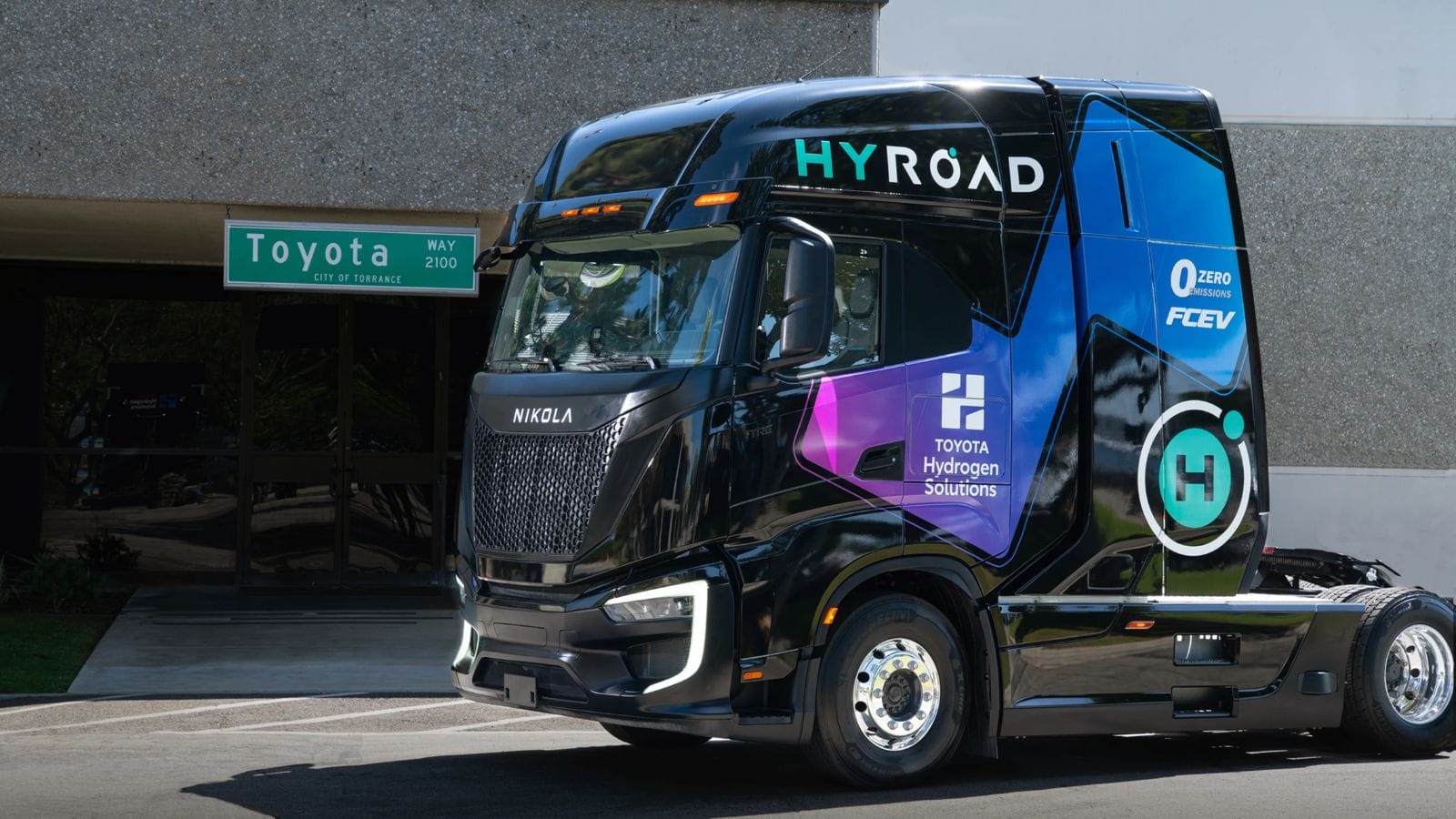
Toyota's longer history in Southern California hydrogen trucking
Toyota has been running hydrogen trucks in Southern California since 2019, when it and Kenworth deployed 10 jointly developed fuel cell T680s to move cargo from the ports of Los Angeles and Long Beach under a $41 million grant from the California Air Resources Board. Those trucks managed around 300 miles per fill - the Hyroad deal is 4 times the fleet size and claims roughly 200 miles more range per truck.
Toyota is also building the refuelling infrastructure to support the fleet, with a station under development in Ontario, California. The company says this gives it control over the full hydrogen supply chain for the operation, from fuel production to the truck's tank.
How the specs sit against battery-electric Class 8 trucks
On range, the Nikola Tre FCEV and Tesla Semi both claim 500 miles - though the Semi needs around 30 minutes on a proprietary Megacharger to reach 80%, where the Tre refuels in 15-20 minutes. The Freightliner eCascadia manages roughly 230 miles on a charge that takes around 90 minutes. In a PepsiCo fleet trial that included both technologies, Tesla's best-performing Semi averaged 574 miles per day while a Nikola Tre BEV managed 255.
Hyundai's Xcient Fuel Cell tractor, the other notable hydrogen Class 8 entrant in North America, claims around 450 miles of range with a similar refuelling time. Daimler Truck's GenH2 prototype has reportedly exceeded 660 miles at 80,000 lb gross vehicle weight, though that vehicle is not yet in commercial service.
40 trucks on Toyota's books
Toyota's initial deployment is 40 of the 113 trucks Hyroad acquired, with the remaining 70-odd without announced customers. California's regulatory environment, despite the partial rollback of the Advanced Clean Fleets rule for private operators, still requires state and local government fleets to purchase zero-emission trucks from 2027 - and the hydrogen refuelling infrastructure Toyota is building in Ontario will outlast this initial contract.