H2 MOBILITY brings hydrogen deliveries in-house as it pivots to trucks
Europe's largest hydrogen station operator has put the first 2 of 6 new tube trailers into service - each carrying 1,200 kg, and owned by H2 MOBILITY itself rather than the gas producers that conventionally dispatch them.

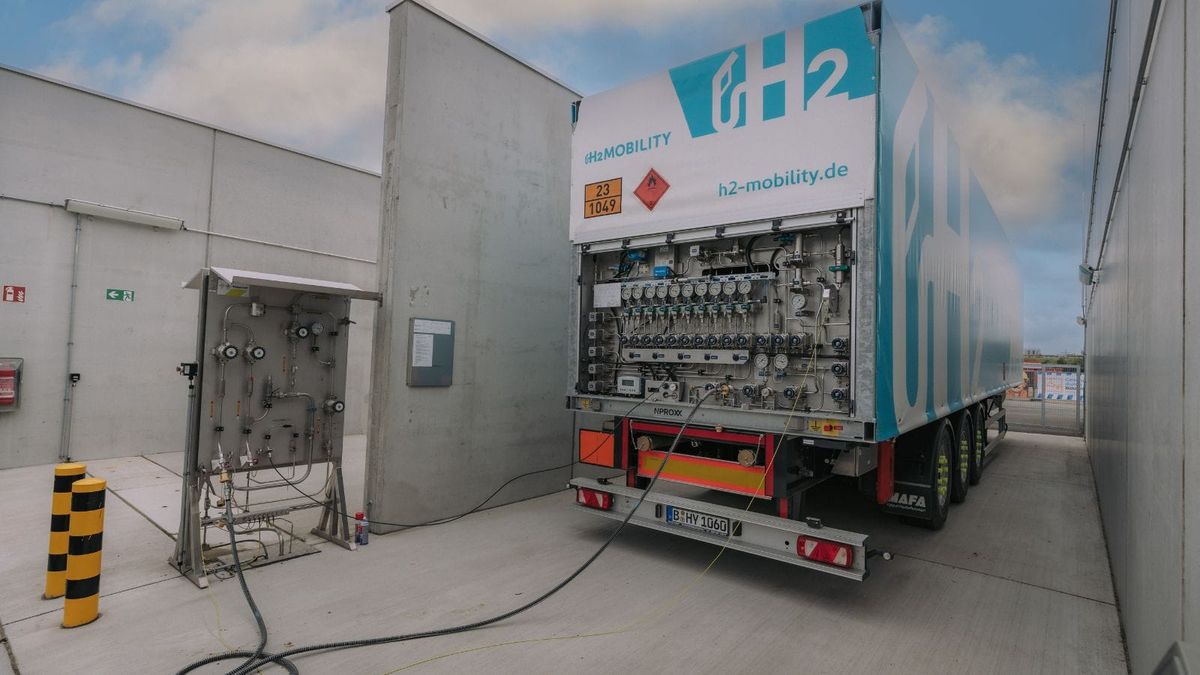
H2 MOBILITY, Europe's largest operator of hydrogen refuelling stations, has put the first 2 of its 6 new tube trailers into service after several weeks of testing - the start of an in-house logistics operation that the Berlin company says will give it more control over deliveries to its filling network. HOYER, the long-established gas logistics firm, will continue to provide the drivers and operational expertise. H2 MOBILITY will own the assets.
Conventionally, the trailers that supply hydrogen stations are owned and dispatched by gas producers - Linde, Air Liquide, Air Products and their peers. Bringing the trailers in-house flips that, letting H2 MOBILITY decide which stations get filled and when, and reducing its exposure to any one supplier's logistics schedule. The company says the change will improve station availability and reduce downtime, which has been one of the network's recurring sore points.
1,200 kg of hydrogen across 78 vessels
Each new trailer carries 1,200 kg of hydrogen in 78 pressure vessels, according to H2 MOBILITY - a payload at the top end of what European road logistics currently moves. Typical Type 4 composite trailers operating at 500 bar carry around 1,000 to 1,100 kg, while older steel-tube designs are limited to roughly 380 kg by the weight of the cylinders themselves. The larger payload reduces the number of trips needed to keep a station supplied.
The new high-capacity station coming online in Düsseldorf is claimed to be the most powerful hydrogen refuelling site in Europe, with a daily dispensing capacity above 5 tonnes - more than 4 trailer loads a day for one site.
Why H2 MOBILITY is rebuilding its supply chain
The trailer rollout follows 18 months of upheaval in the network. H2 MOBILITY closed 22 older 700-bar stations through 2025, citing weak demand from passenger-car hydrogen drivers and infrastructure that could not be retrofitted to serve trucks and buses. In March 2025, the share of hydrogen dispensed at 350 bar - the pressure used by commercial vehicles - overtook 700 bar for the first time in the company's history. Newly constructed sites in Düsseldorf, Ludwigshafen, Frankenthal and Mannheim offer both pressures.
Reliability has been a recurring complaint from the truck operators the network is now built to serve, with fleet pilots citing station outages and inconsistent supply as operational obstacles.
Frank Fronzke, managing director and COO of H2 MOBILITY, said the company needs solutions that combine "security of supply, economic efficiency and scalability" if hydrogen is to ramp up in heavy goods transport, and the trailer fleet was a step towards optimising costs across the value chain.
HOYER keeps the keys
HOYER signed its first transport contract with H2 MOBILITY in July 2025, covering deliveries in the Rhein-Neckar region. The new arrangement extends that relationship rather than replacing it. Anna Krüger, head of sales for global gas logistics at HOYER, said the company's drivers would now be on the road with H2 MOBILITY-branded trailers and would handle reliable supply to the network.
HOYER's hydrogen experience runs wider than this contract. The group transports both compressed gaseous hydrogen and cryogenically liquefied hydrogen across Europe, and in January 2025 it commissioned Germany's first hydrogen-powered truck for dry ice logistics with Nippon Gases - an unusual but tidy demonstration of fuel cell heavy goods vehicles serving cryogenic supply chains.
What comes next
The remaining 4 trailers will join the fleet over the coming months. H2 MOBILITY has said publicly that it intends to transition entirely to renewable hydrogen by 2028, which would require tighter coordination between renewable production sites and station delivery routing.
The broader regulatory backdrop is the EU's AFIR mandate, which requires member states to build hydrogen refuelling stations along the TEN-T core network by 2030. Germany has been the most active national market under that framework, and H2 MOBILITY's network is the spine of it. Keeping those stations supplied is now part of the company's own remit.