Hitachi Energy launches hydrogen genset that doubles as a microgrid
HyFlex® Compact pairs hydrogen fuel cells with batteries in a portable hybrid generator, with optional AC and DC inputs that let it connect to the grid and other energy sources into one system.

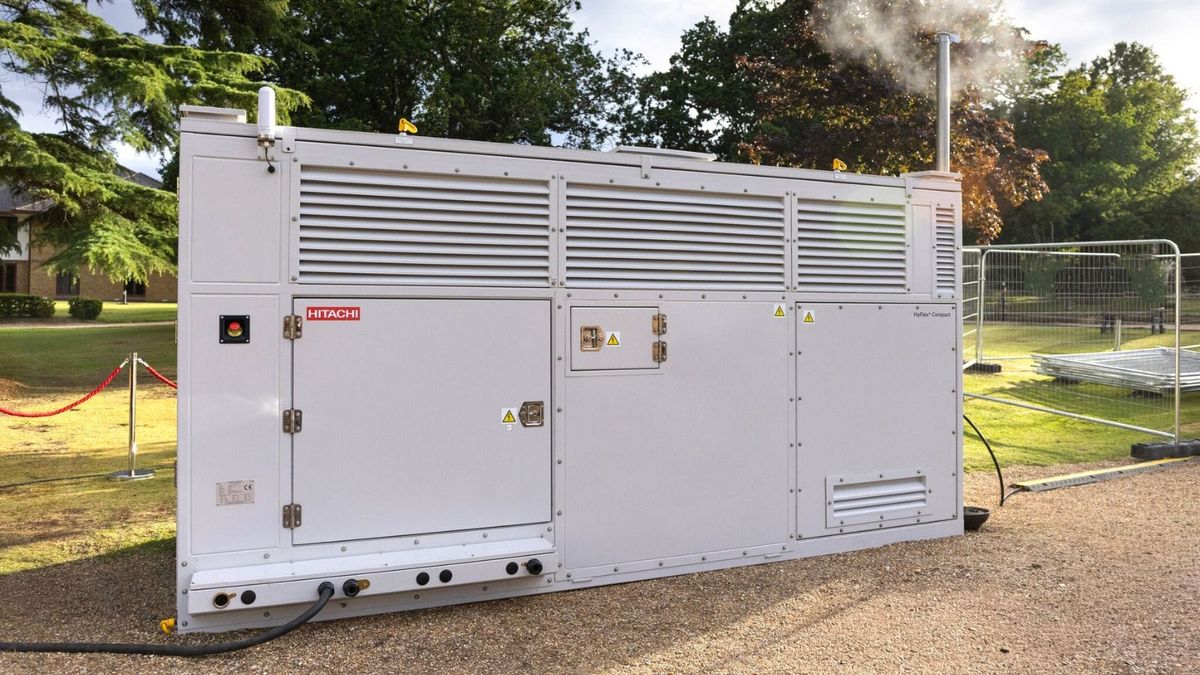
Hitachi Energy has launched HyFlex Compact, a hydrogen fuel cell and battery hybrid generator which can replace diesel gensets on construction sites, at events, in mining operations, and anywhere else the grid cannot reach.
The product was unveiled at a launch event in London on Wednesday that was itself powered entirely by hydrogen - the exhaust producing nothing but water vapour.
HyFlex Compact is the commercial product of roughly 5 years of development under the broader HyFlex programme. Hitachi Energy has run pilot projects including a unit replacing a diesel generator on a construction site in Rotterdam with Air Products, and a shore power system providing emission-free electricity to ships at berth in Gothenburg. “Those real-world customer trials gave the field experience and operating data needed to move from a demonstrator to a commercial product”.
Microgrid in a container
Most hydrogen gensets on the market are straightforward diesel swaps - fuel cell, hydrogen in, power out. But the HyFlex Compact goes one further. Optional AC and DC input modules let it connect grid power or other energy sources alongside its own fuel cells and batteries, with a single control system managing all of them. Hydrogen provides long-duration power, batteries handle peak loads and instant response, and when supplementary sources are available, hydrogen consumption drops.
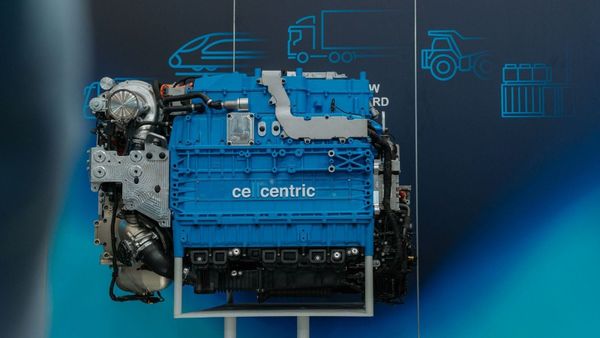
The system uses low-temperature PEM fuel cell stacks from Toyota. It comes in two main configurations rated at 110 kVA and 250 kVA with up to 260 kWh of usable battery capacity, unlike competing solutions that may require regular "rest" periods, the HyFlex Compact’s unique hybrid design allows for true continuous operation without damaging the critical fuel cell component.
The whole unit fits in a 2.5 x 1.8 x 4.3 metre container weighing between 6 to 8 tonnes depending on configuration, and can accept up to three supplementary power inputs at once. It also incorporates an online double-conversion UPS for critical loads.
The diesel displacement race
Hitachi Energy is far from alone in chasing diesel off construction sites. EODev, the French company spun out of the Energy Observer hydrogen vessel project, already supplies its GEH2 generators through rental firms including United Rentals and Loxam, while AFC Energy in the UK reported $33.5 million in orders for its smaller 30 kW units during 2024. GeoPura, also British, recently won a Ministry of Defence contract to supply hydrogen-powered EV charging hubs across RAF bases.
Most of these competitors are specialist outfits - small companies with sharp technology and narrow focus. Hitachi Energy is a $20 billion, 56,000-person operation with power electronics installed across 140 countries, and its argument is that the hard part of off-grid decarbonisation is not the fuel cell itself but the system integration around it.
"This is where Hitachi uses its system integration knowledge to build systems based on different building blocks - hydrogen fuel cells, batteries, grid electricity, different loads like electric vehicles," said Jerome Henry, Hitachi Energy's head of sales for eMobility and hydrogen in Europe. "We integrate all these equipment seamlessly into a single holistic solution."
Where does the hydrogen come from?
A diesel generator runs wherever you can deliver a barrel of diesel. A hydrogen generator needs a tube trailer of compressed hydrogen, and in most of Europe those supply chains are still being assembled.
"No company can make it alone," Henry said. "We need partners, we need collaborations, we need people supplying hydrogen, we need people using the equipment, we need construction companies, we need rental companies."
The portable hydrogen generator market is projected to grow from $1.5 billion in 2025 to $4.8 billion by 2035, according to Future Market Insights. EU regulation is pushing from multiple angles - the non-road mobile machinery framework is considering zero-emission targets for construction equipment, and mandatory shore power at major European ports takes effect from 2030. Hitachi Energy has backed its position with investment beyond the product itself, opening a Grid & Power Quality Solutions test centre in Västerås, Sweden, and committing $10 million to a new facility in North Carolina.
"Picture this conversation happening in the future between a great-granddaughter and her grandmother," Henry told the audience. "She would ask - grandma, back in the days, why would people use diesel? The pollution, noise, vibrations, that must have been awful. This is the world we are starting to build today."