
NASA's Artemis II moon mission delayed by liquid hydrogen leak
Wet dress rehearsal for NASA's crewed lunar mission terminated at T-5:15 after hydrogen leak detected at umbilical interface. The SLS rocket requires over 537,000 gallons of liquid hydrogen chilled to -253°C - the same cryogenic fuel Daimler Truck is betting on for long-haul transport.

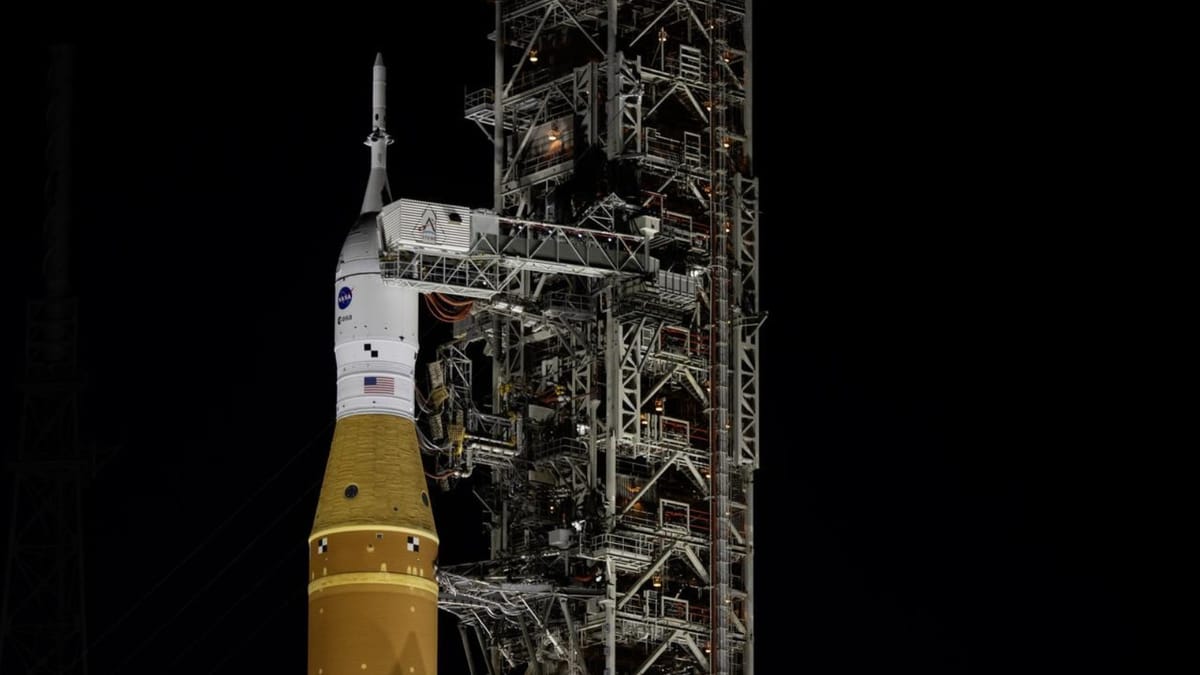
NASA's Artemis II wet dress rehearsal was terminated yesterday at T-5 minutes 15 seconds after engineers detected a liquid hydrogen leak at the tail service mast umbilical - the interface where fuel lines from the launch pad connect to the base of the Space Launch System rocket.
High concentrations of hydrogen had been detected at the same location earlier in the countdown. The launch team is now draining the rocket's tanks and making the vehicle safe. NASA Administrator Jared Isaacman confirmed the mission is now targeting March at the earliest.
The SLS rocket's core stage holds 537,000 gallons of liquid hydrogen chilled to -253°C, consuming 1,500 gallons per second during the 8.5-minute ascent to orbit. Kennedy Space Center maintains over 2 million gallons of storage capacity across two spherical tanks - the largest liquid hydrogen storage facility in the world.
It's a reminder that handling hydrogen at cryogenic temperatures remains an engineering challenge even for organisations with six decades of experience. The seals and interfaces that connect fuel lines to vehicles must withstand extreme thermal contraction as materials shrink in the cold, then expand again as they warm.
The same physics apply to the liquid hydrogen refuelling infrastructure Daimler Truck is developing for its GenH2 long-haul trucks in Europe, where sLH2 stations at Wörth am Rhein and Duisburg use technology co-developed with Linde Engineering.
At -253°C, liquid hydrogen offers roughly 70% more energy density by volume than 700 bar compressed gas - enough to give a 40-tonne truck over 1,000 km of range without the heavy carbon-fibre tanks required for high-pressure storage - but it demands precision engineering at every connection point.
Artemis II will send four astronauts around the Moon and back over 10 days, the first crewed lunar mission since Apollo 17 in 1972.