Hydrogen: Toyota to join Daimler and Volvo in cellcentric fuel cell JV
Toyota signs MoU to join Daimler Truck and Volvo Group as equal partner in cellcentric, the fuel cell joint venture developing hydrogen systems for heavy-duty trucks.

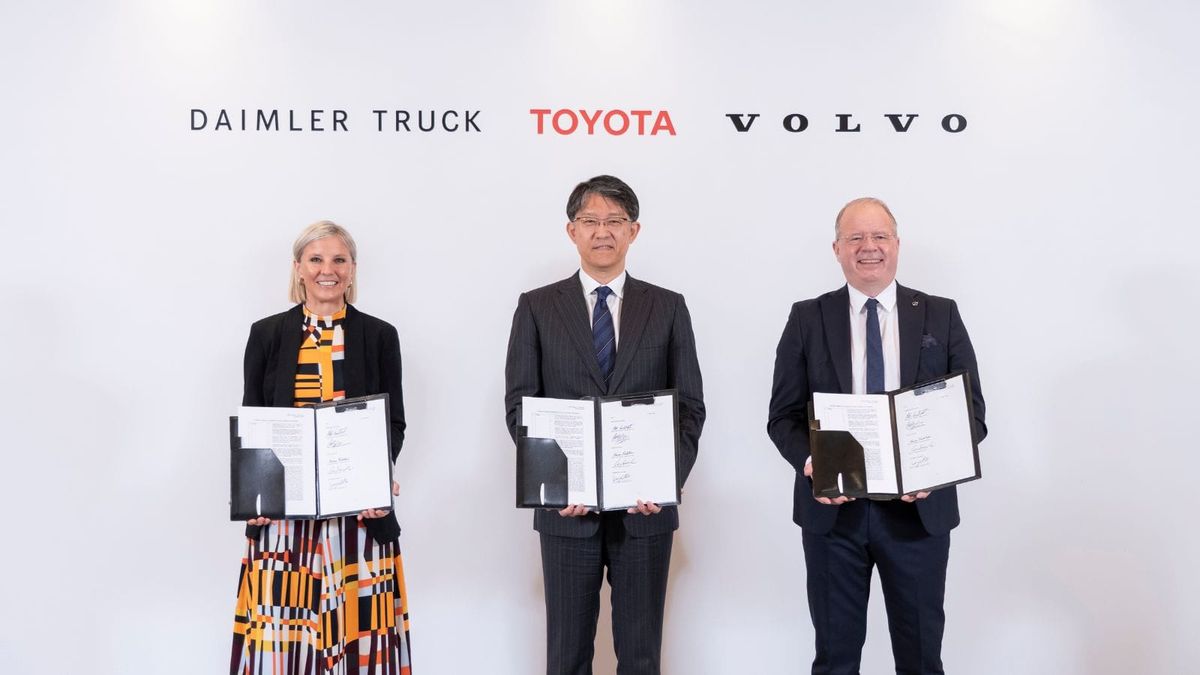
The world's largest carmaker signs a non-binding agreement to become an equal shareholder in the European hydrogen fuel cell joint venture alongside Daimler Truck and Volvo Group.
Toyota Motor Corporation has signed a non-binding memorandum of understanding to join cellcentric, the fuel cell joint venture currently owned 50:50 by Daimler Truck and Volvo Group, as an equal third shareholder.
If the deal completes - and it still requires binding agreements, board approvals and regulatory clearance - it would bring together 3 of the world's heaviest hitters in hydrogen and commercial vehicles under a single development and production entity focused on fuel cells for heavy-duty trucks.
cellcentric was founded in March 2021 when Volvo Group paid around €600 million for a 50% stake in what had been Daimler Truck Fuel Cell GmbH. The venture now employs more than 560 people across sites in Kirchheim/Teck, Esslingen and Stuttgart in Germany and Burnaby in Canada, and holds roughly 700 patents.
Its primary product is a 150 kW fuel cell system designed to match the durability of a conventional diesel powertrain in long-haul use, currently integrated into prototype trucks from both parent companies. Toyota would join by investing in a capital increase, diluting the existing shareholders down to an equal 3-way split.
What Toyota brings is not money so much as 3 decades of fuel cell know-how. The company launched the first mass-produced hydrogen car, the Mirai, in 2014, and earlier this year unveiled a 3rd-generation fuel cell system promising double the durability of its predecessor and a 20% improvement in fuel efficiency.
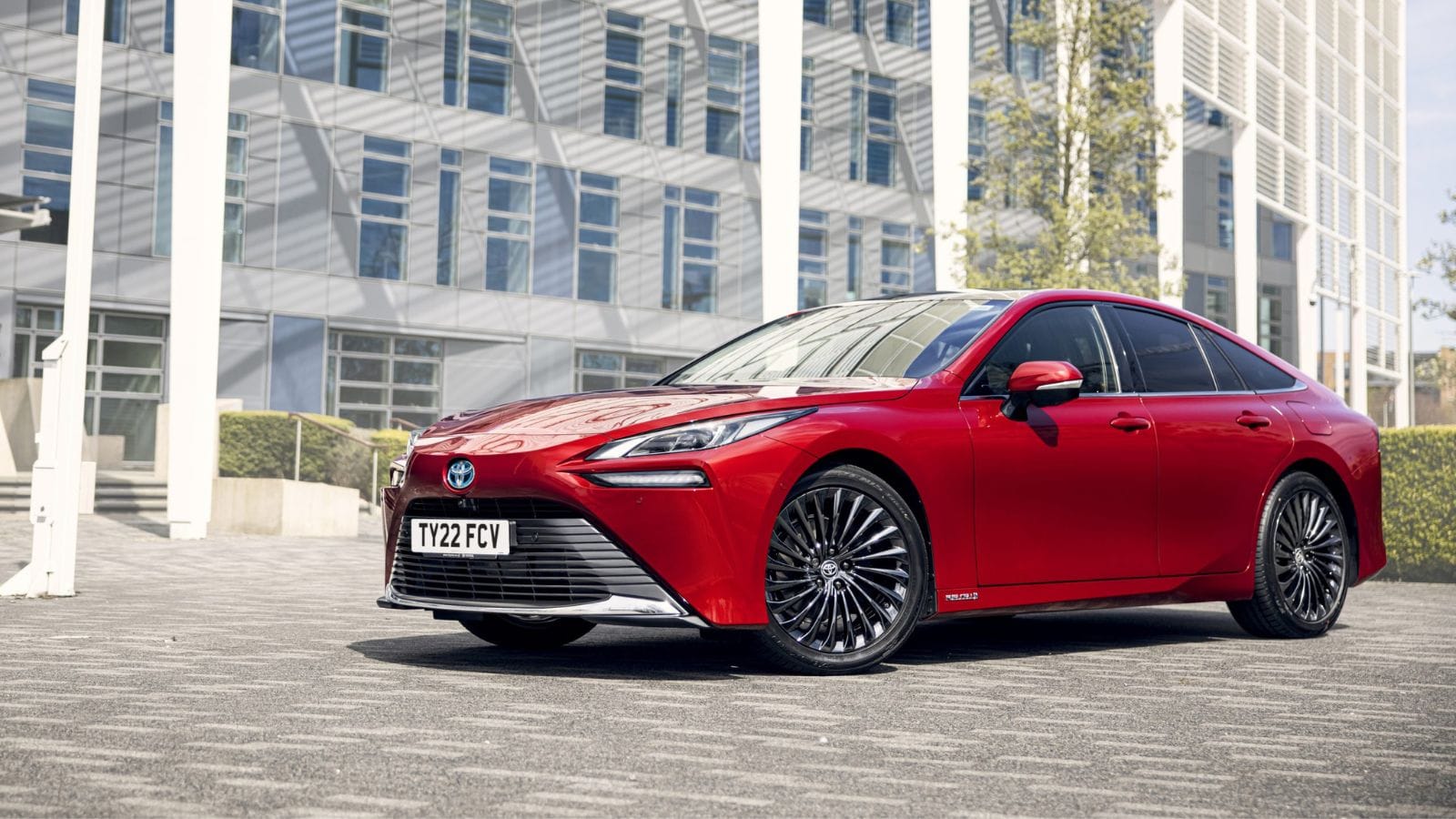
The company says the new system is compact enough to fit a range of commercial vehicles and is planned for markets in Japan, Europe, North America and China from 2026 onward. Under the proposed arrangement, Toyota and cellcentric would jointly manage the development and production of fuel cell unit cells - the core electrochemical component that determines stack performance - along with directly linked architecture and control systems.
Daimler Truck, for its part, has been building the practical case for hydrogen long-haul with its GenH2 and NextGenH2 trucks, which between them have logged more than 225,000 km in customer trials with operators including Amazon and DHL.
The company announced last November that it had secured €226 million in German federal and state funding to produce 100 small-series NextGenH2 trucks at its Wörth plant from late 2026, using liquid hydrogen and cellcentric's fuel cell system. Full-scale production, however, has been pushed to the early 2030s, partly because the hydrogen refuelling network has not kept pace - Germany's public station count has actually fallen from around 80 to roughly 50 over the past 2 years, with operator H2 Mobility closing 22 sites in 2025 alone.
That infrastructure gap is the problem cellcentric's 3 prospective shareholders are hoping collective weight can help fix. In an accompanying article, Daimler Truck board member Andreas Gorbach - who previously served as cellcentric's CEO - made the case that battery-electric and hydrogen trucking need to scale in parallel.
He pointed to the grid capacity problem that emerges once multiple long-haul trucks need fast charging at a single location, noting that 10 trucks charging simultaneously for 45 minutes would draw roughly 10 MW - equivalent to a small town's electricity demand.
Germany's €220 million funding programme for up to 40 hydrogen refuelling stations and 400 trucks, announced in January, is designed to address part of this by bundling station construction with vehicle purchases so neither side is left stranded.
The deal also carries a geopolitical dimension that none of the parties are being shy about. Gorbach framed the partnership in terms of European industrial competitiveness, arguing that hydrogen and fuel cell technology represents a field where Europe still leads - for now - and that keeping that advantage requires scale. The language in the press release is unusually direct about aligning with the European Green Deal and Japan's Hydrogen Society Act, and about reducing dependence on materials and supply chains concentrated outside Europe.
Hydrogen in Germany currently costs between €12 and €19 per kilogram, according to Daimler's own figures. The company and its partners put the threshold for economic viability at around €8.