MAN hTGX becomes first hydrogen truck cleared for ADR chemical haulage
Vervaeke's MAN hTGX is Europe's first ADR-approved hydrogen truck for hazardous chemical transport, following January 2025 rule changes.
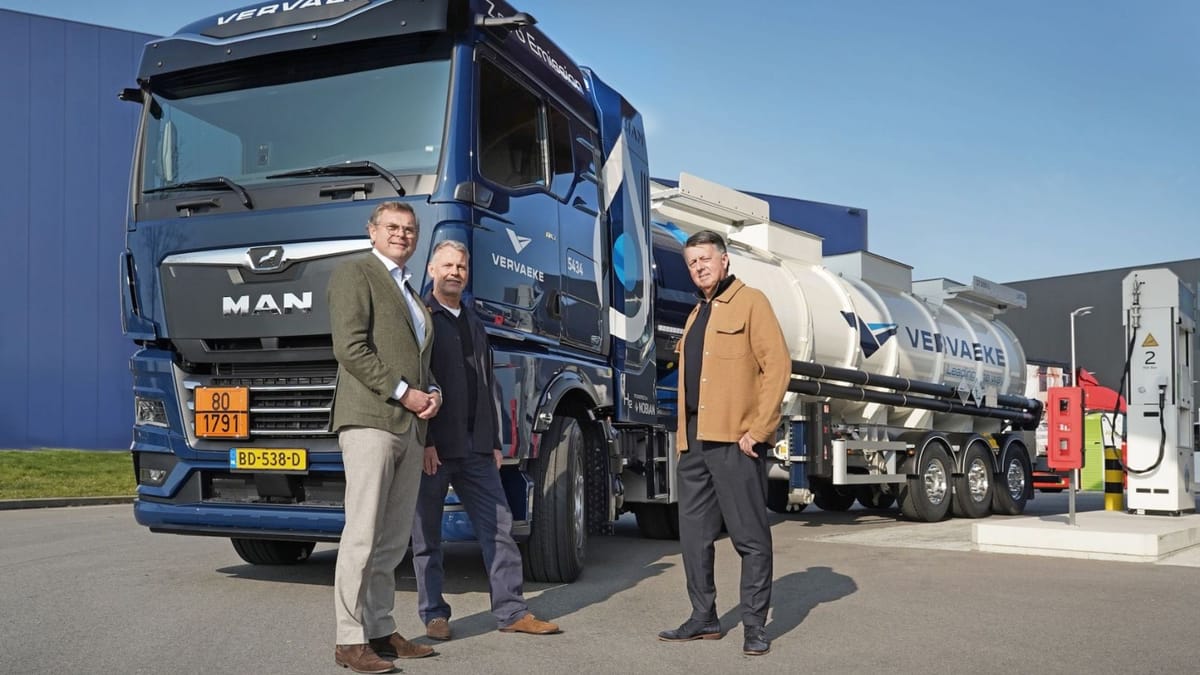
Belgian tanker specialist Vervaeke has started transporting hazardous chemicals using a MAN hTGX hydrogen truck - the first ADR-certified hydrogen vehicle operating in Europe.
The 3-year pilot with Dutch chemicals producer Nobian puts the truck on routes around Rotterdam carrying caustic soda and hydrochloric acid. Vervaeke expects it to cover around 100,000 km annually, replacing a diesel vehicle and cutting an estimated 88.5 tonnes of CO₂.
The MAN hTGX runs on a hydrogen internal combustion engine - MAN's H45 unit, a modified version of its D38 diesel producing 520 hp and 2,500 Nm. Four tanks behind the cab hold 56 kg of hydrogen at 700 bar, giving a claimed range of up to 600 km and refuelling in under 15 minutes. It was delivered at Fountain Fuel's Amersfoort station, which dispenses at both 350 and 700 bar.
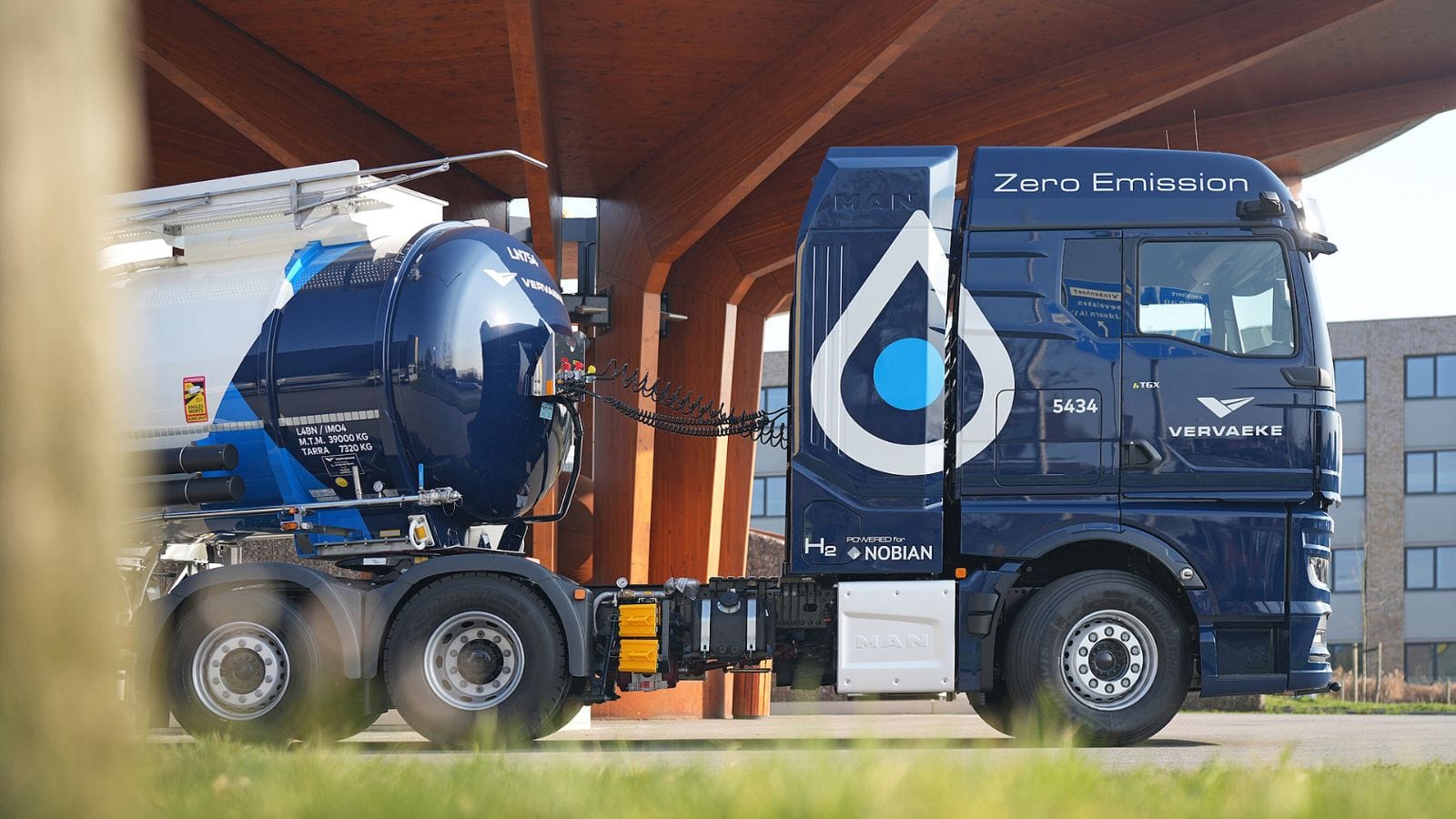
Until 1 January 2025, hydrogen and battery electric vehicles were barred from carrying dangerous goods under ADR - the European agreement governing hazardous materials transport. Updated rules from the UN Economic Commission for Europe now permit hydrogen-powered vehicles in categories AT (tank vehicles) and FL (flammable liquids and gases), provided they meet electrical safety and fire protection requirements.
For Vervaeke, this unlocks something battery trucks cannot currently offer. "An electric truck is not an option for us," said CEO Frédéric Derumeaux. "We need both AT and FL approval for our wide ADR product portfolio. That combination, reinforced by the zero-emission output of the hydrogen drive, means the MAN hTGX fits perfectly with our ambitions."
The purchase was part-funded by the Dutch government's SWiM scheme, which covers up to 80% of the cost premium over diesel - capped at €100,000 for this class of truck. The programme awarded €40 million to 8 partnerships in 2025, funding 355 hydrogen vehicles and 8 refuelling stations across the Netherlands. Vervaeke also qualifies for the lowest tier of the country's distance-based HGV toll.
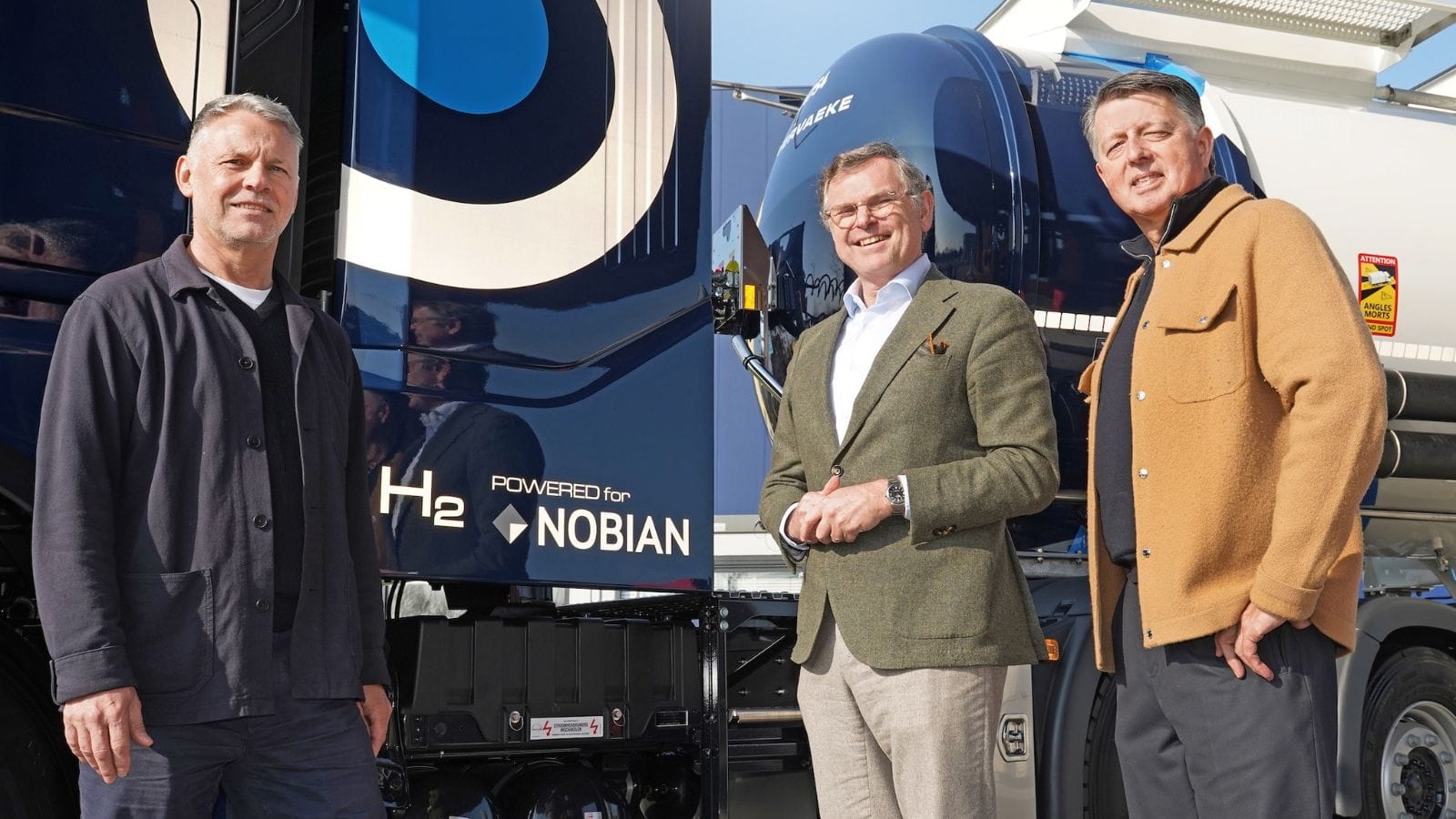
Vervaeke - a family-owned operator with 750 trucks across 13 sites in the Benelux, France and Germany - has been testing hydrogen vehicles since 2024, when it joined a Mercedes-Benz GenH2 trial carrying PVC for INEOS. That programme was limited to non-hazardous cargo because the rules at the time excluded hydrogen from ADR work. The company says it lobbied for the regulatory change at UN level.
Nobian produces chlor-alkali chemicals at its Rotterdam Botlek site using electrolysis, generating hydrogen as a byproduct. It already supplies some ISCC PLUS certified caustic soda made with 100% renewable electricity.
Whether hydrogen can scale beyond a single-truck pilot depends on refuelling availability. The Netherlands had around 25 public hydrogen stations at the end of 2024, with more under construction through SWiM-funded partnerships - better than most of Europe, but still thin for cross-border operations.