Daimler builds 100 liquid hydrogen trucks as series production slips
The Mercedes-Benz NextGenH2 enters small-series production at Wörth from late 2026, with 100 units heading to fleet customers. Full series volumes have been pushed to the early 2030s after hydrogen refuelling infrastructure failed to materialise at the pace Daimler expected.

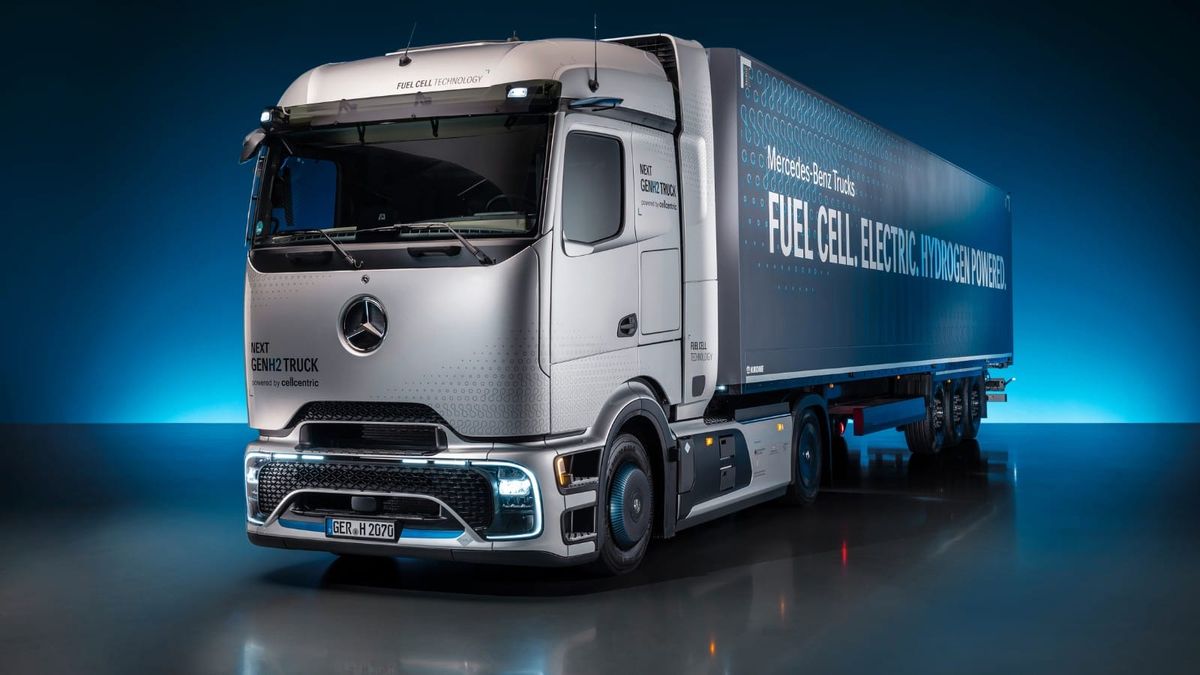
Daimler Truck will build 100 Mercedes-Benz NextGenH2 trucks at its Wörth plant from late 2026, deploying the second-generation liquid hydrogen fuel cell HGV with commercial fleet customers in long-haul operations.
Full series production remains years away. Daimler originally targeted the end of the 2020s but confirmed at its Capital Markets Day last July that high-volume production would slip to the early 2030s, citing hydrogen refuelling infrastructure that was expanding "significantly slower than expected".
The delay came as part of a broader cost-cutting programme that saw the GenH2 deprioritised and development focused solely on Europe.
Liquid hydrogen storage
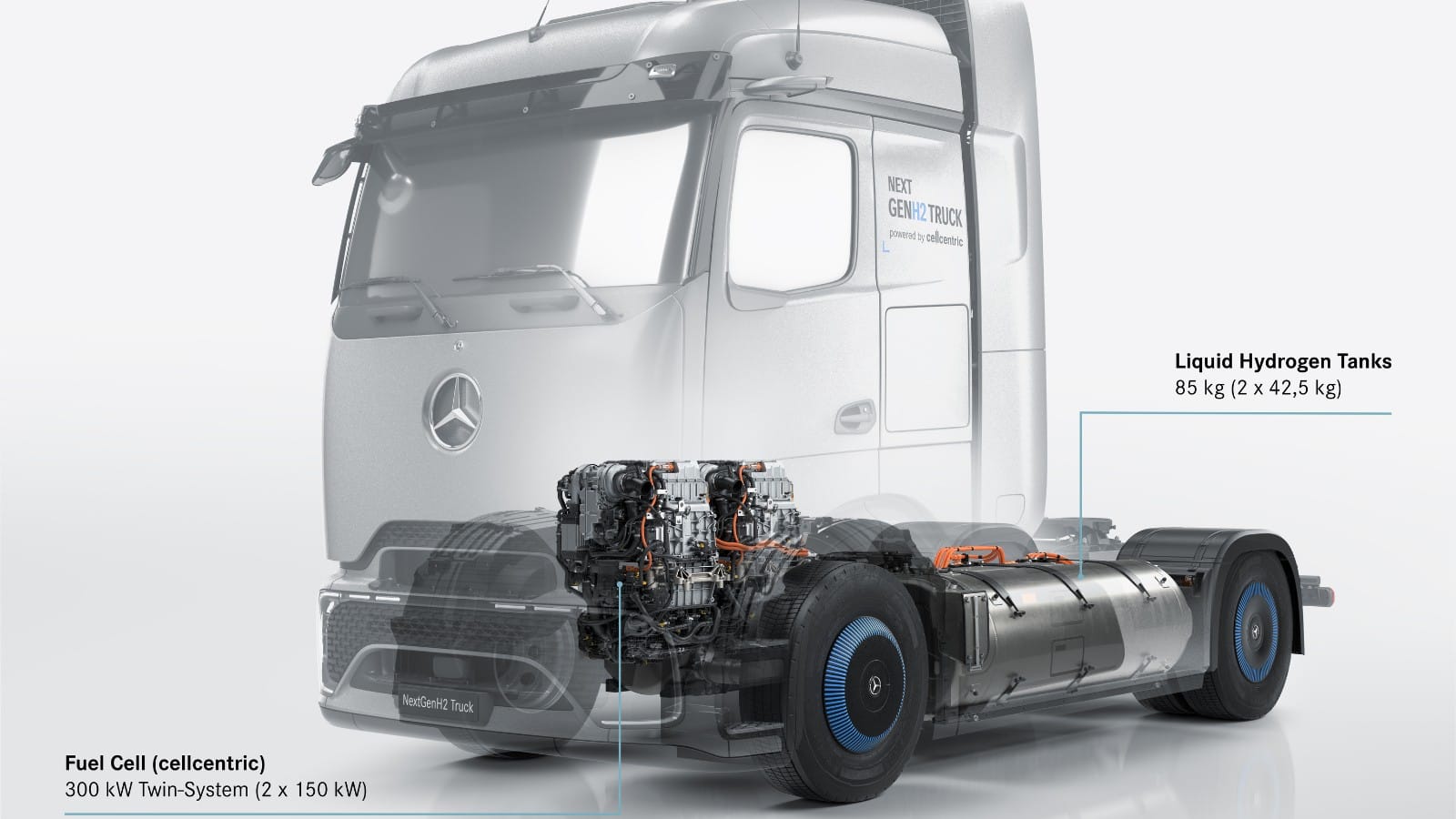
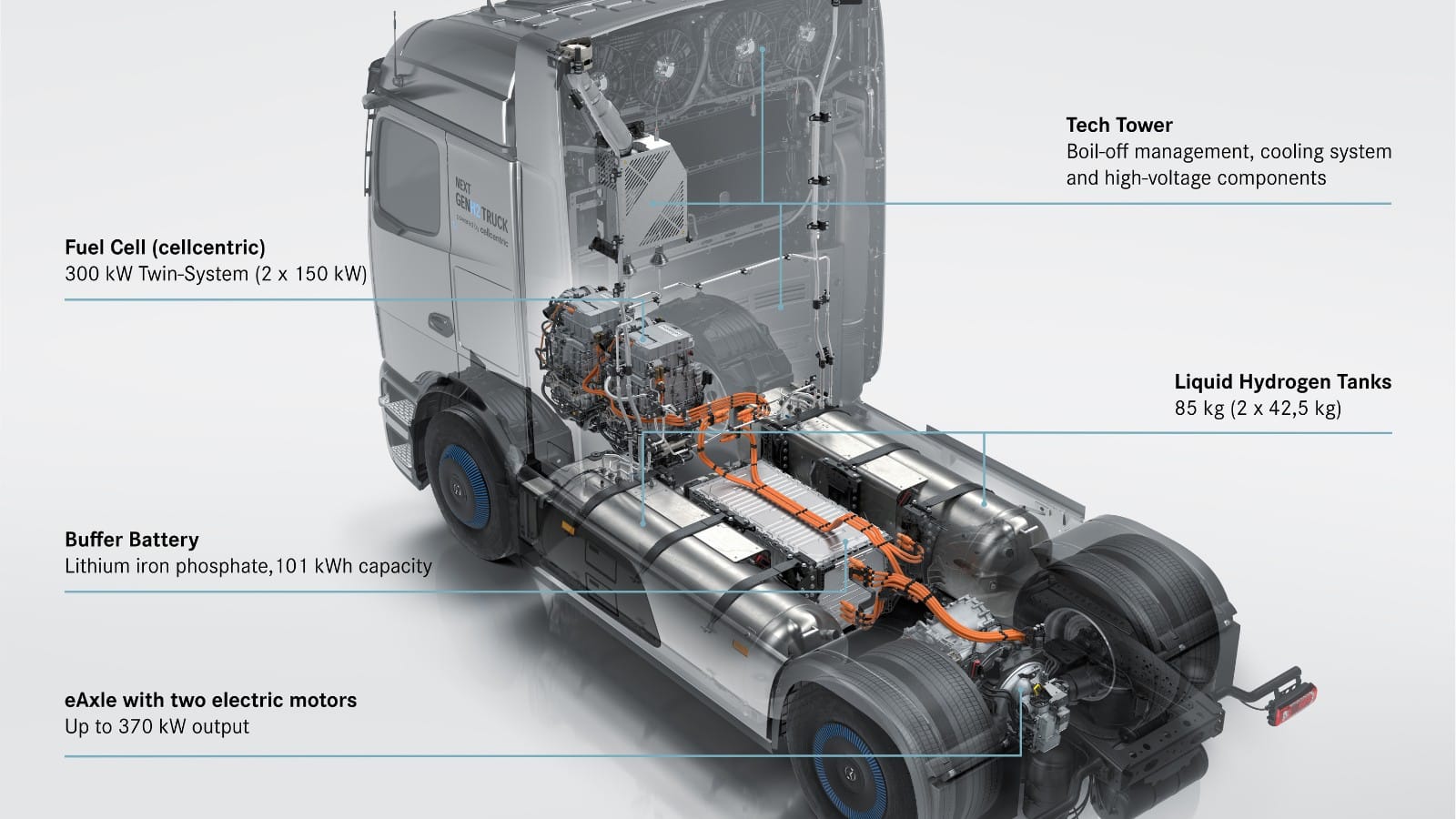
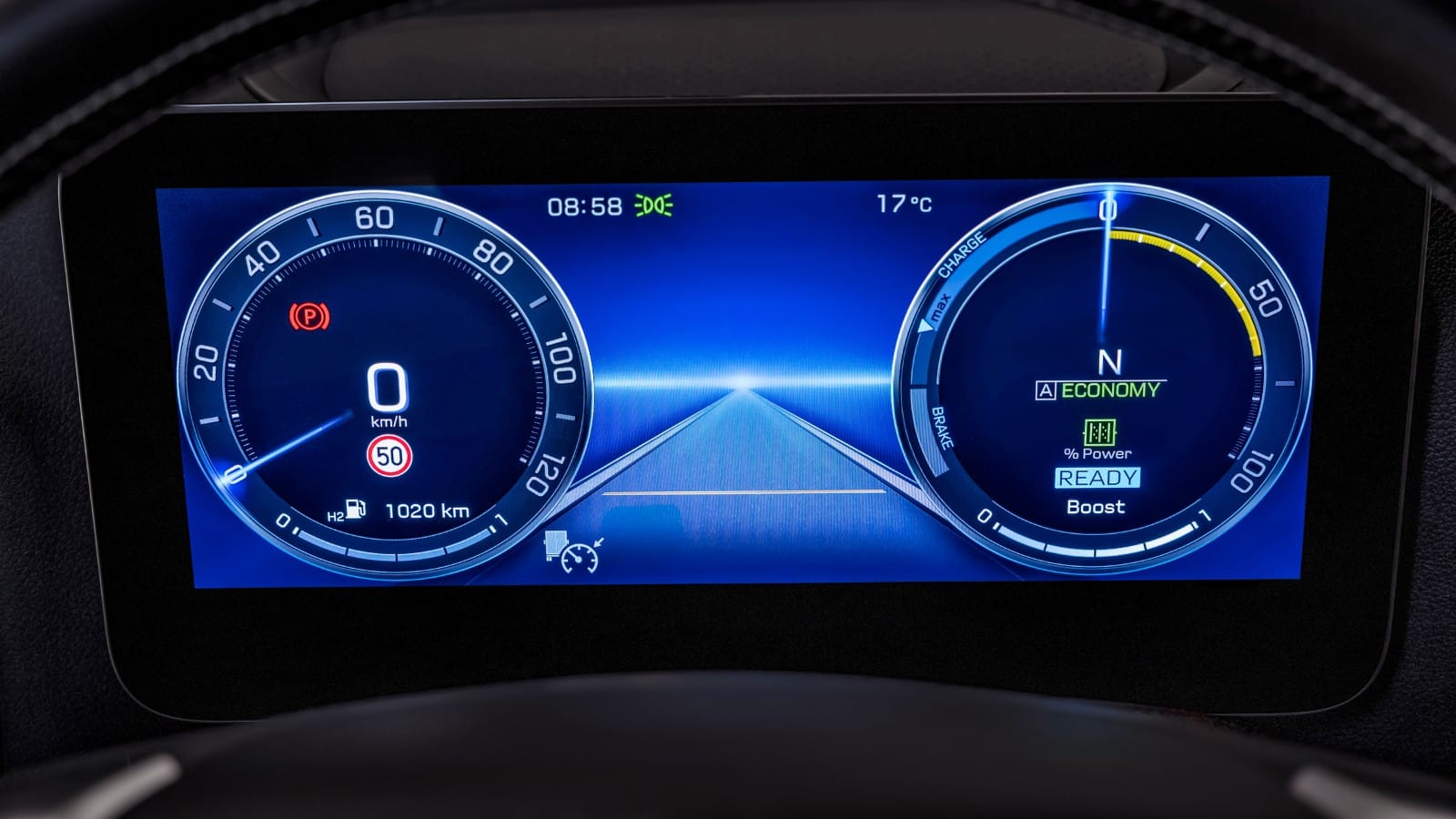
The NextGenH2 stores hydrogen in liquid form at -253°C rather than as compressed gas at 350 or 700 bar. Liquid storage offers roughly twice the energy density by volume, which translates into claimed ranges over 1,000 km at full load from 85 kg of fuel - up from 80 kg in the first-generation GenH2.
Both tanks are connected, allowing refuelling from either side in 10-15 minutes using the sLH2 standard Daimler developed with Linde.
© Images: Daimler Truck
The truck can currently refuel at only 2 dedicated liquid hydrogen stations in Germany, at Wörth and near Duisburg - a constraint that explains Daimler's cautious production timeline.
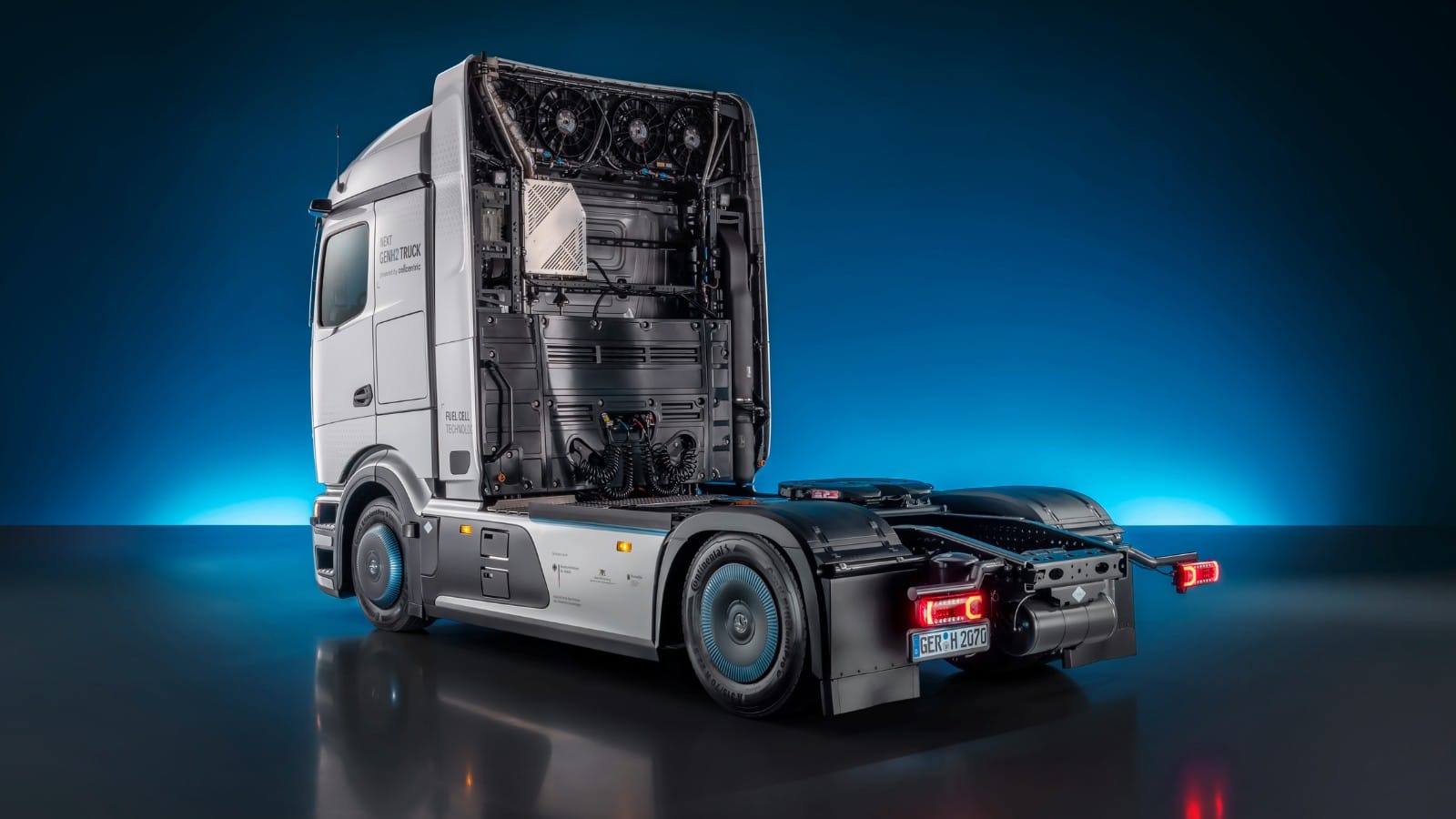
A redesigned Tech Tower behind the cab houses the hydrogen storage and a new boil-off management system that meets regulatory requirements for parking in enclosed spaces.
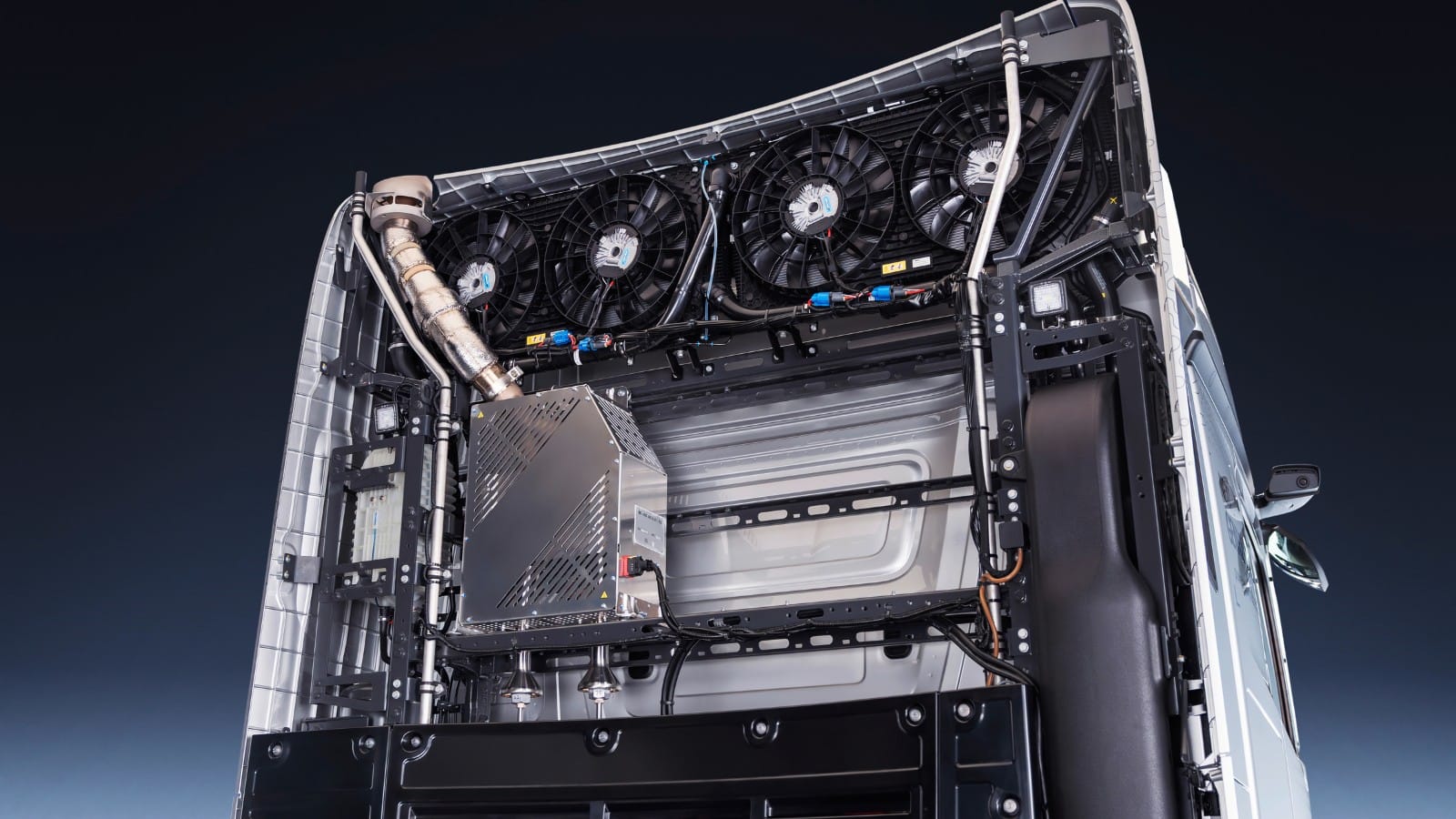
The wheelbase has been shortened by 150 mm to 4,000 mm, improving compatibility with standard EU trailer combinations. A new sensor system allows overnight stays in the cab's 2 beds - addressing a practical limitation of the earlier truck.
Powertrain
The powertrain uses the cellcentric BZA150 fuel cell system, a joint venture with Volvo Group. 2 fuel cell units of 150 kW each deliver 300 kW total, integrated beneath the cab. A 101 kWh lithium-iron-phosphate battery buffers energy during regenerative braking and supports the fuel cells during peak demand.
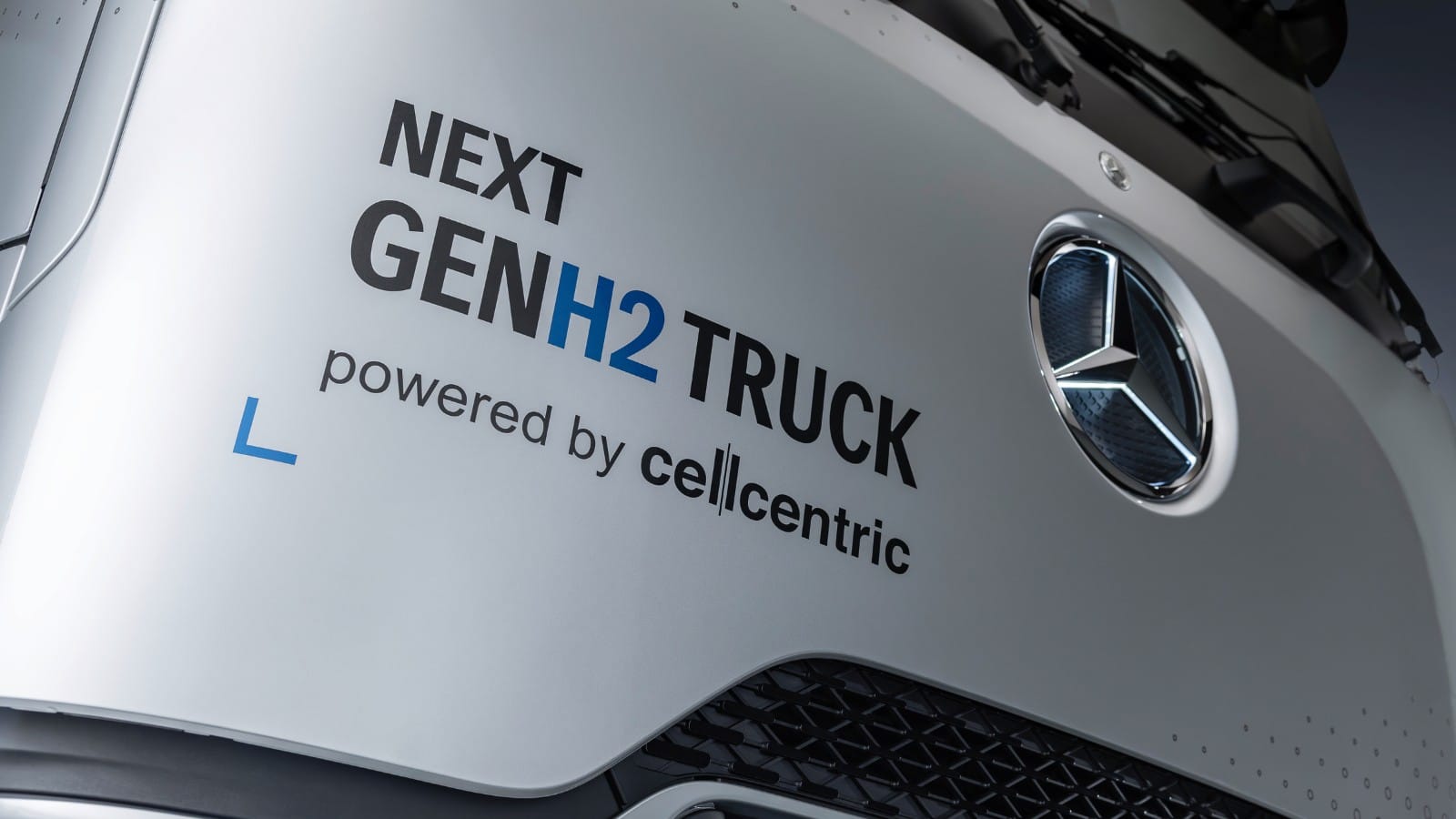
The NextGenH2 shares its e-axle with the battery-electric eActros 600 - a 4-speed transmission developed in-house that delivers up to 340 kW in Economy Mode and 370 kW in Power Mode. The truck also inherits the eActros 600's ProCabin, which Daimler says delivers a 9% improvement in drag coefficient.
First-generation trials with Amazon, Air Products, Holcim, INEOS Inovyn and Wiedmann & Winz recorded consumption between 5.6 and 8 kg per 100 km depending on load, covering 225,000 km across 5 vehicles before concluding in late 2025.
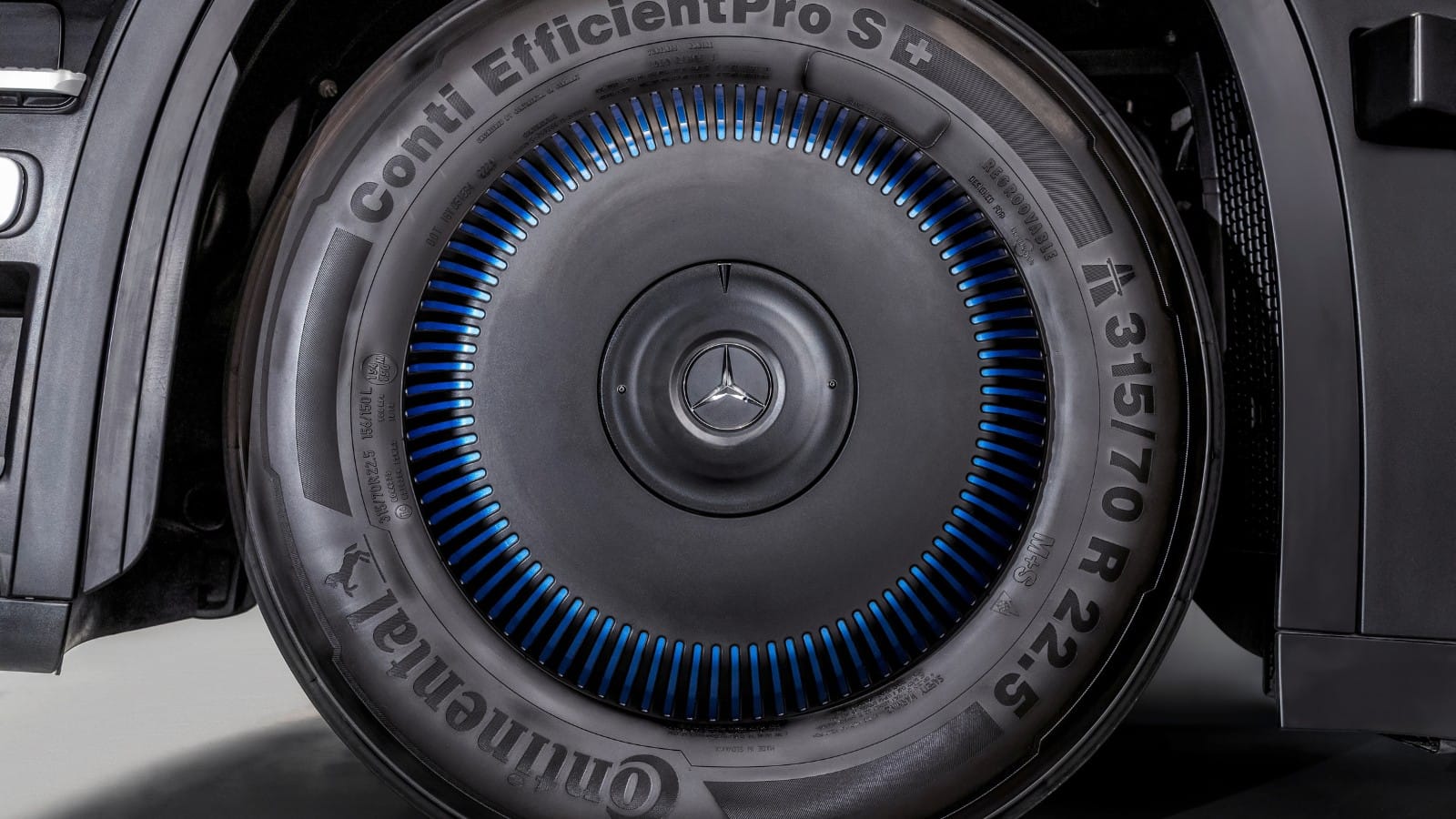
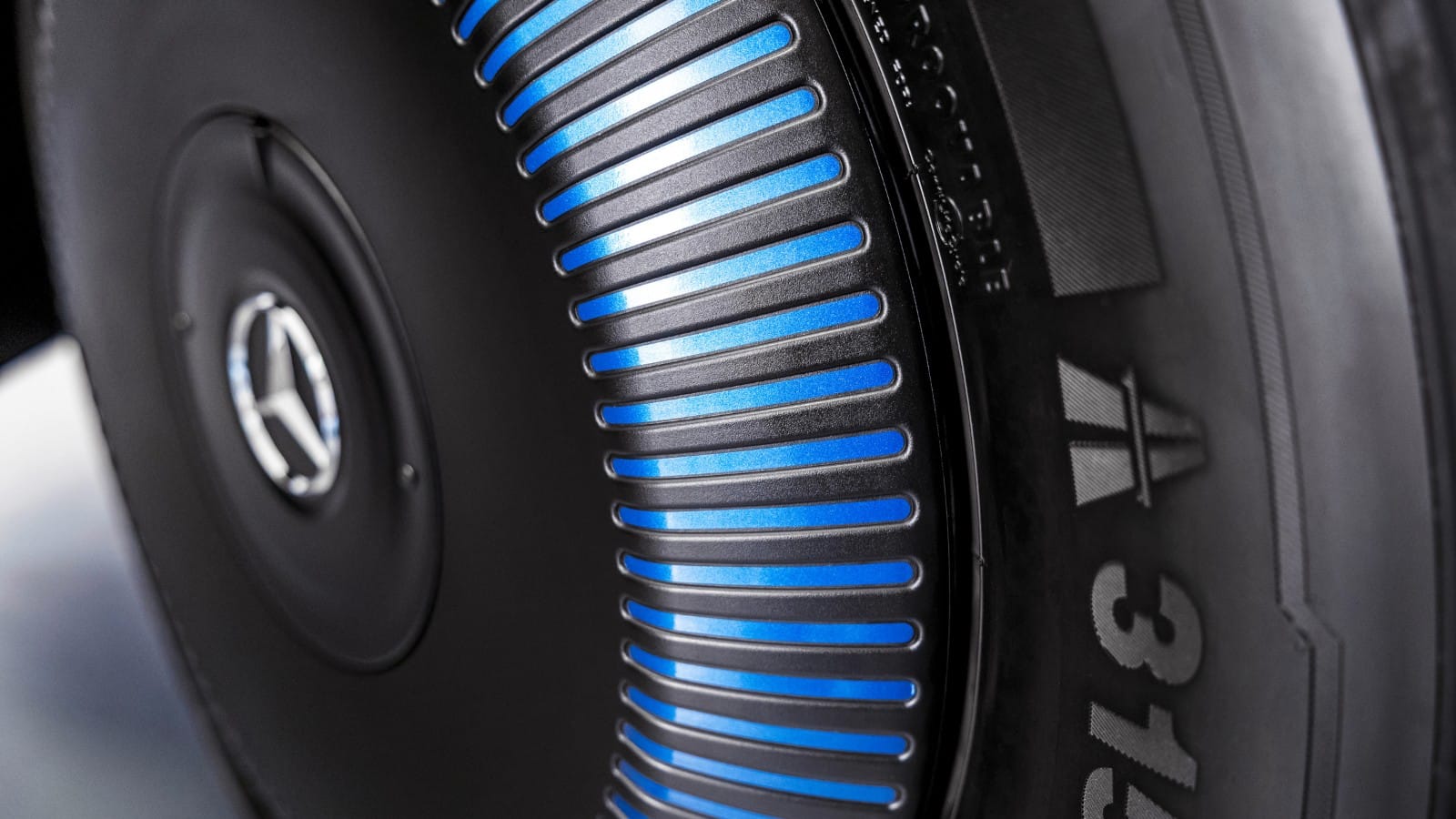
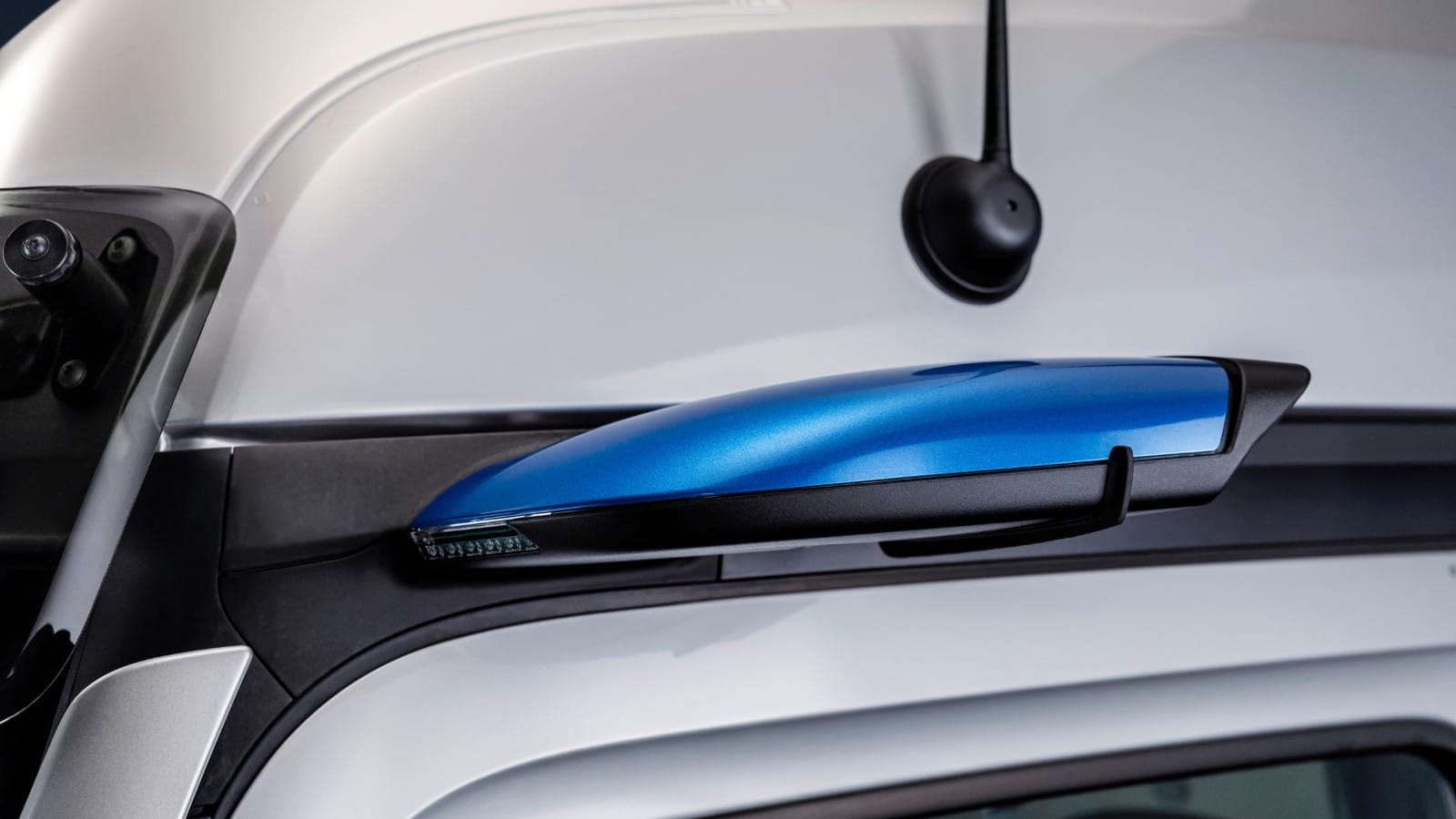
© Images: Daimler Truck
Market context
Hyundai's XCIENT fuel cell truck, which uses compressed rather than liquid hydrogen, has nearly 200 units operating in Europe with over 15 million km accumulated, according to Hyundai.
Volvo plans to begin customer trials of hydrogen internal combustion engine trucks this year, with commercial production targeted for the end of the decade.
Scania revealed its first hydrogen fuel cell truck in November 2025 and is testing with Norwegian retailer Asko.
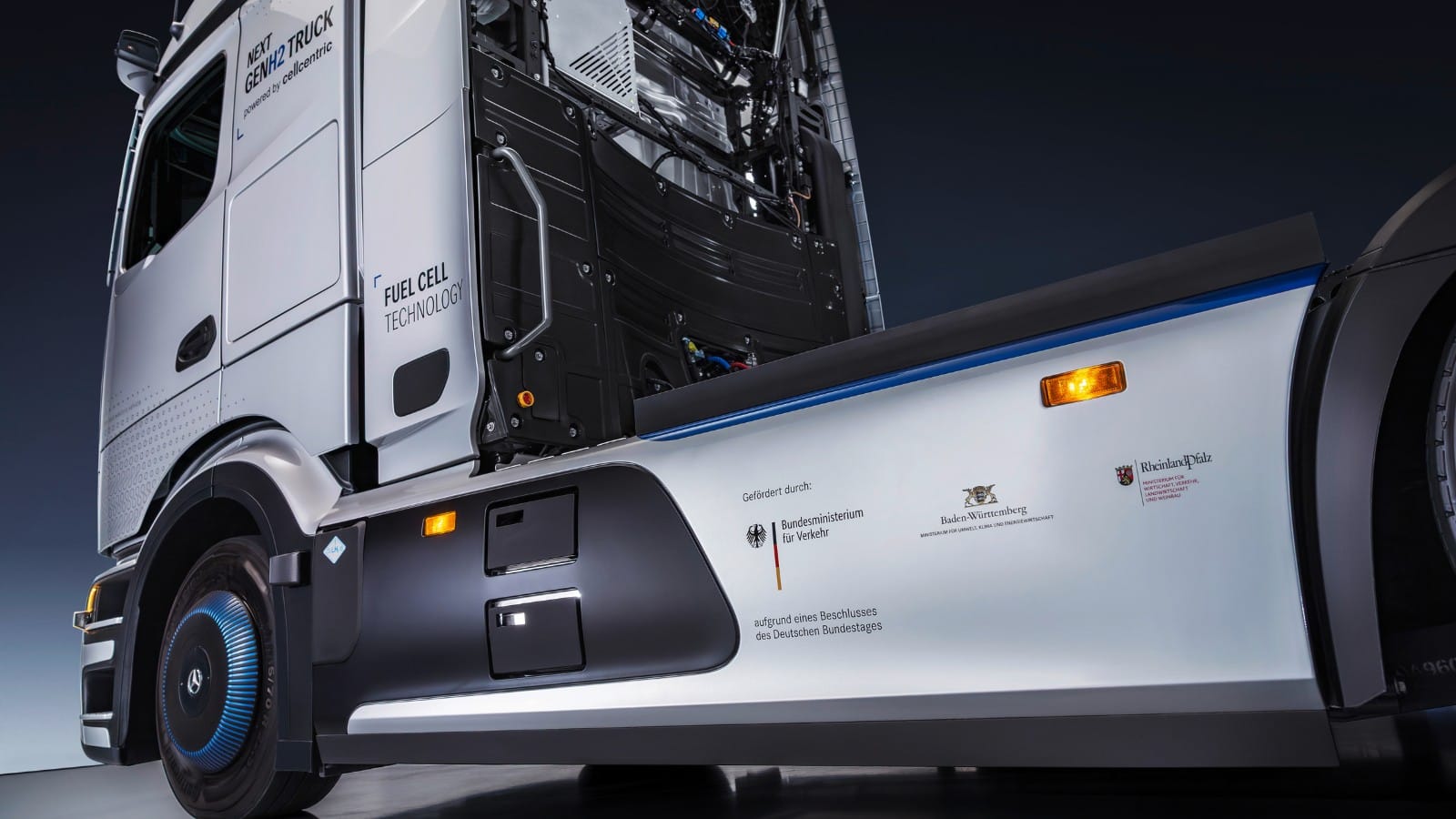
The German Federal Ministry of Transport and the states of Rhineland-Palatinate and Baden-Württemberg are supporting the NextGenH2 programme with €226m.