Germany launches €220m funding for hydrogen trucks and refuelling stations
The BMV scheme bundles infrastructure and vehicle funding, requiring applicants to link station construction with truck purchases. Germany's existing hydrogen network has shrunk in recent years and currently stands at 50 stations across 46 cities.

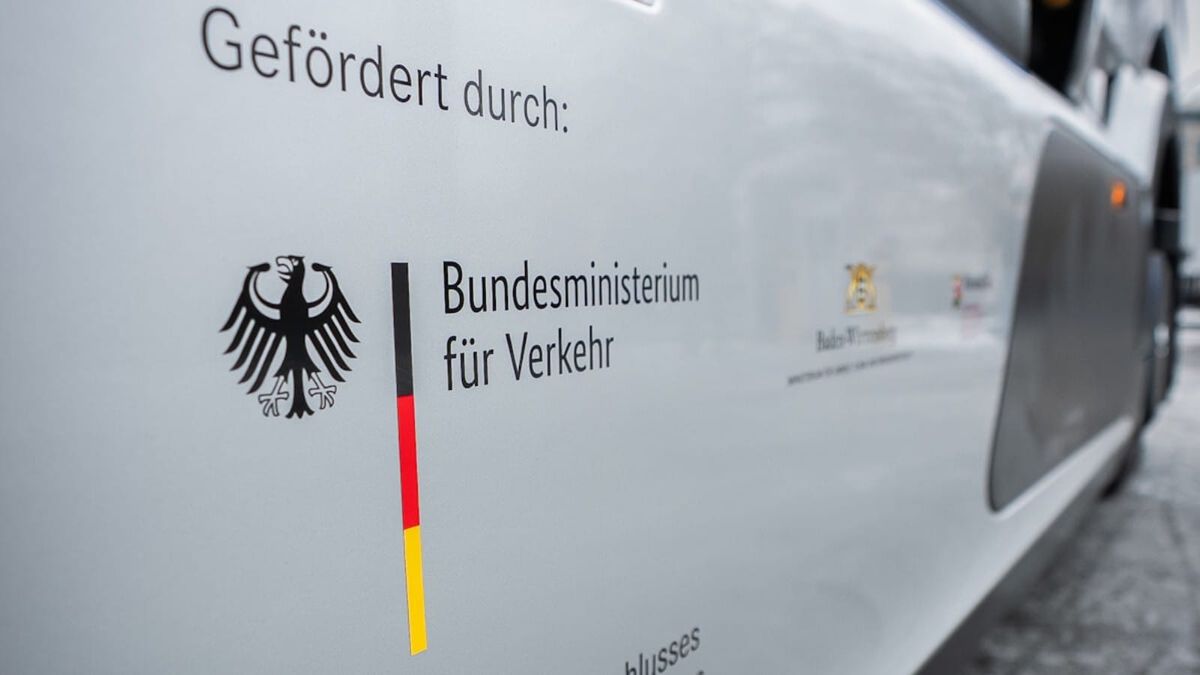
The German Federal Ministry of Transport (BMV) has launched a €220m funding programme for hydrogen refuelling stations and trucks, with applications open until 31 May 2026. The scheme aims to roll out up to 40 public stations and support the purchase of up to 400 hydrogen trucks.
Funding is bundled, meaning applicants must link station construction with vehicle procurement. Stations can receive up to 50% of capital expenditure. Trucks, including both fuel cell and hydrogen combustion models in categories "N2" and "N3", can receive up to 80% of the additional cost versus a diesel equivalent. Stations must be located on AFIR-compliant TEN-T corridors or urban transport hubs.
"We are solving the chicken-and-egg problem," said Federal Transport Minister Patrick Schnieder. "Truck drivers will find reliable refuelling options, and the stations will be utilised from the start."
The bundled approach is a response to the state of Germany's existing hydrogen network, which has contracted rather than expanded in recent years. Germany currently has around 50 public stations, according to Clean Energy Wire, down from over 90 at its peak. H2 Mobility, the main operator, closed 22 older 700 bar stations in 2025 as part of a consolidation programme that began in 2022. These were originally built for passenger cars, but that market failed to develop.
Under the EU's Alternative Fuels Infrastructure Regulation, Germany must have a publicly accessible hydrogen station every 200 km along the TEN-T core network by 2030, plus coverage of all relevant urban nodes.
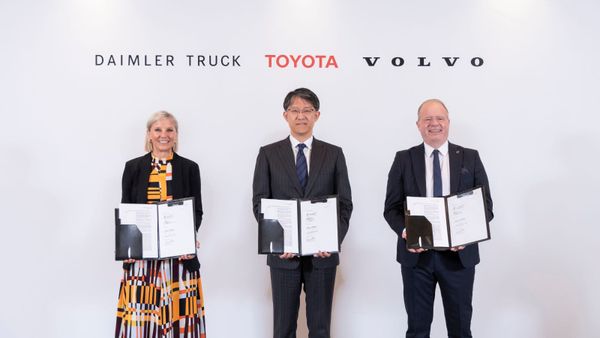
The scheme does not mandate a specific pressure standard. Most truck-capable stations dispense compressed gas at 350 bar, but Daimler Truck is pursuing liquid hydrogen at -253°C for its NextGenH2, which requires different infrastructure entirely. Germany currently has 2 liquid hydrogen stations, at Wörth am Rhein and in the Duisburg area, both linked to Daimler's development programme.
The funding programme is coordinated by NOW GmbH and administered by Projektträger Jülich (PTJ). Applications are submitted via the easy-Online portal. An online seminar for prospective applicants will be held on 17 February 2026.