GeoPura wins £80m contract to supply hydrogen for Lower Thames Crossing
British hydrogen producer secures largest green hydrogen deal ever awarded for a UK construction project.

GeoPura has been appointed to supply 2,500 tonnes of green hydrogen to the Lower Thames Crossing, in what is being described as the largest green hydrogen contract ever awarded for a British construction project.
The £80m deal, announced by National Highways this week, will see GeoPura provide hydrogen as a managed service during the main construction phase of the £11bn road and tunnel scheme linking Kent and Essex. The contract covers production, delivery, storage and distribution to equipment on site.
National Highways says the hydrogen will replace more than 12 million litres of diesel and save an estimated 30,000 tonnes of CO2 emissions. That sounds significant, though it's worth noting the project will still require around 40 million litres of diesel overall - hydrogen is displacing roughly a quarter of what would otherwise be burned.
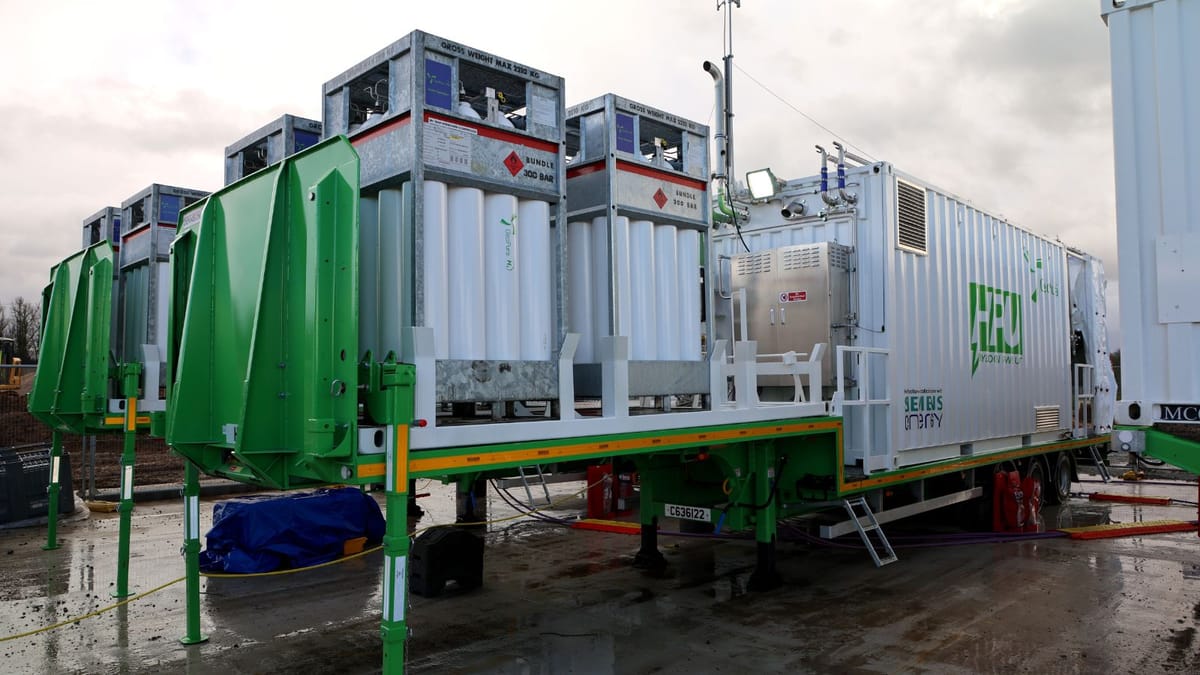
Six GeoPura hydrogen-powered generators are already operating at a preparatory works site in Essex, charging batteries for electric machinery. Last year, a JCB hydrogen-fuelled backhoe loader became the first to be deployed outside a test environment anywhere in the world when it was used for survey work in Kent.
From coal to hydrogen
GeoPura, founded in 2019 and employing around 170 people across Britain and Europe, produces green hydrogen via electrolysis powered by renewable electricity. Its flagship facility, HyMarnham Power in Nottinghamshire, sits on the site of a former coal-fired power station - a rather pointed piece of energy transition symbolism. The facility is backed by government Hydrogen Allocation Round 1 (HAR1) funding and is due to reach commercial operation this year.
The company has form in off-grid power supply, with its portable hydrogen power units previously used by the BBC for Springwatch and Autumnwatch, by Netflix for Bridgerton, and by the DP World Tour at Wentworth.
Mandating the transition
Perhaps more significant than the headline figures is the contract structure. National Highways is requiring its delivery partners - which include Balfour Beatty, Skanska and other major European contractors - to invest in hydrogen-powered machinery and develop the skills to operate and maintain it. This is not an optional green initiative bolted onto a conventional project, but a procurement condition.
The Lower Thames Crossing received planning permission in March 2025, with construction expected to begin this year and the road due to open in the early 2030s. National Highways has positioned the project as a pathfinder for carbon-neutral construction, with lessons intended to inform future major infrastructure programmes.
Whether the economics ultimately stack up is another question. At typical diesel prices, 12 million litres would cost somewhere in the region of £18m - making the £80m hydrogen contract look less like a cost saving and more like paying a premium for decarbonisation. But the Construction Leadership Council has committed the UK construction industry to a 78% reduction in diesel use by 2035, and contracts like this are presumably how that happens.
"By replacing diesel with homegrown hydrogen, we're not only reducing our own carbon footprint but also helping clean up the construction sector," said Matt Palmer, executive director for the Lower Thames Crossing. Palmer has also been CO2nstruct Zero programme sponsor for the Construction Leadership Council, so the alignment between industry ambition and project delivery is not coincidental.