Aberdeen sells hydrogen bus fleet as decade-long project ends
Aberdeen sells its 25 hydrogen double-decker buses and exits BP joint venture after refuelling failures left the fleet grounded for over a year.

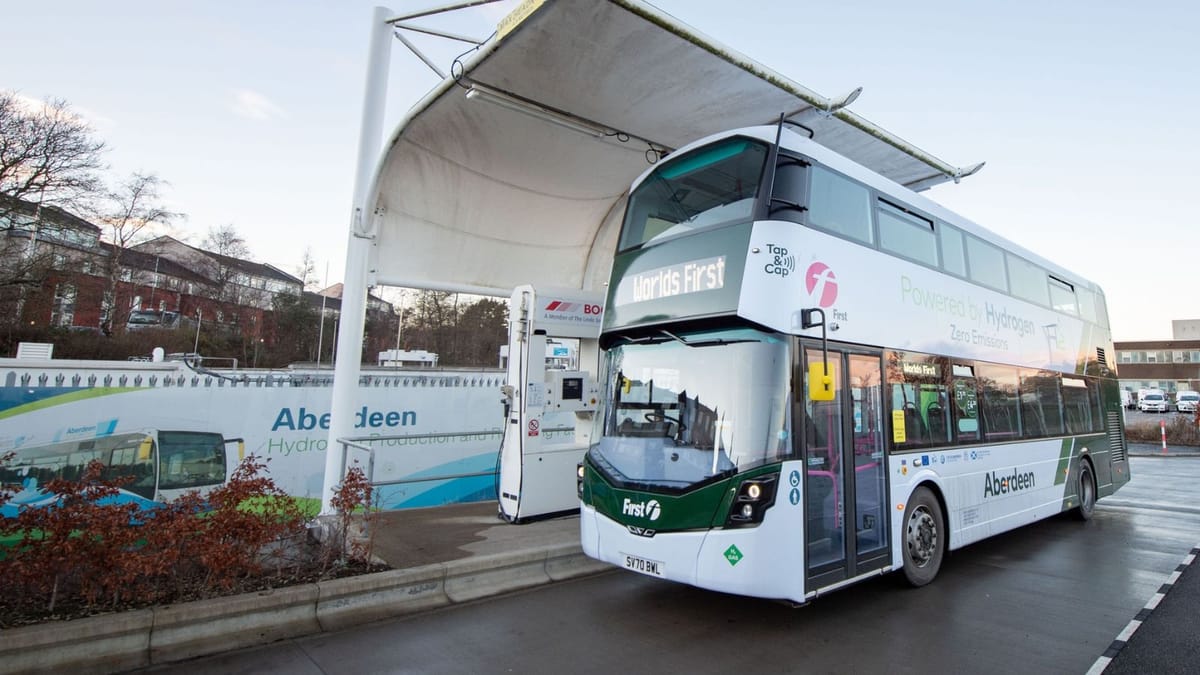
The council confirmed this week that it will sell the Wrightbus StreetDeck Hydroliner fleet and transition to battery-electric buses, ending what was once billed as a world-first hydrogen transport programme.
The 25 double-deckers, leased to First Bus, have been out of service since mid-2024 after hydrogen production at the council's Kittybrewster and Cove stations became unreliable. Repairs proved difficult to source for the decade-old infrastructure, and councillors have now voted to stop trying.
In a statement, the council said discussions with BP had been prompted by "significant advancements in electric vehicle technology" and noted that "as manufacturers and operators increasingly favour EVs, demand for hydrogen in transport has diminished."
Aberdeen's hydrogen bus programme began in 2014 with 10 Van Hool A330 single-deckers, part of an £8.3 million EU-backed project to build a hydrogen economy around the city's oil and gas expertise. Those buses ran until 2019, carrying more than 440,000 passengers and travelling 250,000 miles before the lease with Van Hool expired. The council then ordered 15 Wrightbus StreetDeck Hydroliners in 2019 - the world's first hydrogen double-deckers - with a further 10 arriving in 2020-2022.
Funding came from multiple sources: the Scottish Government contributed over £15 million across vehicle purchases, station upgrades, and the Aberdeen Hydrogen Hub; the European Commission provided €2 million through its JIVE programme; and the council itself invested £2.5 million. BP partnered with the council to operate the hydrogen hub, which was intended to supply not just buses but a broader ecosystem of hydrogen vehicles.
The vision was coherent within its moment. In the mid-2010s, hydrogen was widely framed as a universal energy carrier, and Scotland, seeking post-oil positioning, saw Aberdeen as a natural test bed. The council talked of becoming "a European centre of excellence in hydrogen technology" and attracted global attention for the first double-decker deployment.
But the economics never quite worked. The StreetDeck Hydroliners cost roughly £500,000 each - significantly more than their diesel or battery-electric equivalents. More critically, the refuelling infrastructure proved fragile. When parts for the 10-year-old Kittybrewster station became difficult to source in 2024, the entire fleet was grounded. Council papers from late 2024 show officials exploring whether to take over the station from BP to refurbish it with public funds, but the arithmetic no longer added up.
First Bus and Stagecoach, meanwhile, have continued expanding their battery-electric operations in Aberdeen. First currently runs 48 electric buses and 12 repowered diesels alongside the now-dormant hydrogen fleet, while Stagecoach operates its own battery vehicles. The council says the exit from hydrogen will "strengthen Aberdeen's electric vehicle charging infrastructure" and deliver better value.
Whether the 25 Hydroliners will find buyers is another matter. The secondary market for hydrogen buses is thin - most UK deployments have been grant-funded pilots rather than commercial operations, and any buyer would need compatible refuelling infrastructure. Wrightbus has sold the model to a handful of other operators, including Transport for London and Belfast, but neither has pursued large follow-on orders.
Aberdeen's decision follows a similar retreat in Liverpool, where the city region combined authority announced in December that it would convert its 20 Alexander Dennis hydrogen double-deckers to battery-electric power. Half of those buses had never carried a passenger; fuel supply problems had plagued the project since delivery in 2023. The cost of conversion is being met by the supplier.
For hydrogen advocates, the explanation is infrastructure timing rather than technology failure - the buses worked, but the refuelling systems weren't scaled or maintained to match. For sceptics, Aberdeen's 12-year experiment delivered valuable data but proved that hydrogen for urban buses faces structural disadvantages against batteries that have grown cheaper and more capable with each passing year.
The council says it remains committed to renewable energy and will negotiate the transfer of the hydrogen hub assets to its own control, though their future use remains unclear.